
As a high-precision thermal processing device, the vertical curing oven has gradually replaced part of traditional horizontal curing equipment in precision manufacturing sectors. Driven by the general trend of factory automation, compact production layout and stricter product quality standards, it delivers remarkable practical value for enterprises, and holds broad development prospects across multiple high-tech industries.
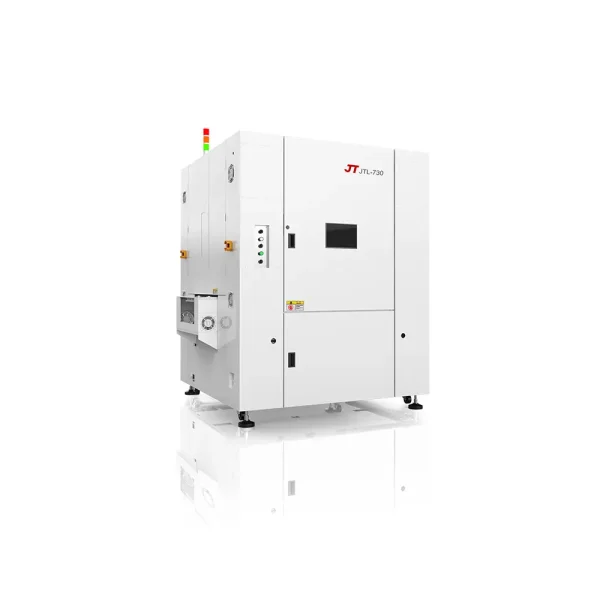
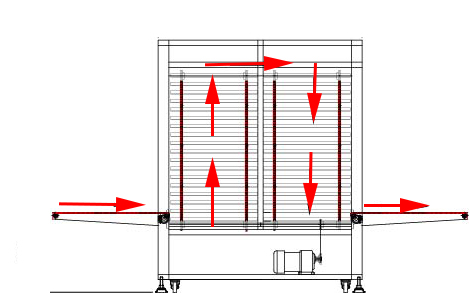
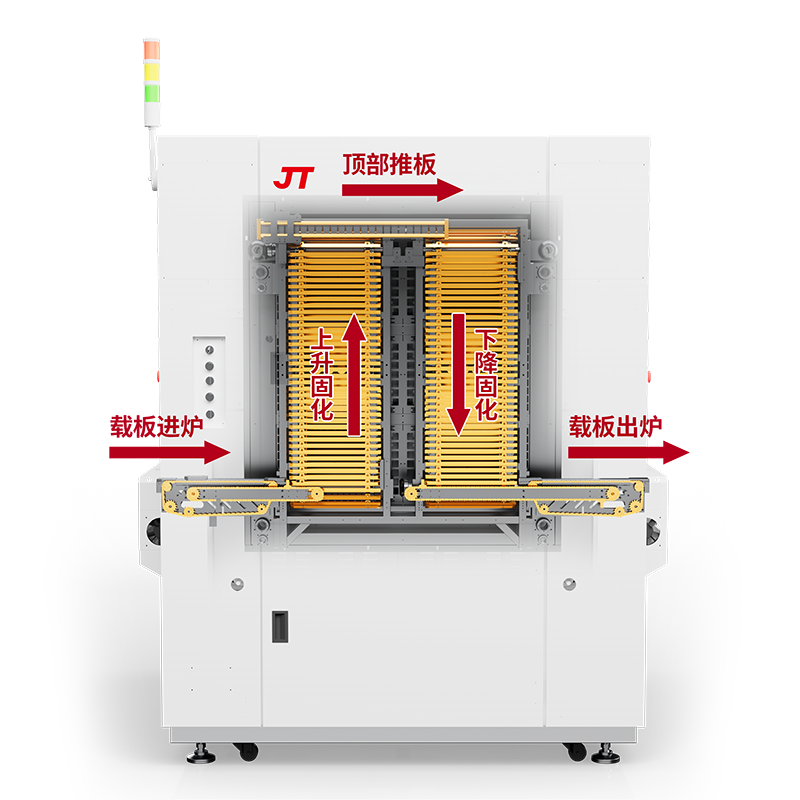
The most immediate industry value lies in space optimization and production cost reduction. Land and workshop space are precious resources for electronic manufacturers, especially for SMT factories and PCB enterprises with dense production lines. Different from horizontal ovens that stretch along the ground, the vertical curing oven adopts a three-dimensional stacked layout, which greatly cuts floor occupation while maintaining equivalent or even higher throughput. For manufacturers expanding production capacity, there is no urgent need to rent or rebuild larger workshops. Meanwhile, its closed hot air circulation system lowers heat dissipation loss. Continuous operation reduces repeated heating cycles, helping factories save electricity consumption and bring down long-term production costs.
In terms of product quality control, this equipment elevates the overall quality benchmark of precision electronic processing. Segmented independent temperature control and well-designed air duct systems minimize temperature deviation inside the chamber. For sensitive processes such as solder mask curing, conformal coating baking and adhesive solidification, stable thermal conditions reduce the rate of defective products caused by uneven heating, bubbling, ink cracking or insufficient cross-linking. Since workpieces are conveyed vertically without stacking or squeezing, scratches and surface damage are effectively avoided. Consistent curing results help manufacturers meet stringent quality requirements from downstream clients in communication, automotive electronics and new energy industries, strengthening their market competitiveness.
Furthermore, the vertical curing oven fits perfectly into the roadmap of intelligent manufacturing. Modern production pursues seamless connection between different processes. This oven can be directly docked with upstream dispensing, spraying and screen-printing equipment, as well as downstream testing and sorting machines, forming fully automated production lines. Equipped with PLC control, data recording and remote alarm functions, it enables unmanned continuous operation. Production data including temperature curve, running speed and batch records can be stored and exported, facilitating traceability, standardized management and digital transformation for factories. Environmental protection is another highlight: its built-in exhaust and filtration system treats volatile organic compounds generated during curing, helping companies comply with increasingly strict industrial emission regulations.
Looking ahead, the market demand for vertical curing ovens will keep rising. The rapid expansion of sectors such as high-density PCB, miniaturized semiconductor modules, automotive electronics, energy storage and consumer electronics creates a huge demand for reliable curing equipment. As electronic components become smaller and processing requirements more sophisticated, the demand for low-deformation, high-uniformity thermal treatment will grow. Besides, manufacturers will keep upgrading equipment toward higher cleanliness, smarter parameter adjustment and stronger energy-saving performance. Customized models tailored for special materials and special processes will emerge continuously.
To conclude, the vertical curing oven is far more than a simple baking machine. It solves the pain points of limited workshop space, unstable curing quality and low automation level for modern manufacturers. Benefiting from the booming high-end electronic industry, it will remain an indispensable core facility and witness continuous technological iteration in the future.