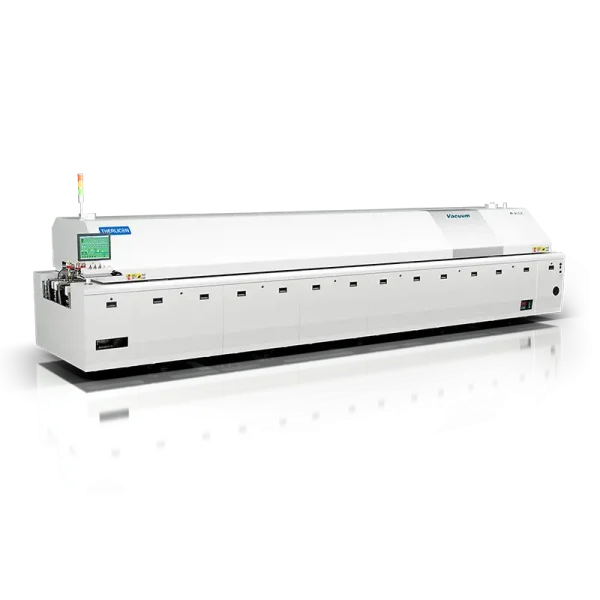

Reflow soldering in SMT PCB manufacturing is a controlled heating process that melts solder paste to permanently form electrical and mechanical connections between surface-mounted components and a PCB, and it is essential because it enables precise, reliable, and high-volume assembly of modern high-density electronic devices.
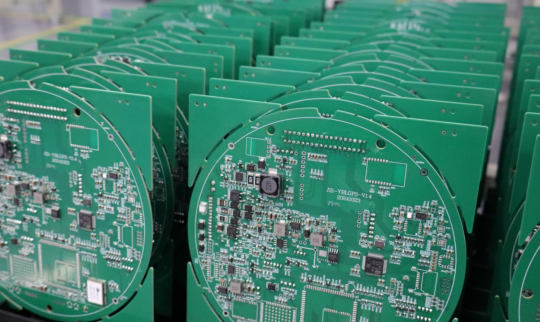
Definition of reflow soldering in surface mount technology (SMT)
Reflow soldering is a PCB assembly process where solder paste is heated until it melts, then cooled to form strong electrical and mechanical connections between components and the board.
Reflow soldering in SMT (Surface Mount Technology) refers to the method of attaching electronic components directly onto the surface of a PCB using solder paste. The solder paste is a mixture of tiny solder particles and flux, printed onto specific pads on the board.
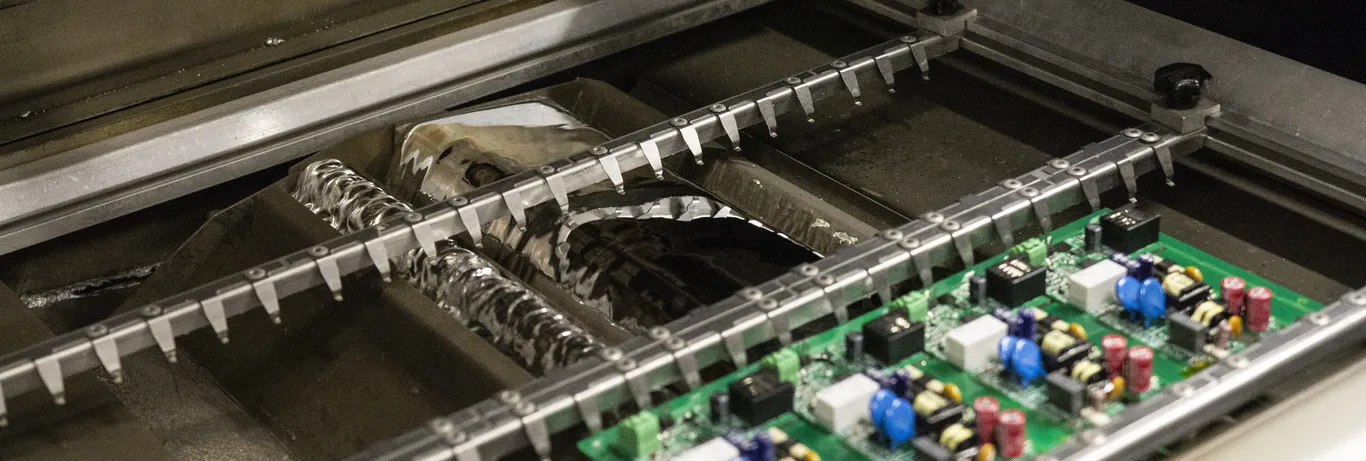
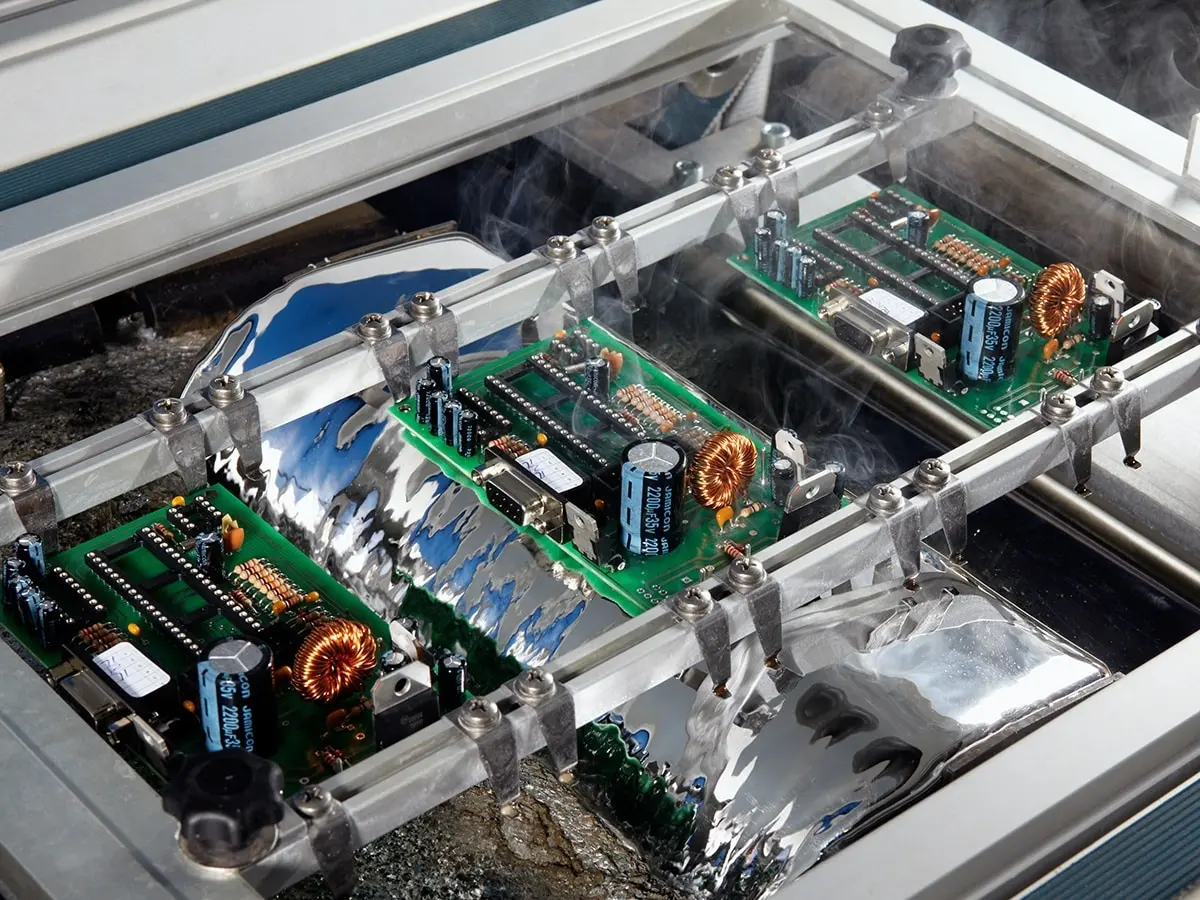
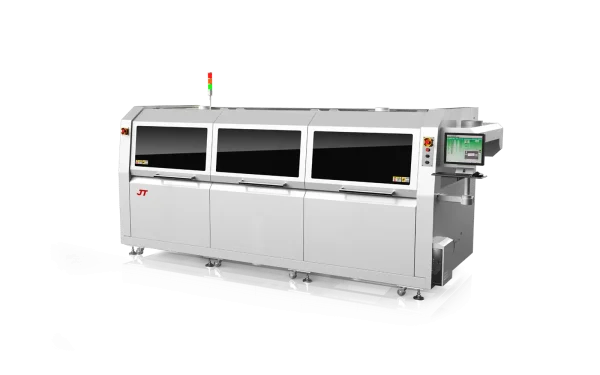
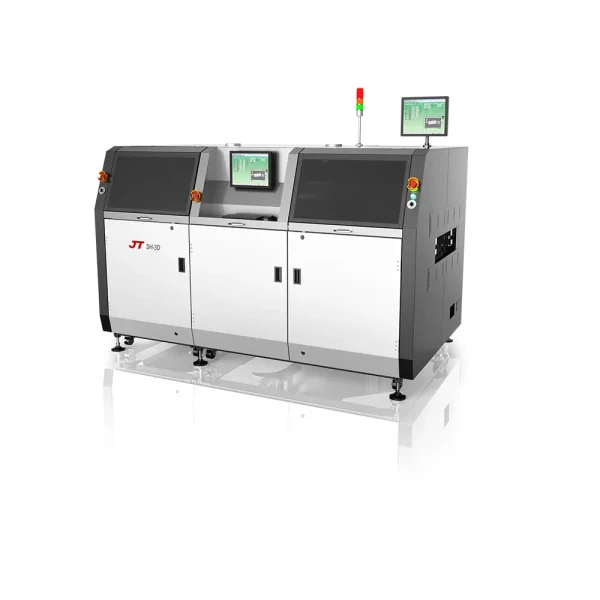
When the PCB passes through a reflow oven, the temperature rises in a controlled way. First, the solder paste becomes soft and activates the flux. Then, at higher temperature, the solder melts and “flows” around the component leads and pads. Finally, as the board cools down, the solder solidifies and locks the component in place.
This controlled heating process creates both an electrical path and a strong mechanical bond at the same time. For example, in a smartphone motherboard, thousands of tiny components are held in place only by these solder joints, yet they must survive drops, heat, and long-term use.
In simple terms, reflow soldering is like “controlled melting and freezing” of solder to glue and connect electronic parts with high precision.
Why reflow soldering is the dominant process in modern PCB assembly
Reflow soldering is widely used because it supports very small components and works well with high-density, high-performance PCB designs.
Modern electronics such as smartphones, laptops, and automotive control units require extremely small and tightly packed components. Reflow soldering is ideal because it can handle micro-sized parts like 0201 resistors or fine-pitch ICs without manual soldering.
Another reason it dominates PCB assembly is its compatibility with HDI (High-Density Interconnect) and multilayer boards. These boards have complex routing and limited space, so traditional soldering methods cannot achieve the same precision or consistency.
For example, in an automotive ECU (Engine Control Unit), hundreds of components must be placed with exact alignment. Reflow soldering ensures every joint is formed under identical temperature conditions, reducing human error and improving reliability.
Compared with hand soldering, reflow soldering is also far more scalable. Once the process is set, thousands of boards can be produced with nearly identical quality, which is critical for mass production environments.
Where reflow soldering fits in the SMT assembly workflow
Reflow soldering happens after component placement and before inspection in the SMT production line, acting as the key step that permanently forms all solder joints.
In a typical SMT (Surface Mount Technology) production line, the workflow follows a clear sequence:
1. Solder paste printing: A stencil printer applies solder paste onto PCB pads.
2. Component placement: A pick-and-place machine positions components onto the pasted pads.
3. Reflow soldering (core process): The PCB enters a reflow oven where controlled heating melts the solder and forms permanent joints.
4. Inspection: The finished board is checked using AOI (Automated Optical Inspection) or X-ray systems.
For example, in a consumer electronics factory, a PCB may travel on a conveyor system through each stage automatically. The reflow oven acts as the “bonding stage,” where all previously placed components are permanently fixed in one continuous thermal cycle.
This position in the workflow is critical because any error before reflow (such as misaligned components or uneven solder paste) will become permanent after the heating cycle. That is why upstream process control is essential for successful SMT reflow soldering results.