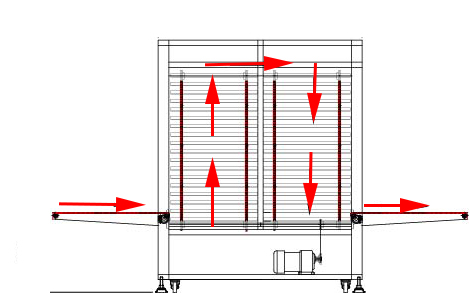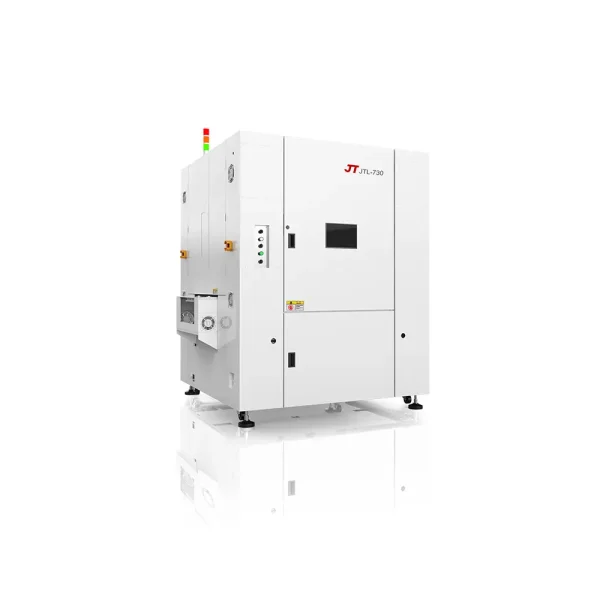

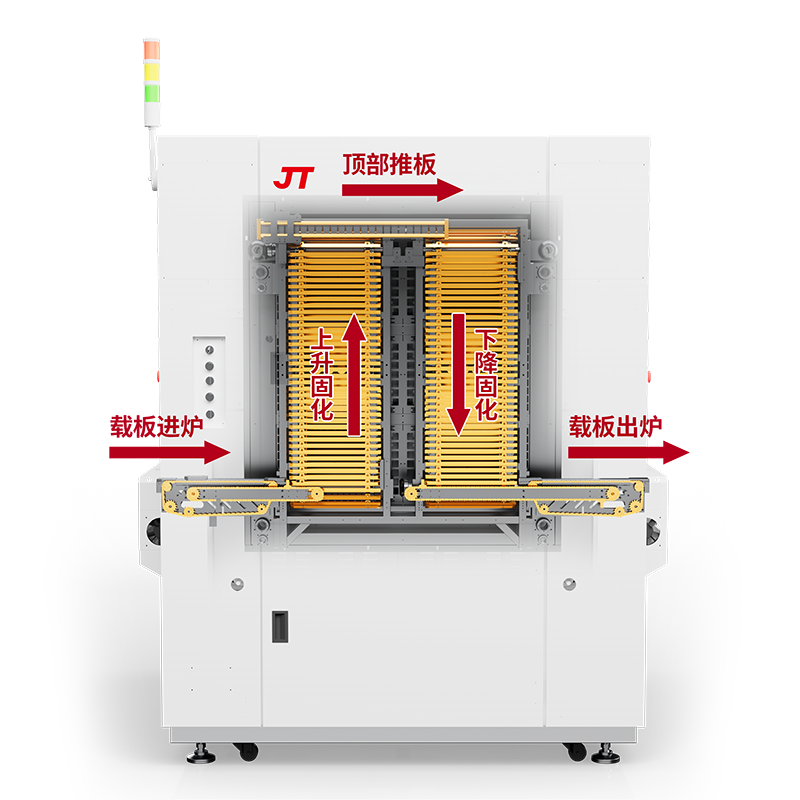
Vertical curing ovens are essential automated thermal processing equipment in modern precision electronics manufacturing. Thanks to their vertical space-saving structure, uniform hot air circulation, and precise segmented temperature control capabilities, they can adapt to diversified low-temperature and medium-temperature curing processes. Compared with traditional horizontal ovens, they feature higher operational stability, lower space consumption, and better product consistency. Therefore, vertical curing ovens are widely applied in PCB production, SMT patch processing, electronic component packaging, and new energy accessory manufacturing, covering most common drying, curing, and aging processes in the electronic industry.
In the field of PCB manufacturing, vertical curing ovens serve core curing procedures for circuit board production. The most typical application is solder mask curing. After green oil coating, PCBs must undergo stable constant-temperature baking to cross-link and solidify the solder mask ink, forming an anti-oxidation and insulation protective layer on the board surface. In addition, the equipment is fully applicable to legend ink curing. Fine printed characters and symbols on circuit boards require gradual temperature curing to avoid fading, blurring or falling off. With uniform internal temperature distribution, the vertical curing oven effectively prevents board deformation and ink cracking, ensuring clear circuit identification and stable insulation performance. It also supports post-process moisture removal and baking for finished circuit boards to eliminate internal residual moisture and improve product reliability.
In SMT surface mount technology, vertical curing ovens are widely used for adhesive curing and reinforcement processing. During electronic assembly, a variety of adhesives need thermal curing to achieve bonding and fixing effects, including SMT red glue, UV structural adhesive, silica gel, and thermal conductive adhesive. The segmented temperature design of vertical curing ovens matches the curing characteristics of different glues. Low-temperature preheating removes volatile components, and medium-temperature constant heating completes molecular cross-linking, effectively improving bonding strength and assembly stability. Moreover, the equipment is suitable for three-proof paint curing on circuit boards. After spraying waterproof, moisture-proof and anti-corrosion conformal coating, precise baking can form a dense protective film, greatly enhancing the environmental adaptability of electronic products.
In precision electronic component processing, the equipment adapts to the drying and curing requirements of small and delicate workpieces. It is commonly used for surface coating curing of connectors, chip accessories, precision plastic parts, and hardware electronic parts. The vertical suspended transmission method avoids workpiece stacking and friction damage, which is especially suitable for high-precision parts with strict surface quality requirements. Meanwhile, it can be used for low-temperature aging testing of small electronic modules to screen out defective products caused by poor material stability.
In addition, vertical curing ovens have expanded applications in the new energy industry. They are used for insulation paint curing, adhesive fixing, and surface dehumidification of lithium battery accessories, wiring harness modules, and energy storage components. The stable and dust-free internal working environment meets the high-standard production requirements of new energy products.
To sum up, vertical curing ovens cover mainstream curing and drying processes in electronics, SMT, PCB and new energy manufacturing. With flexible process adaptability and reliable continuous production capacity, they have become standard supporting equipment for intelligent and high-efficiency automated production lines.