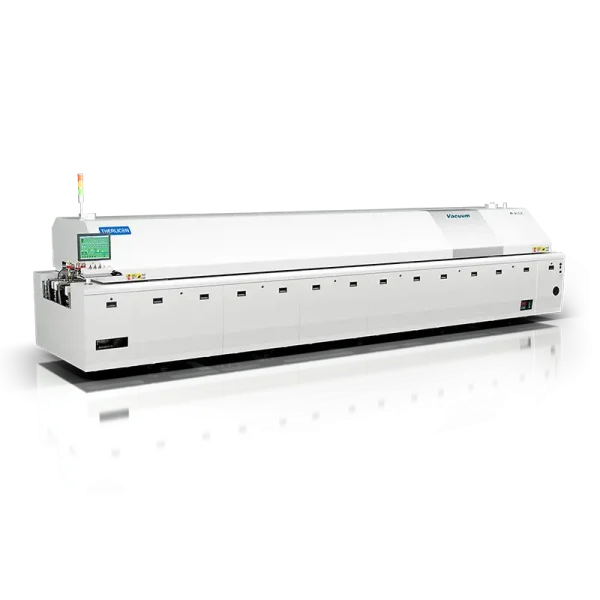

Reflow soldering is a core process in SMT electronic assembly, which determines the welding quality and reliability of PCB boards. Air reflow soldering and nitrogen reflow soldering are the two mainstream welding technologies in the industry. They differ greatly in working principle, welding effect, cost and application scenarios, and are suitable for different electronic manufacturing demands.

The fundamental distinction lies in the welding atmospheric environment. Air reflow soldering directly uses ambient air as the heating atmosphere for reflow processing. The oxygen in the air cannot be isolated during high-temperature welding, which is the key factor restricting its welding performance. In contrast, nitrogen reflow soldering injects high-purity nitrogen into a sealed reflow oven to expel air, keeping the internal oxygen concentration below 100ppm and forming a stable inert environment to avoid oxidation reactions effectively.
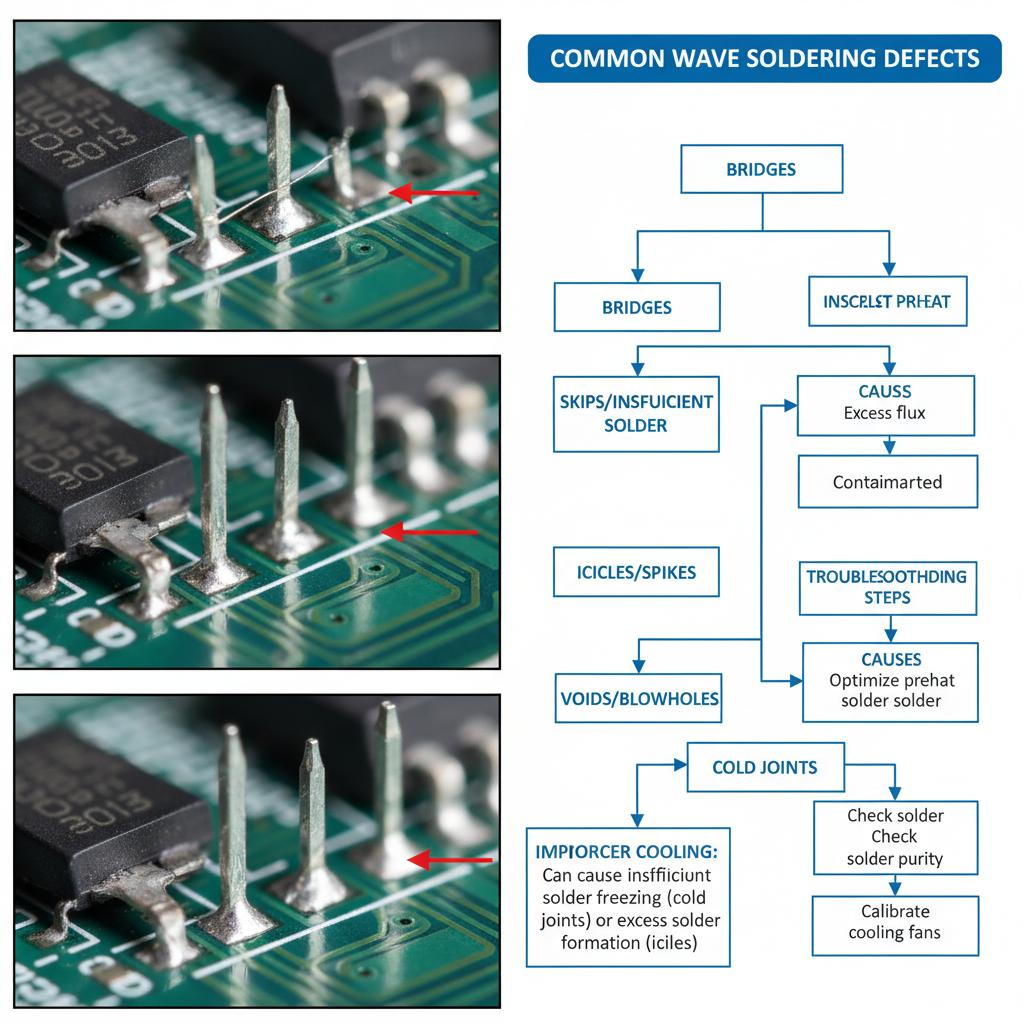
The two technologies show obvious gaps in solder joint quality and yield rate. In air reflow, high-temperature oxygen oxidizes solder paste, PCB pads and component pins easily. This problem leads to poor solder wettability, dull solder joints, and common defects such as solder bridging, empty soldering and excessive voids. These flaws weaken the electrical conductivity and mechanical stability of solder joints. Nitrogen atmosphere effectively suppresses oxidation, significantly improving solder fluidity and wettability. It produces smooth, bright and full solder joints with fewer voids and almost no welding defects, greatly enhancing the durability and stability of electronic products.
Cost and operational economy are another major difference. Air reflow soldering requires no auxiliary gas supply or special equipment modification. It features simple operation, low equipment investment and zero additional operating costs, making it highly cost-effective for mass production. However, nitrogen reflow soldering needs professional nitrogen supply equipment and regular gas supplementation. The higher equipment investment and continuous gas consumption raise production costs and operational thresholds.
Their application scenarios are divided according to quality requirements. Air reflow is widely used in low and medium-end electronic products with ordinary precision requirements, such as common household appliance circuit boards and low-density consumer electronics. Nitrogen reflow is the preferred process for high-precision and high-reliability products, including automotive electronics, medical devices, aerospace equipment, and precision components like fine-pitch BGA and QFN.
In conclusion, air reflow is an economical choice for standard welding tasks, while nitrogen reflow excels in high-quality and high-stability manufacturing. Manufacturers should select the appropriate process based on product precision, reliability standards and production budgets to balance quality and cost.