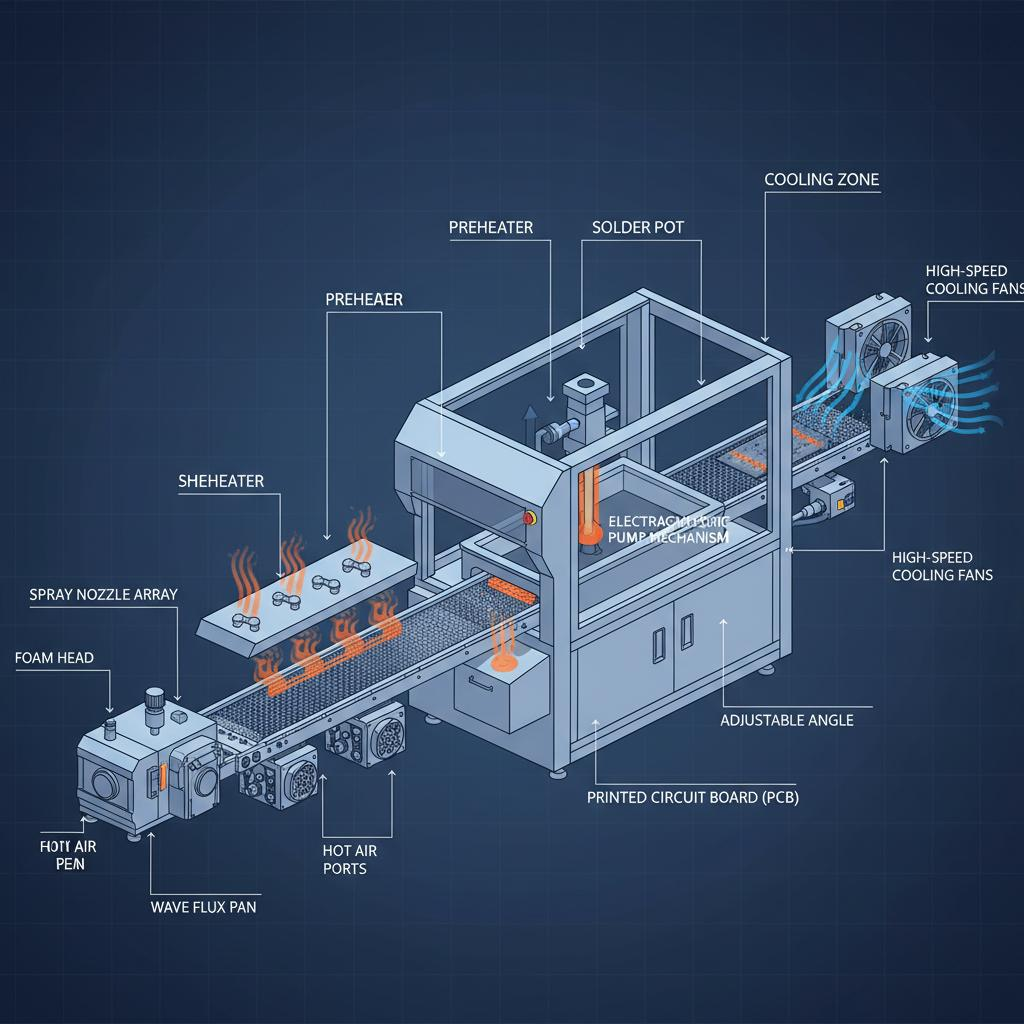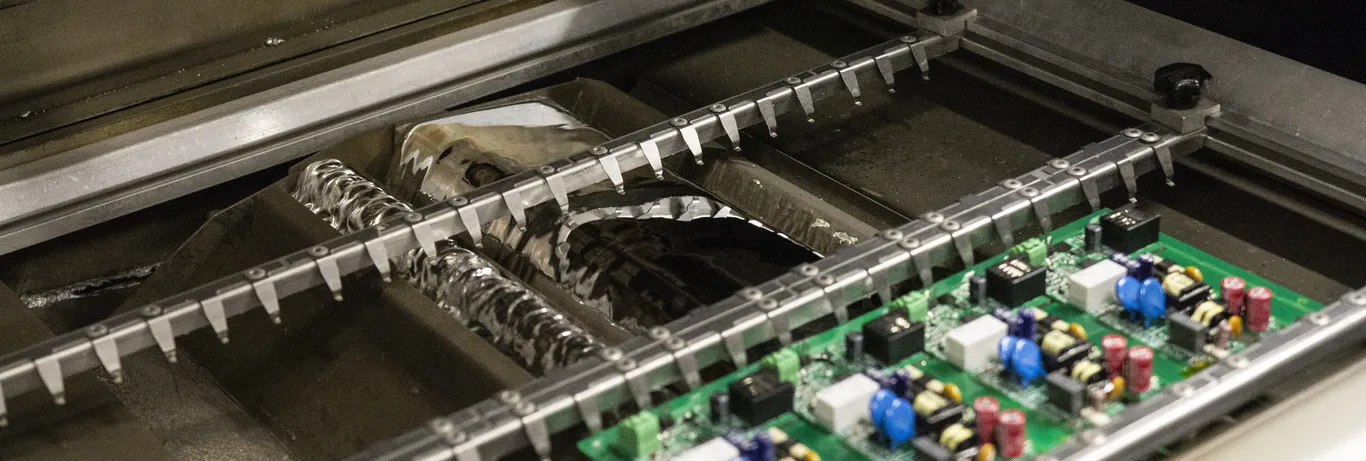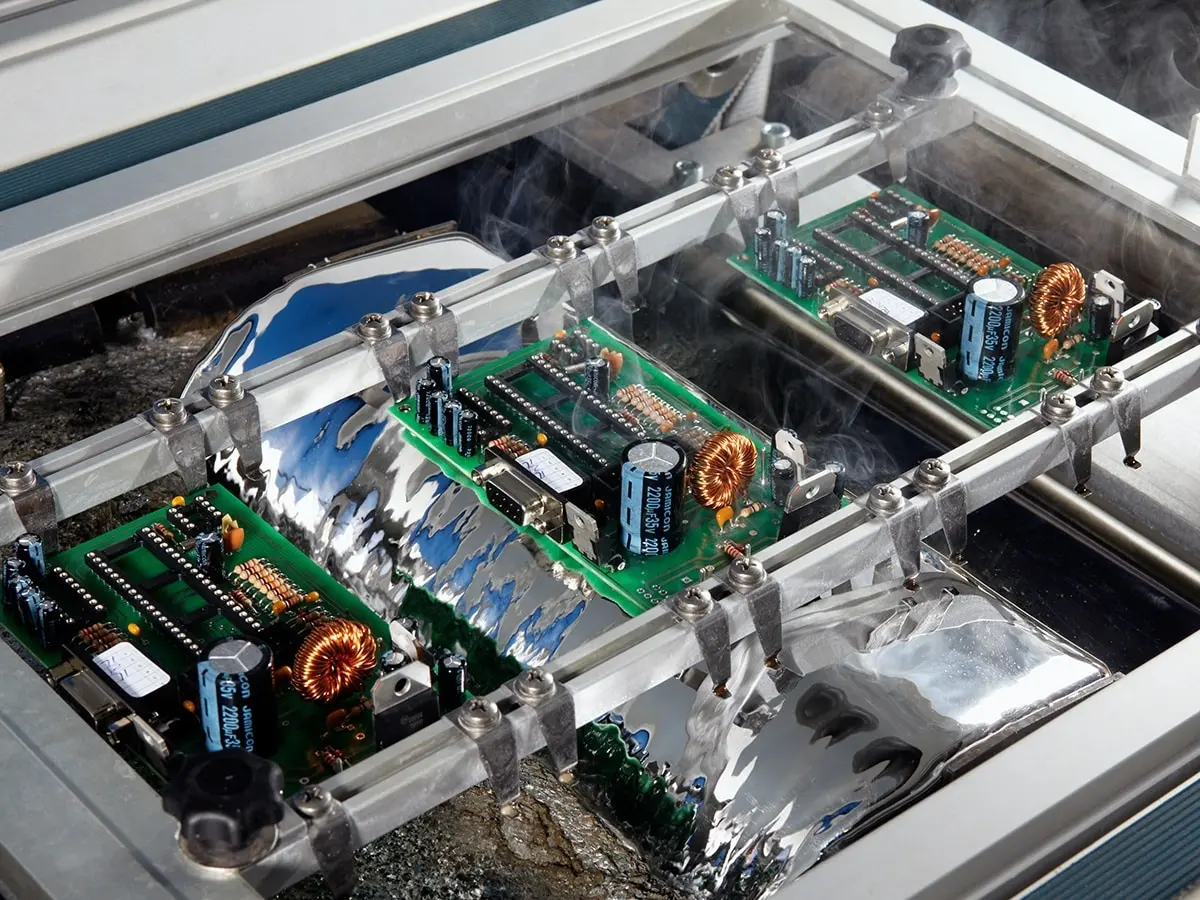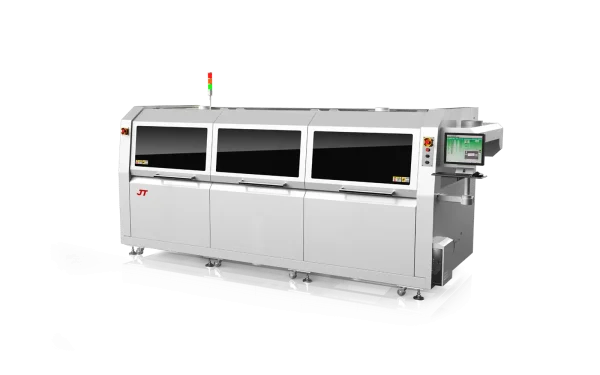

While surface-mount technology (SMT) dominates modern electronics assembly, wave soldering remains an irreplaceable process for through-hole components and mixed-technology boards. By creating a standing wave of molten solder, the wave soldering oven efficiently solders hundreds of joints in seconds. Its robustness, speed, and reliability make it a cornerstone across diverse industrial sectors.

Consumer Electronics: The Backbone of Mass Production
The consumer electronics industry—producing power supplies, television boards, home appliance controls, and LED lighting drivers—relies heavily on wave soldering. These products often combine surface-mount chips with bulky through-hole connectors, transformers, or electrolytic capacitors. Wave soldering offers the perfect balance: high throughput (conveyor speeds up to 1.8 m/min) with consistent quality. For LED lighting, specialized long-board wave soldering systems handle PCB lengths exceeding 600 mm, ensuring uniform solder joints on aluminum-backed boards. Given the cost-sensitive nature of consumer electronics, manufacturers favor wave soldering’s low per-joint cost and minimal maintenance.
Automotive Electronics: Demanding Zero-Defect Reliability
Modern vehicles contain over 100 electronic control units (ECUs) managing engine control, transmission, anti-lock braking, lighting, and infotainment. Automotive electronics operate under extreme temperatures (-40°C to 150°C), high vibration, and corrosive environments. Through-hole components, soldered via wave soldering, provide superior mechanical strength compared to SMT alone. Critical modules like alternator voltage regulators, sensor interfaces, and power distribution boxes use large connectors, relays, or heavy-gauge wires—all wave-soldered. Nitrogen-protected wave soldering ovens reduce dross and improve wetting, directly reducing void rates and ensuring compliance with IATF 16949 and AEC-Q100 standards. As hybrid and electric vehicles grow, high-current busbars and charging connectors increasingly require selective wave soldering for precise, reliable joints.
Industrial Control and Automation: Rugged and Long-Life
Industrial environments demand 24/7 operation with lifespans exceeding 10 years. PLCs (programmable logic controllers), motor drives, power inverters, and HVAC controllers often utilize large terminal blocks, fuses, and relay sockets—components poorly suited for SMT reflow. Wave soldering excels here, forming filled, shiny fillets that withstand thermal cycling and mechanical stress. For thick copper layers (4 oz. or more) common in power electronics, wave soldering’s intense heat transfer ensures proper hole fill. Additionally, conformal coating—essential for moisture/dust protection—requires clean, residue-free flux, driving adoption of water-soluble or low-residue flux processes in wave soldering.
Telecommunications and Networking: High-Frequency Integrity
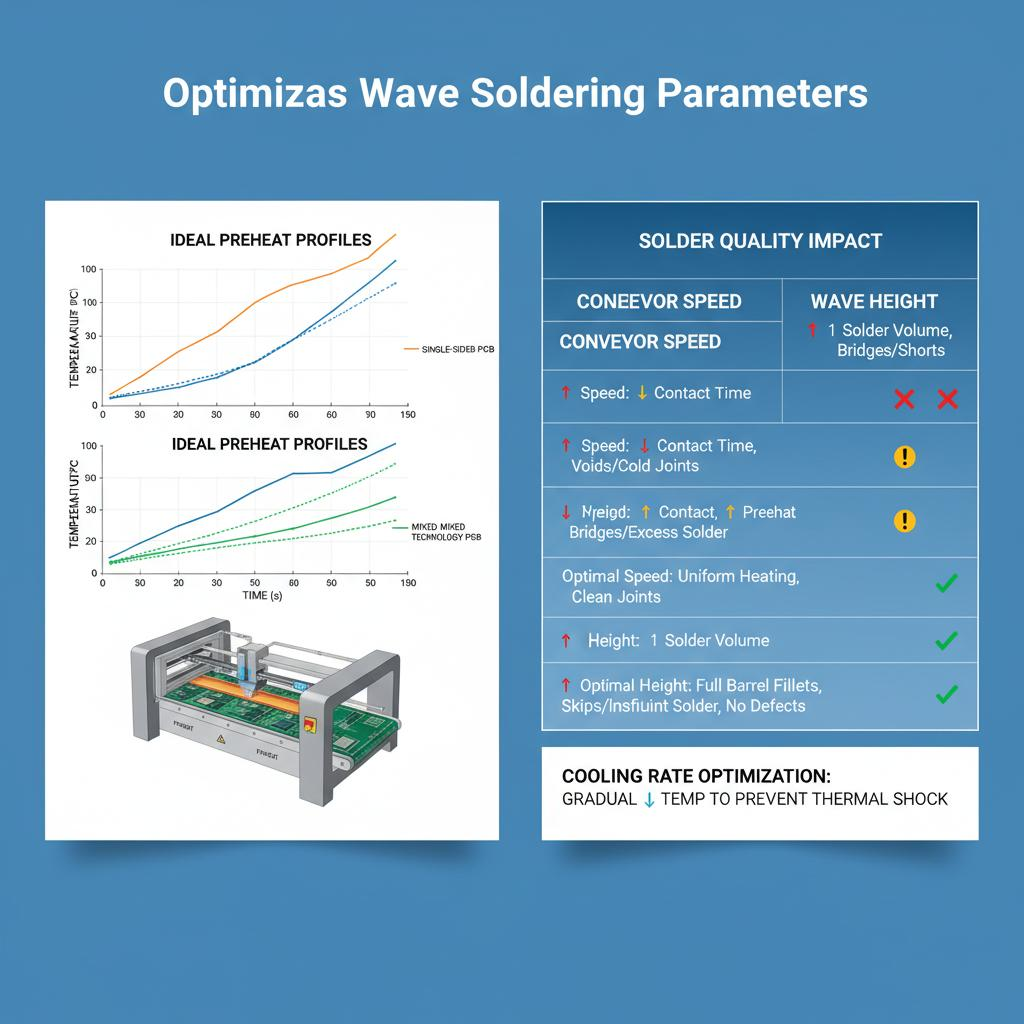
Base stations, routers, and optical network units require robust power supplies and high-frequency shielding. Wave soldering attaches metallic shielding cans, RJ-45 jacks, power inductors, and through-hole connectors. The process’s ability to handle mixed-pitch components (from 2.54 mm connectors to 5 mm power modules) provides flexibility. For telecom-grade reliability, wave soldering parameters are tightly controlled: preheat temperature profiles (80–130°C) prevent thermal shock, while dual-wave systems (turbulent wave for high-density joints, laminar wave for smooth solder removal) eliminate bridging on fine-pitch connections.
Medical Devices: Reliability Under Scrutiny
Though medical devices increasingly adopt miniaturized SMT, certain subsystems—like power supplies for patient monitors, control boards for imaging equipment, or motor drivers for surgical robots—still rely on through-hole components for safety criticality. Wave soldering, combined with rigorous process validation (CPK > 1.33), delivers consistent, void-free joints. Cleanroom-compatible wave soldering ovens with isopropyl alcohol or water-based flux systems meet ISO 13485 requirements. Every board undergoes automated optical inspection (AOI) post-soldering, tracking defects such as insufficient fill or solder balls that could compromise patient safety.
Conclusion
Wave soldering ovens remain vital across consumer, automotive, industrial, telecom, and medical electronics. Each industry imposes unique demands—from consumer cost-efficiency to automotive zero-defect reliability and medical traceability. As electronics continue to integrate through-hole power components with SMT logic, wave soldering will evolve alongside selective soldering and smart process monitoring, securing its place in the manufacturing landscape for decades to come.