
If you’re new to SMT wave soldering, using the right methods can save time and reduce errors. Here are some practical tips to help beginners master this technique:
Start with Proper PCB Design
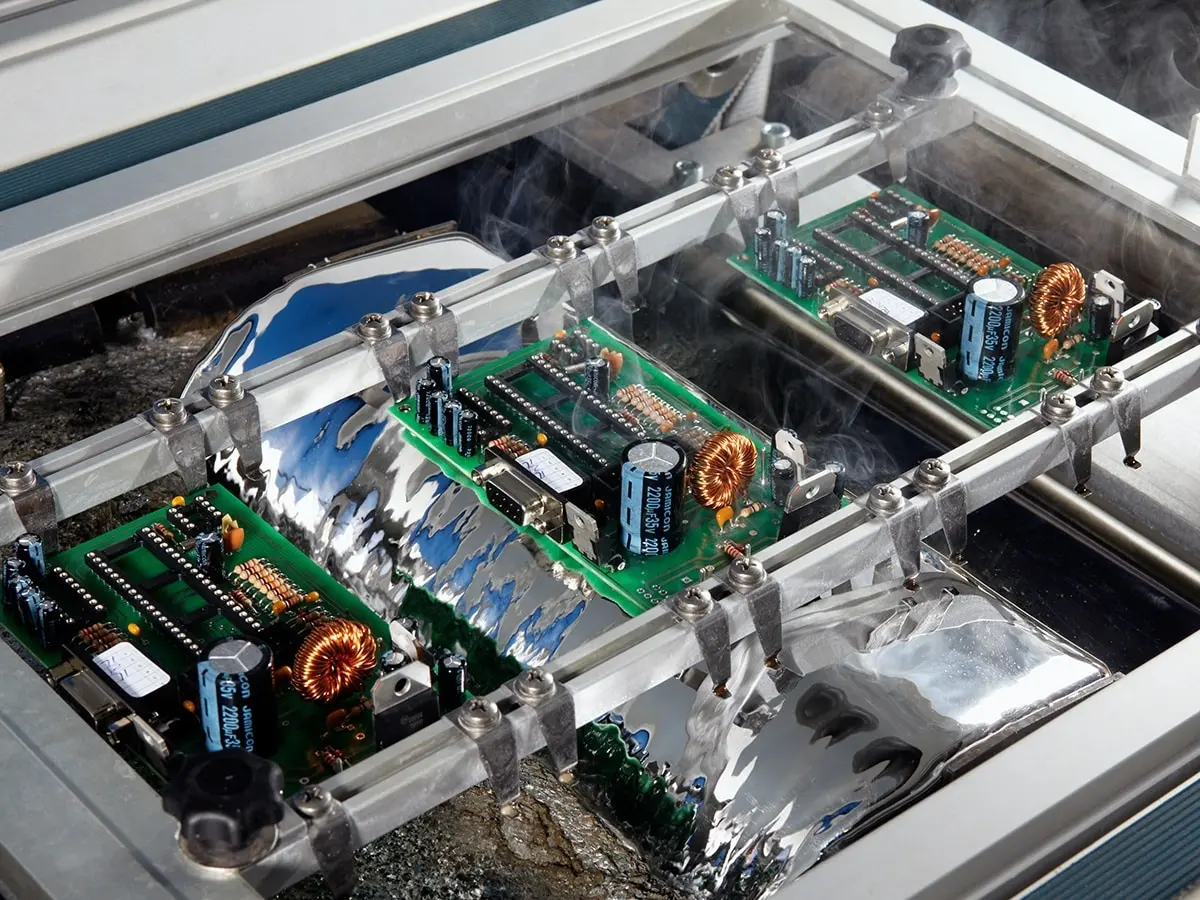
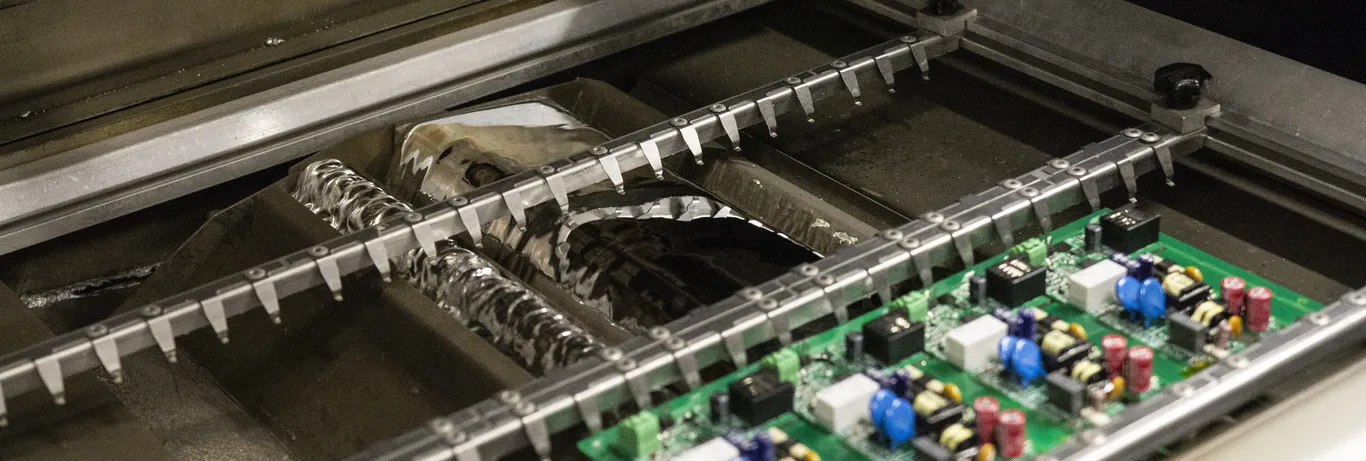
When designing your PCB, consider the wave soldering process. For SMT components, ensure sufficient spacing between the bottom pads (at least 0.5 mm for small components) to prevent solder bridging. Components should be placed along the conveyor belt direction to minimize solder shielding and prevent solder from failing to reach certain areas due to component placement.
Choose the Right Solder Alloy
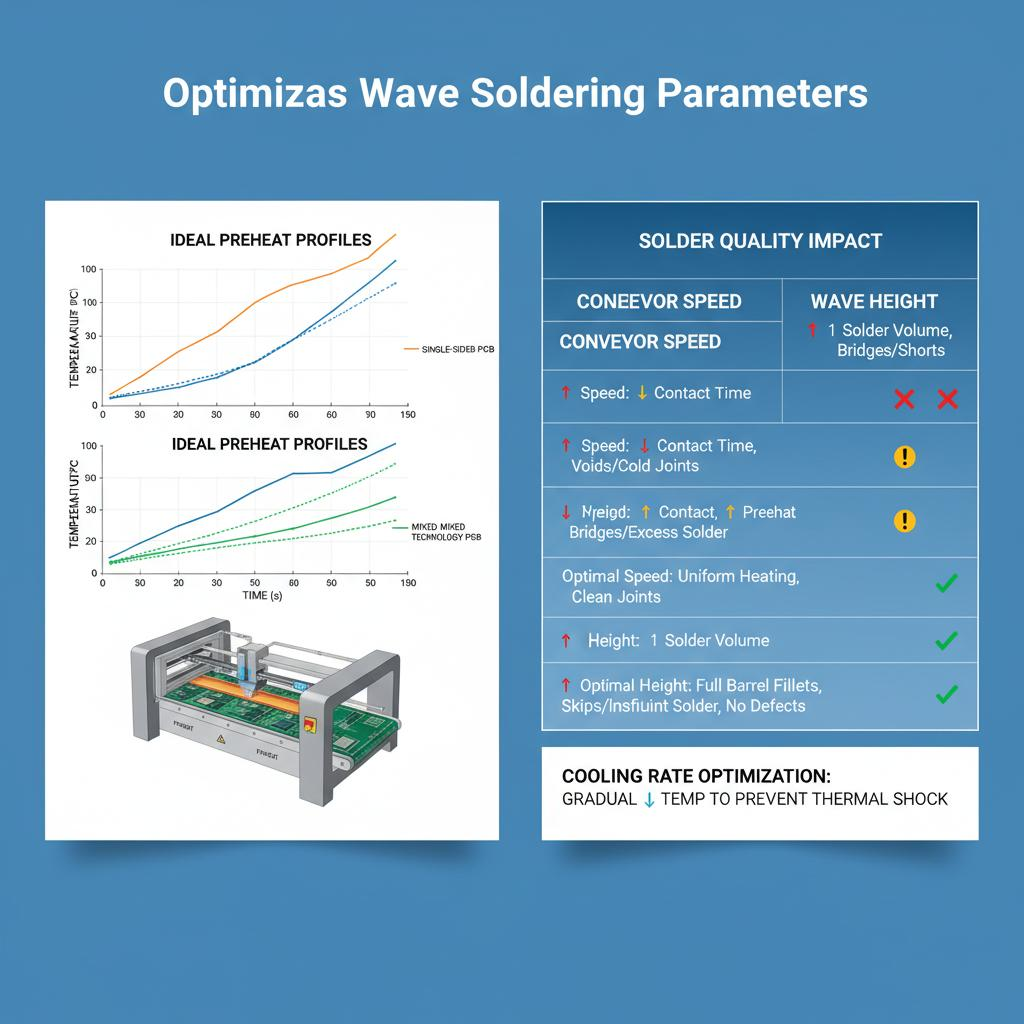
For lead-free soldering, a commonly used alloy is SAC305 (96.5% tin, 3% silver, 0.5% copper), with a melting point of approximately 217°C to 220°C. This alloy offers good wetting and reliability for SMT components. Always ensure your wave soldering machine maintains a stable solder temperature, as temperature fluctuations can lead to poor solder joints.
Monitor Flux Application
Too much flux can cause residue buildup, while too little flux can result in incomplete surface cleaning. To balance cleanliness and residue issues, it is recommended to use flux with a solid content of 2-5% when wave soldering SMT components.
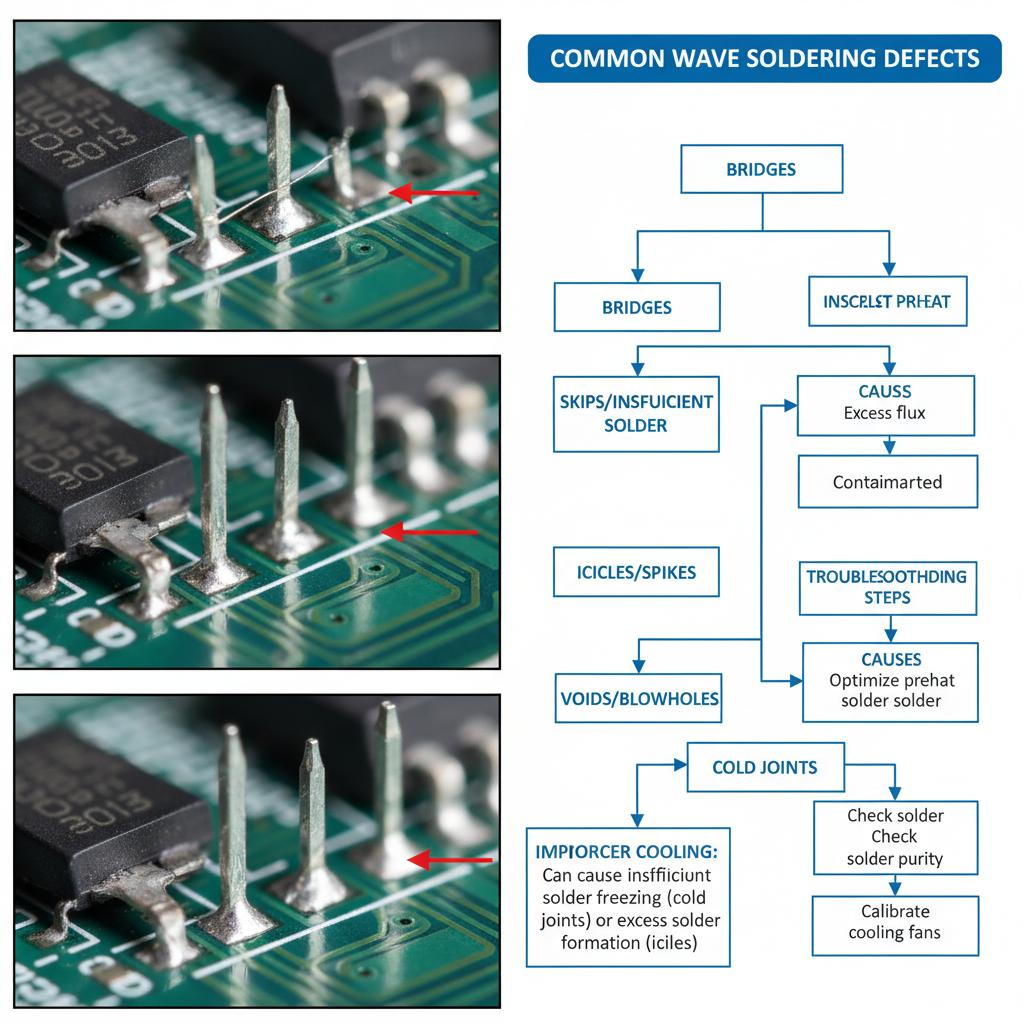
Testing and Inspection: After soldering, inspect the circuit board for defects such as solder bridges, insufficient solder, or component misalignment. Use a magnifying glass or automated optical inspection (AOI) tools to check the solder joint quality. For beginners, conducting small-batch testing before full production helps identify problems early.