
The terms SMT and SMD are often confused by beginners. However, they have distinct meanings:
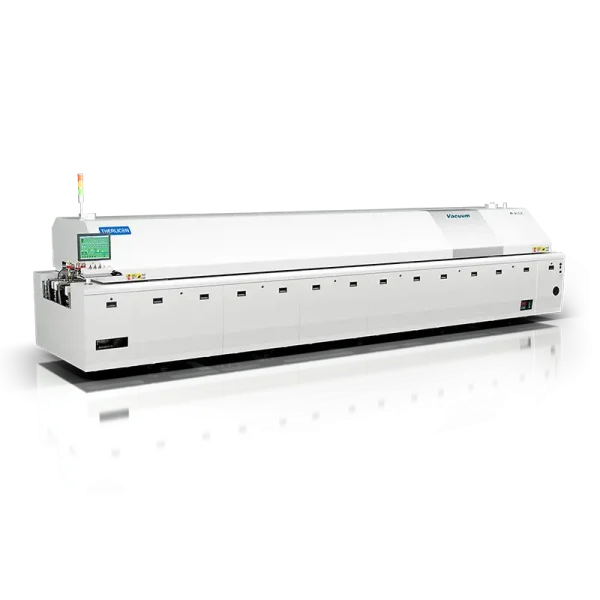
SMT (Surface Mount Technology): SMT refers to the entire method of mounting components onto a PCB surface. It includes the complete process, requiring the equipment, techniques, and procedures used in the assembly line (like solder paste printing, pick-and-place, and reflow soldering).
SMD (Surface Mount Device): SMD refers to the electronic components used in SMT assembly. These parts (resistors, capacitors, ICs, etc.) are designed to be mounted on the PCB surface. They are the physical items picked and placed during SMT.
In short, SMT is the “how” (the technology/process). SMD is the “what” (the component). SMDs were developed to take advantage of SMT. SMT relies on available SMDs to function.
Pros and Cons of SMT Surface Mount Technology
SMT offers significant benefits over THT. However, it also has some challenges.
Pros of SMT
- Higher component density: SMT allows components to be packed closer. They can be placed on both sides of the PCB. This eliminates drilled holes. The result is smaller, lighter, and more compact devices. This is vital for portable electronics.
- Faster assembly: The SMT process is highly automated. Pick-and-place machines work quickly. This means significantly faster production and lower labor costs.
- Improved electrical performance: SMDs have shorter or no leads. This reduces unwanted inductance and capacitance. It leads to better high-frequency performance and improved signal integrity. It also reduces electromagnetic interference (EMI).
- Cost-effective for mass production: While initial equipment costs are high, SMT lowers overall manufacturing costs for large volumes. This is due to less material handling, fewer drilling, and higher efficiency. SMT components can also be less expensive.
- Enhanced mechanical performance: SMDs are more resistant to shock and vibration. This is due to their lower mass and tight connection to the PCB.
- Automatic placement correction: During reflow, molten solder’s surface tension can self-align slightly misaligned components. This improves assembly accuracy.
- Design flexibility: SMT allows for more complex circuit designs. It also enables the use of more PCB layers
Cons of SMT
- High initial investment: Setting up an SMT line requires expensive, specialized equipment. This includes reflow ovens, pick-and-place machines, and solder paste printers. This can be a barrier for small manufacturers. JT has worked for 20 years in SMT assembly. We have 4 complete SMT lines for your manufacturing needs.
- Thermal sensitivity: Many SMDs are sensitive to temperature changes during reflow. Precise control of the oven’s temperature profile is critical to prevent component damage. JT has rich experience in reflow oven temperature control.
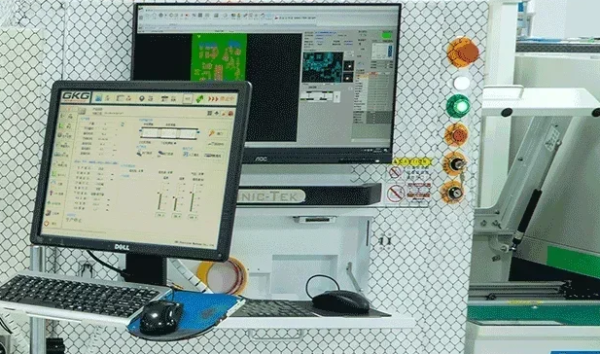
- Solder joint inspection challenges: Inspecting solder joints can be difficult, especially for packages like BGAs. These have connections underneath the component. X-ray inspection is required. For hidden-joint components like BGAs, JT conducts an X-ray inspection after the SMT process to ensure quality.
- Susceptibility to mechanical stress: Solder joints for some SMDs might be less mechanically robust than through-hole connections. This applies to larger or heavier components under significant physical stress.
- Not ideal for high-power components: Some very large, high-power, and high-voltage components still should use THT technology to insert into the drilled holes for THT assembly. This is due to their strength or heat dissipation needs.