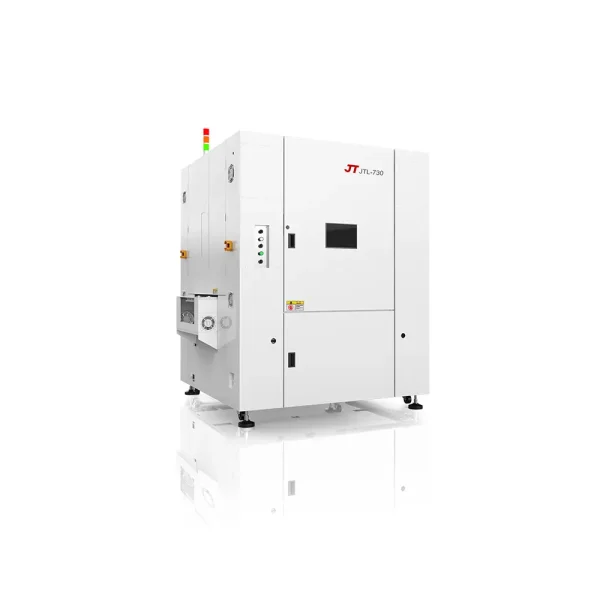

Solder Paste Inspection (SPI) is a cornerstone of modern Surface Mount Technology (SMT) manufacturing, serving as a critical inline quality control step immediately after stencil printing and before component placement. As over 60% of SMT defects originate from poor paste application, SPI’s core features are engineered to enable preventive quality control, delivering the precision, speed, and data-driven insights needed for high-reliability electronics production—especially as components shrink to 01005 sizes and PCBs grow denser with BGAs and QFNs .

The most defining feature of state-of-the-art SPI is 3D optical metrology, which has largely replaced legacy 2D systems by enabling true quantitative measurement. Using laser triangulation or structured light projection (e.g., phase-shift profilometry), 3D SPI captures a full topographical map of each solder deposit, reconstructing its three-dimensional morphology with micron-level accuracy (typically ±1 μm). This unlocks the simultaneous measurement of four non-negotiable parameters: volume, the single best predictor of solder joint reliability; height, which flags bridging risks from excess paste or open circuits from insufficient paste; area, verifying pad coverage; and offset, detecting X/Y misalignment relative to pad centers. Unlike 2D systems, which only assess surface appearance, 3D SPI reliably identifies hidden risks such as uneven deposits and insufficient volume—critical for BGA packages where post-reflow inspection is impossible.
SPI systems are built for high-speed, inline operation, balancing precision with production throughput. Equipped with ultra-rigid frames, high-resolution cameras, and dedicated image processors, they achieve scan rates exceeding 20 cm²/s while maintaining repeatable positioning via fiducial mark alignment. Advanced algorithms enable real-time defect classification against IPC-7527 standards, the global benchmark for solder paste printing quality . Common defects flagged include insufficient volume (e.g., <70% of aperture volume), bridging between adjacent pads, slumping, “dog ears,” and stencil clogging—all before components are placed, when rework costs are up to 10 times lower than post-reflow.
A transformative feature is closed-loop process control, which turns SPI from a passive inspector into an active process optimizer. Modern SPI seamlessly integrates with stencil printers via M2M (Machine-to-Machine) communication, feeding real-time data back to adjust print pressure, speed, and stencil cleaning cycles dynamically . This reduces process variation by up to 40% and elevates the process capability index (CpK) from 1.0 to 1.8, ensuring consistent paste deposits across production runs. When paired with downstream AOI (Automated Optical Inspection), SPI data reduces solder-related false calls by 70%, boosting overall first-pass yield by over 25%.
Data intelligence and traceability are integral to SPI’s value proposition. All measurement data is logged and analyzed via Statistical Process Control (SPC), generating trend charts for volume, height, and offset that highlight emerging issues (e.g., stencil wear) before defects escalate. High-end systems include self-diagnostic tools that monitor hardware health and consumable status, enabling predictive maintenance and minimizing unplanned downtime . For regulated industries like automotive and medical electronics, SPI provides full traceability, linking every paste deposit to time, machine, and operator—essential for compliance and root-cause analysis.
In summary, Solder Paste Inspection’s power lies in its fusion of 3D precision, inline speed, closed-loop control, and data-driven intelligence. By quantifying critical paste parameters, enforcing IPC standards, and enabling real-time process adjustment, it acts as the first line of defense against SMT defects. As electronics continue to miniaturize, SPI remains indispensable, turning raw measurement data into actionable insights that drive higher yields, lower costs, and long-term product reliability.