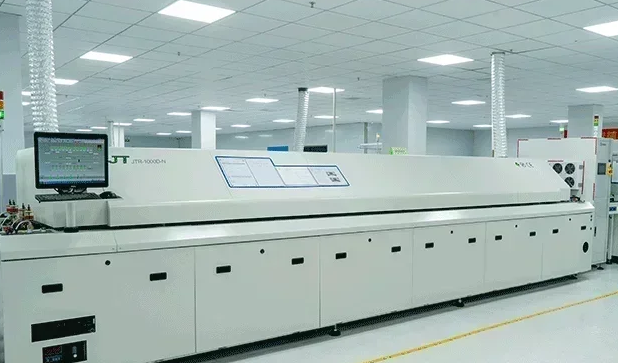

Reflow oven is one of the most critical equipment in SMT assembly lines, directly influencing solder joint quality, production efficiency and product stability. Selecting a proper reflow oven according to production demands is essential to reduce defective rates, lower operating costs and adapt to diverse electronic manufacturing requirements. Multiple key factors must be considered during equipment selection.
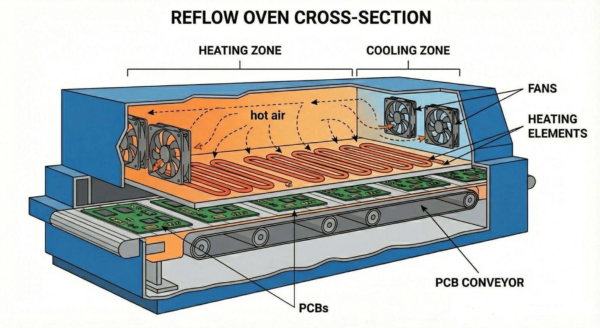
First of all, manufacturers should match the oven’s temperature performance with production processes. Temperature uniformity is the core indicator of a high-quality reflow oven. For conventional mass production of consumer electronics, an oven with stable temperature deviation within ±2°C is sufficient. For high-precision products such as automotive electronics, medical devices and industrial control boards, stricter temperature consistency is required to avoid cold solder, virtual soldering or component thermal damage. In addition, lead-free production needs equipment that can support higher peak temperatures, while low-temperature welding processes for sensitive components require ovens with precise low-temperature control functions.
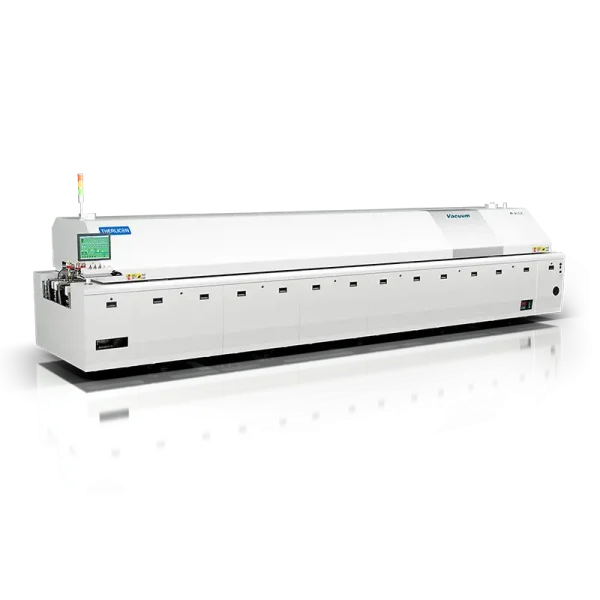
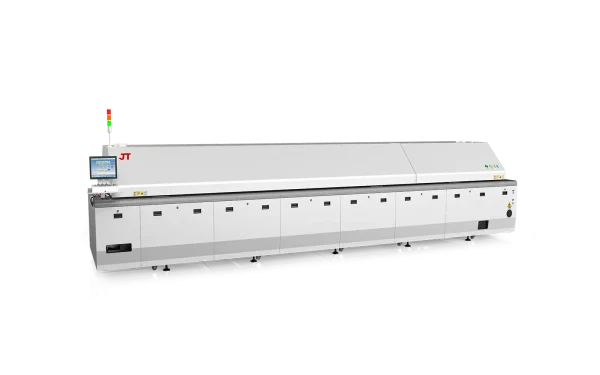
Secondly, production scale determines the configuration of the reflow oven. Small-batch and prototype workshops can choose compact six to eight temperature zone ovens, which occupy less space and save energy. For medium and large-scale factories with high daily output, multi-temperature zone ovens with ten or more zones are ideal. Longer heating tunnels provide more stable temperature curves, support faster conveyor speed, and greatly improve continuous production capacity. Meanwhile, mesh belt or chain conveyor types can be selected according to PCB size and thickness to prevent board deformation and dropping.
Thirdly, energy efficiency and maintenance performance cannot be ignored. Modern advanced reflow ovens adopt independent hot air circulation systems and heat insulation structures, which effectively reduce power consumption compared with traditional models. Equipment with intelligent temperature self-calibration, fault alarm and real-time data monitoring functions can greatly improve production controllability. In addition, users should prioritize models with easy-to-clean furnace chambers and detachable wind structures, which reduce daily maintenance time and extend equipment service life.
Finally, product application scenarios put forward special selection requirements. For high-end precision packaging such as BGA, QFN and fine-pitch components, nitrogen-filled reflow ovens are highly recommended. The low-oxygen nitrogen environment significantly enhances solder wettability, reduces oxidation and void rates, and improves the reliability of tiny solder joints. For ordinary household electronic products, standard air reflow ovens are enough to meet production needs and control investment costs.
In conclusion, the selection of a reflow oven should comprehensively consider process requirements, production capacity, energy consumption and product precision standards. A well-matched reflow oven can stabilize welding quality, optimize production efficiency and create long-term economic benefits for SMT manufacturing.