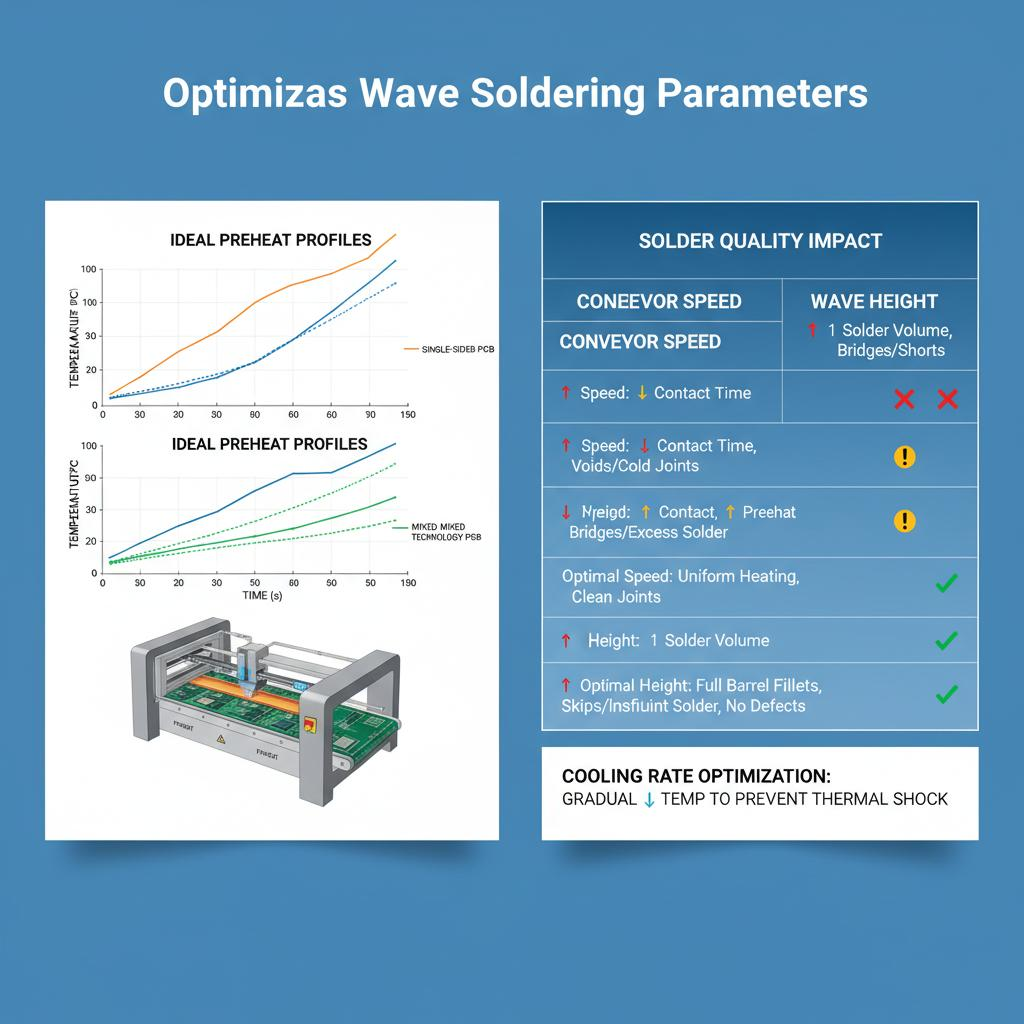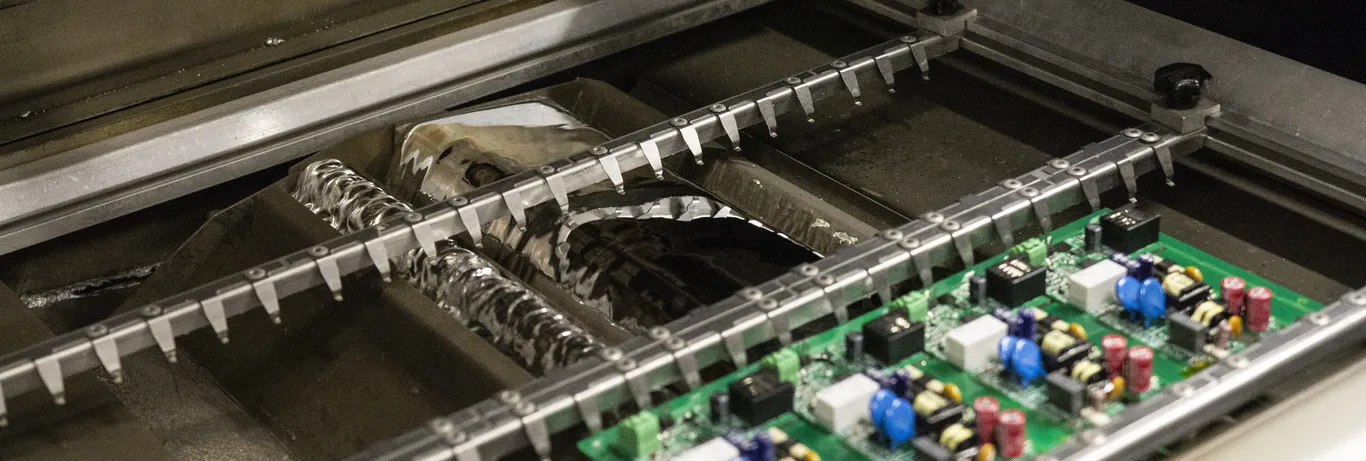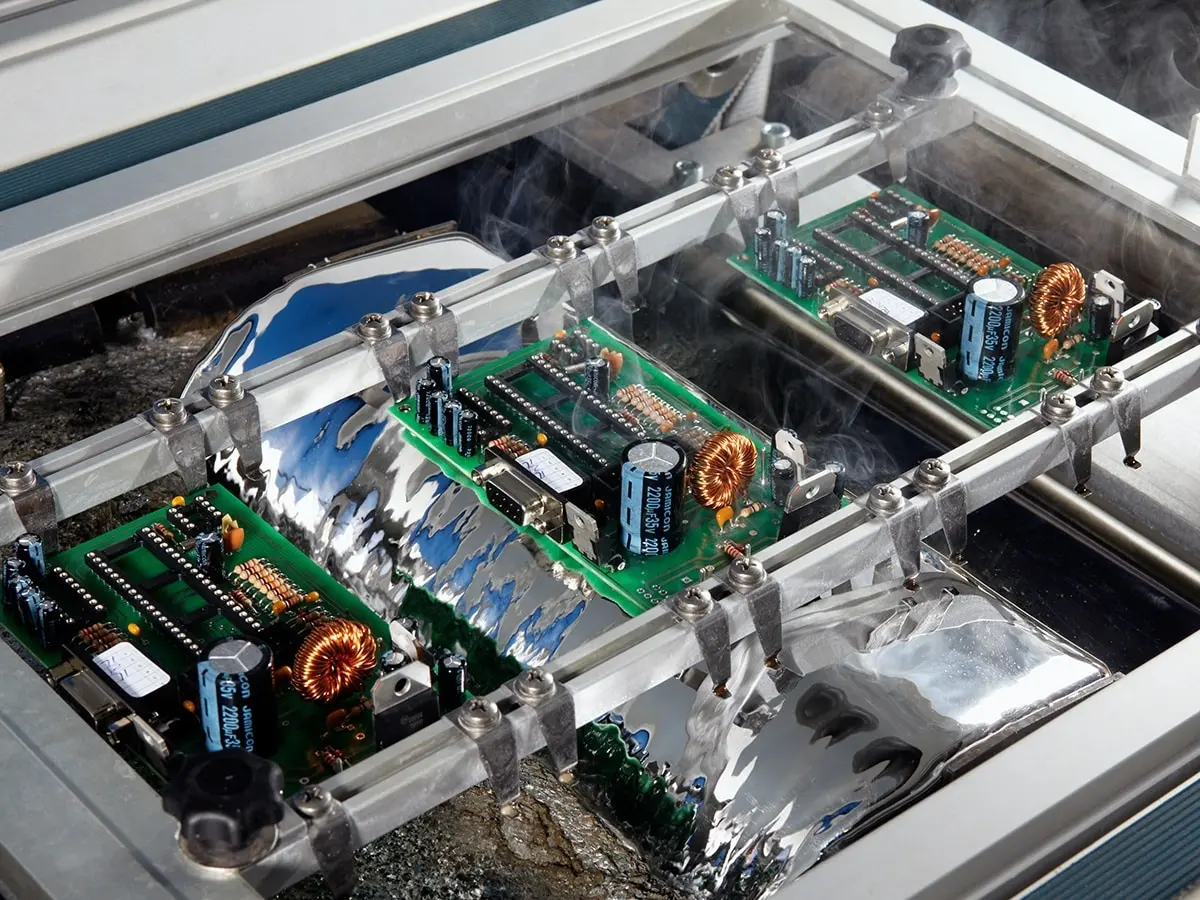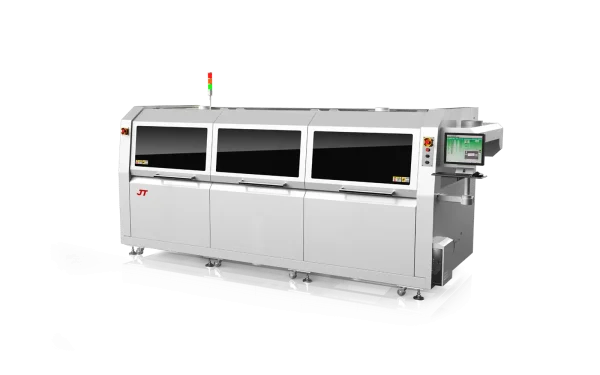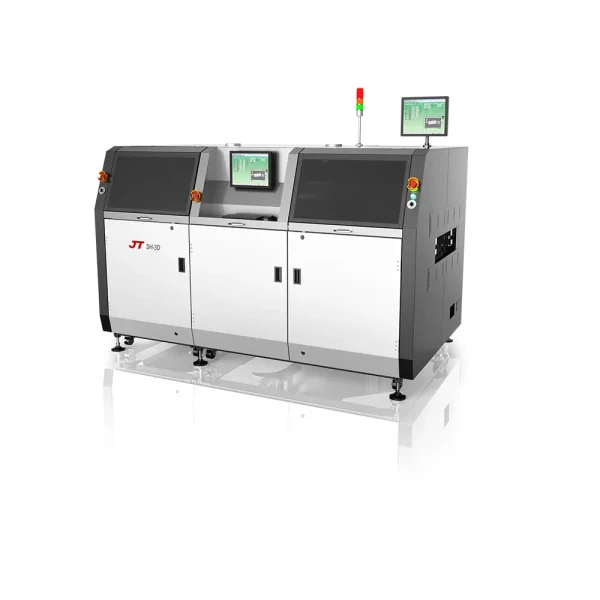

Reflow soldering quality is highly dependent on precise thermal control throughout the entire heating process. Thermal analysis refers to the professional detection, evaluation, and optimization of the reflow temperature profile, which covers preheating rate, soak stability, peak temperature, liquidus time, and cooling speed. As the core technical means of SMT process control, thermal analysis is undoubtedly the fundamental guarantee for stable and consistent solder joint quality in mass production.
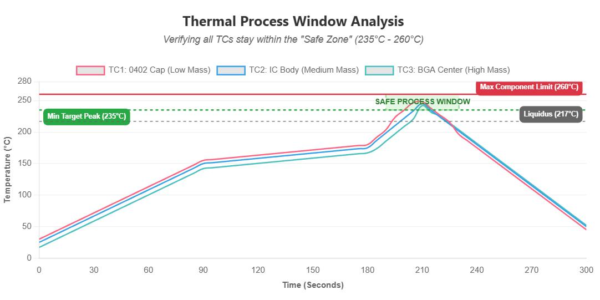
The primary value of thermal analysis lies in eliminating temperature imbalance on printed circuit boards. Modern PCBs carry components of varying sizes and heat capacities. Large chips, connectors, and thick copper areas absorb massive heat, while tiny resistors and capacitors heat up rapidly. Without accurate thermal analysis, different components will experience inconsistent heating effects. Local overheating causes component cracking and tin overflow, while insufficient temperature leads to cold solder joints, poor wetting, and virtual soldering. Through professional thermal profiling, engineers can calibrate oven parameters to achieve uniform heating across the entire board.
Moreover, thermal analysis ensures standardized flux activation and complete solder metallurgical reaction. Each type of solder paste has a matched temperature window. The soak zone must maintain a stable temperature to fully activate the flux, remove surface oxidation, and prepare for solder spreading. The reflow peak temperature and time above liquidus determine whether the solder alloy can melt completely and form a dense intermetallic compound layer. Too short liquidus time results in weak bonding strength, while excessive high-temperature duration causes oxidation, voids, and brittle solder joints. Thermal analysis accurately locks the optimal process window to balance welding effect and component safety.
In addition, thermal analysis is essential for improving production stability and reducing defective rates. In long-term mass production, reflow ovens suffer from aging heating wires, blocked wind channels, and drifting temperature accuracy. Regular thermal profiling can capture subtle temperature changes in real time, helping technicians adjust parameters timely and avoid batch defective products. For high-precision products such as automotive electronics and medical circuit boards, strict thermal analysis standards are indispensable to meet high reliability requirements.
Furthermore, reasonable thermal analysis can effectively save energy and extend equipment service life. Optimized temperature curves avoid excessive heating and unnecessary energy consumption, making the production process more environmentally friendly and economical.
In conclusion, thermal analysis runs through the whole reflow soldering process. It standardizes heating logic, eliminates process risks, and stabilizes welding consistency. In modern precision SMT manufacturing, scientific thermal analysis is not only a basic process requirement but also the most critical foundation for high-quality and high-yield production.