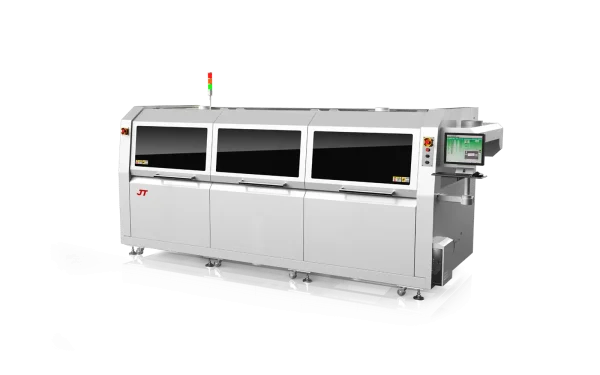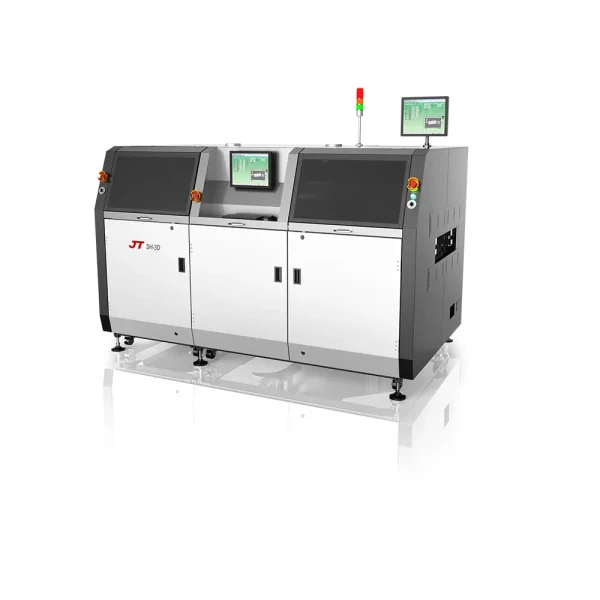

Through-hole (PTH) components are typically wave soldered onto PCBs. However, for assembling PCBs with PTH components, there is another option—through-hole reflow soldering.
Through-Hole Reflow Soldering Technology Overview
Through-hole reflow soldering, also known as pin reflow soldering, is a PCB assembly technique that uses pick-and-place and reflow SMT (Surface Mount Technology) processes to assemble through-hole (PTH) components.
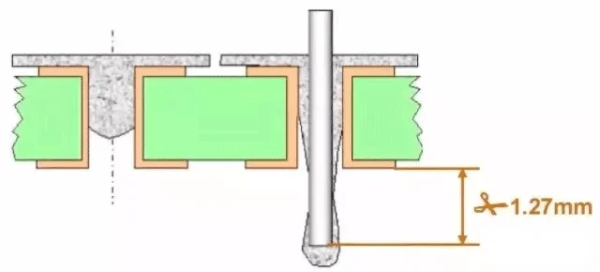
You can see the assembly process for through-hole reflow soldering or solder packaged components below:
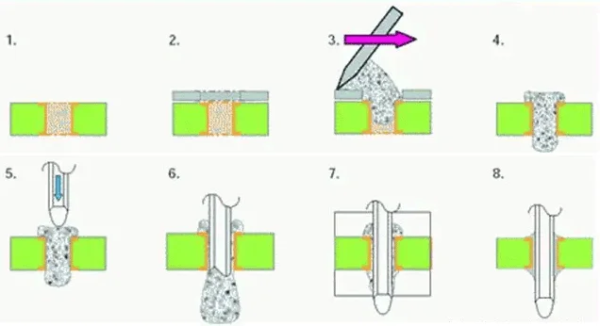
Step 1. Fabricate a PCB with plated through-holes.
Step 2. On the SMT production line, the PCB is transferred under the SMT stencil.
Steps 3-4. In a solder paste printer, a squeegee pushes solder paste through the SMT stencil openings to fill the PTH holes.
Steps 5-6: In a component placement machine, PTH components with SMDs are sucked in by nozzles and mounted onto the PCB. If surface mount technology (SMD) components cannot be mounted, technicians will manually pass the leads of the PTH components through holes in the PCB board after mounting the SMD components. Some solder paste will adhere to the PTH component leads, but most will remain inside the holes.
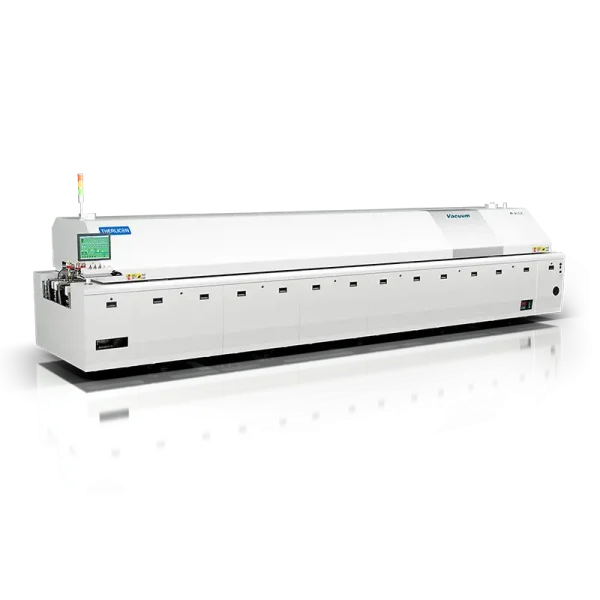
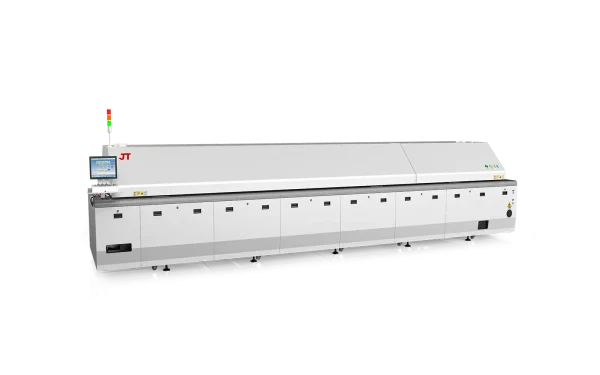
Steps 7-8. In the reflow oven, all SMD and through-hole components are firmly soldered to the PCB. The solder paste inside the holes and on the leads melts and forms IMC (intermetallic compound) with the copper walls and pads of the PCB.
Through-hole reflow soldering provides a reliable connection between the PTH components and the PCB board. It uses heat to melt the solder paste applied to the component leads.
Why do we use through-hole reflow soldering in electronic assemblies? The reason is cost reduction.
For PCB assembly projects, SMD (surface mount devices) account for approximately 80% of component costs, but SMT assembly only accounts for 60% of assembly costs; through-hole components account for approximately 20% of component costs, but PTH assembly accounts for 40% of assembly costs.
This is why project developers and electronics manufacturers consider through-hole reflow soldering (THS) because all PCB components can be mounted directly on the SMT production line.
By partnering with PCBONNLINE, a PCBA manufacturer that provides THS reflow soldering, you can save significant costs because all components can be soldered onto the PCB on the surface mount assembly (SMT) production line!
What should you consider when doing THS reflow soldering on a PCB?
While pin reflow soldering is inexpensive and efficient, it has several requirements. For THS reflow soldering PCBs, you need to consider the following:
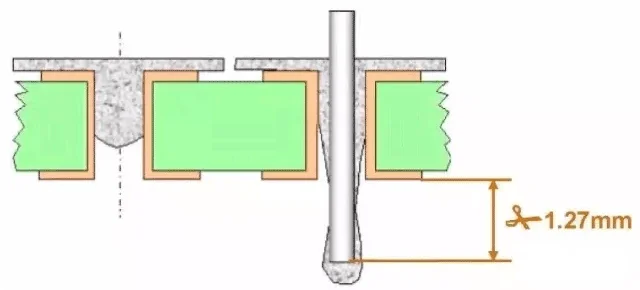
Solder paste fill rate in PCB holes – The solder paste fill rate in the PTH holes should be at least 75%.
Gap design – In THS reflow soldering PCB designs, the PCB pads should be designed to withstand the thermal and mechanical stresses during reflow soldering to ensure strong solder joints. Gap spacers should be designed between the PTH components and their pads to increase solder paste coverage. Additionally, spacers prevent solder balls from accumulating between the PCB and the PTH components. PTH Component Requirements – Leaded PTH components used for reflow soldering should be able to withstand the temperatures of lead-free reflow soldering (260°C, 10 seconds). Furthermore, since PTH components are automatically picked up and placed, tape and reel packaging is preferred.
Visor Diameter – The diameter of the PCB via should ensure that solder paste can flow into the via and guarantee component reliability. It depends on the maximum and effective diameter of the leads, as well as the shape of the PTH component lead tips.
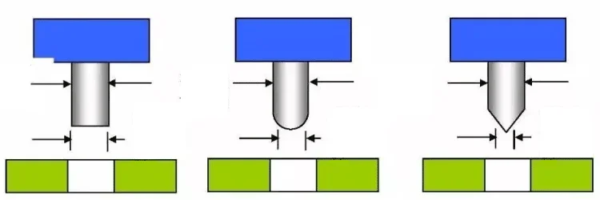
Flat Leads: Effective Lead Diameter = 100% of Maximum Lead Diameter
Round Leads: Effective Lead Diameter = 75% of Maximum Lead Diameter
Pointed Leads: Effective Lead Diameter = 50% of Maximum Lead Diameter
Reliability: For military and aerospace electronic products requiring a certain level of mechanical strength, through-hole reflow soldering is not recommended for PCB assembly because its reliability is lower than that of wave soldering.
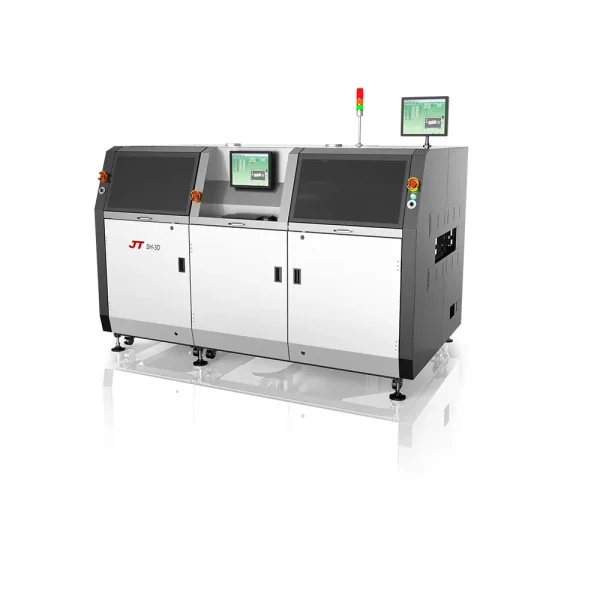
Conclusion: In many cases, especially for high-density PCBs, through-hole reflow soldering can replace wave soldering. JT is a one-stop PCBA manufacturing service provider, offering SMT assembly, through-hole reflow soldering, and wave soldering services. If you require PCBA manufacturing services or encounter any issues with through-hole reflow soldering PCBs, please feel free to contact us via our online chat window.