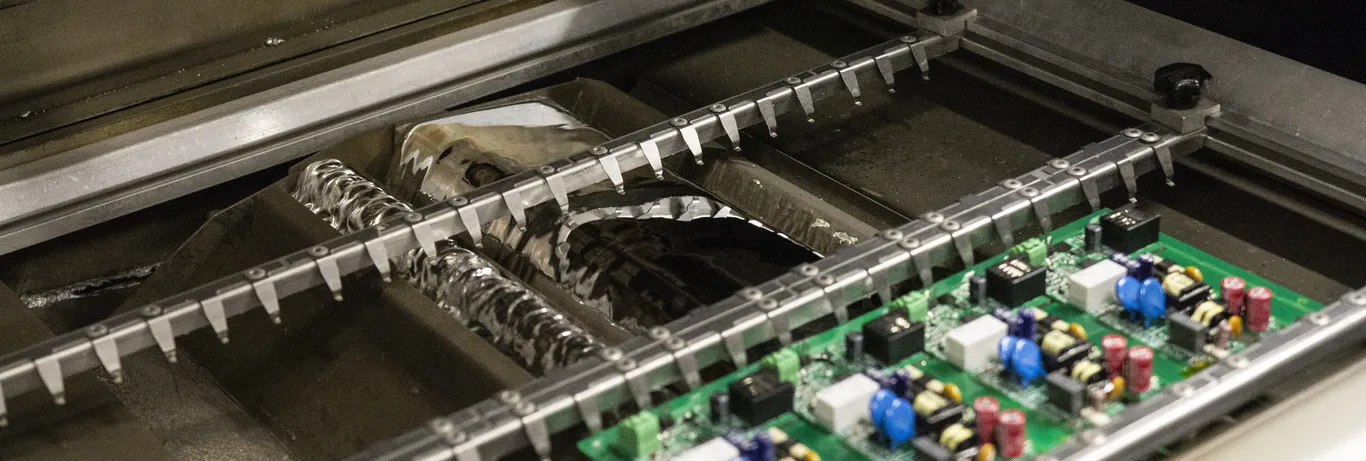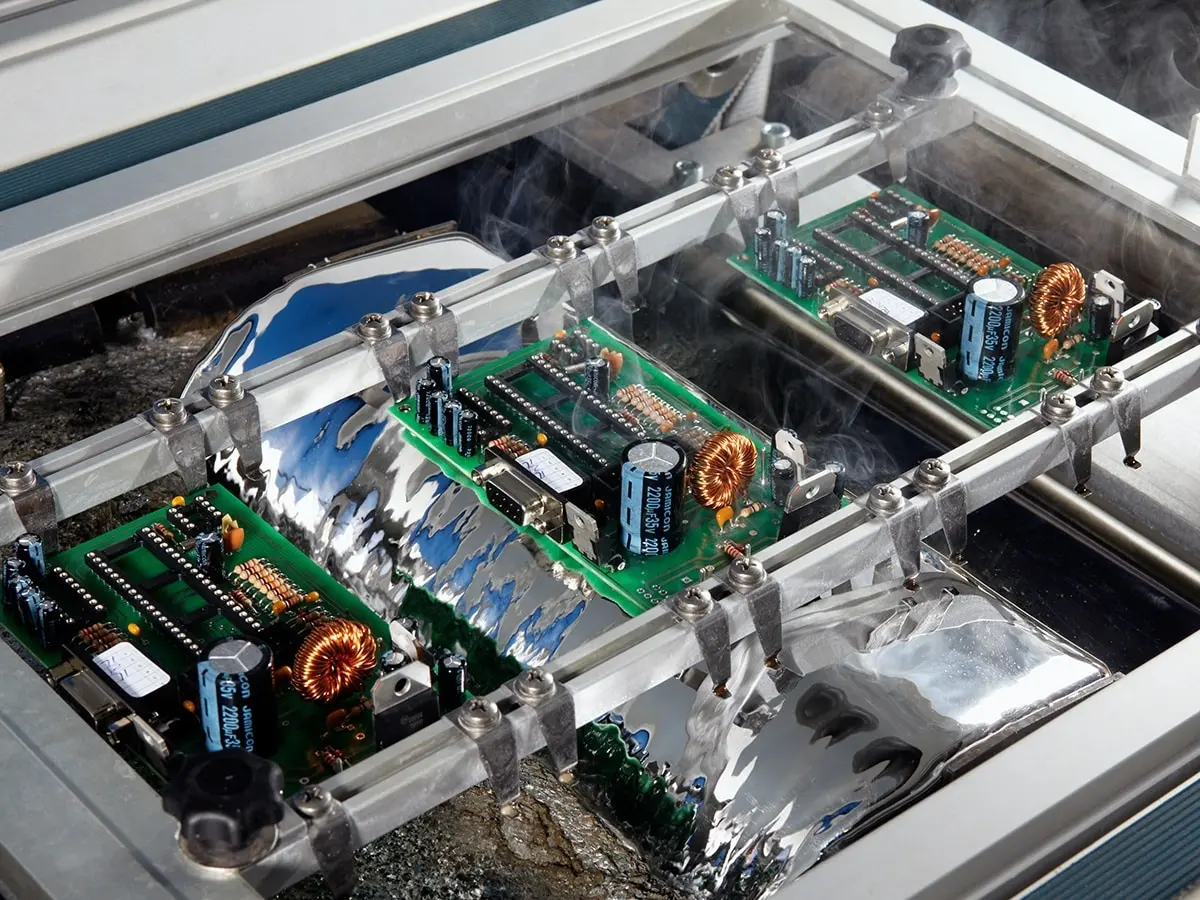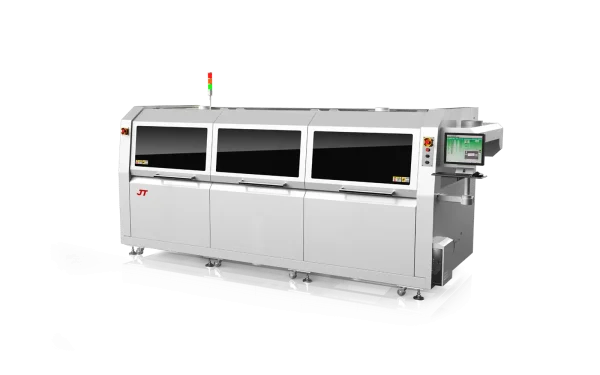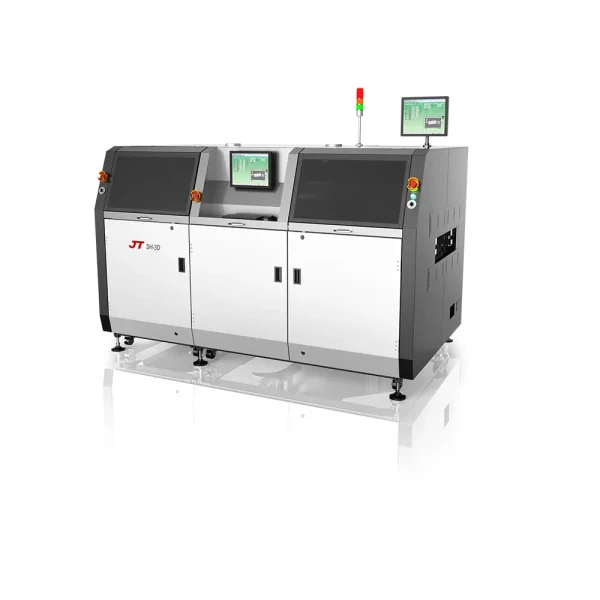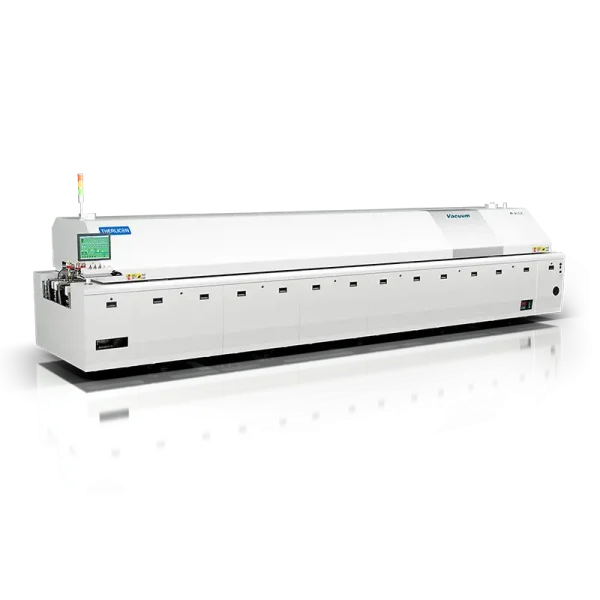

Benchtop reflow ovens are compact, tabletop thermal processing devices widely used for soldering surface mount devices (SMD) onto printed circuit boards (PCBs) in laboratories, small-scale production, educational institutions, and prototype development. Unlike large industrial reflow furnaces, benchtop models are designed for limited space and low-to-medium volume production. They play a critical role in modern electronics manufacturing, especially for small-batch assembly and product testing. This essay analyzes the key advantages and inherent limitations of benchtop reflow ovens to provide a comprehensive understanding of their practical applications.

One of the most significant advantages of benchtop reflow ovens is their compact size and space efficiency. They are specially designed to fit on standard worktables, making them ideal for small workshops, research labs, and electronic repair centers with limited floor area. Their lightweight structure also allows for flexible movement and placement according to production needs. This portability is a major benefit for users who do not have enough room for large industrial equipment.
In terms of cost, benchtop reflow ovens are economically affordable for small enterprises and individual researchers. The initial purchase cost, operating expenses, and maintenance fees are much lower than those of large-scale industrial reflow systems. They consume less electricity and do not require complex installation or dedicated infrastructure, which greatly reduces the overall operational cost. For small-batch production and prototype verification, they provide a cost-effective soldering solution without compromising basic process requirements.
Benchtop reflow ovens also feature easy operation and precise temperature control. Most models are equipped with user-friendly digital control panels and programmable temperature profiles, allowing users to set heating, soaking, reflow, and cooling stages according to different PCB and component requirements. The temperature uniformity in the heating chamber is well-controlled for small-area PCBs, ensuring stable and reliable soldering quality. In addition, they are easy to learn and operate, without requiring professional technical training, which improves work efficiency for beginners and experienced engineers alike.
Furthermore, these ovens support diversified application scenarios. They are suitable for soldering various types of PCBs, including rigid boards, flexible boards, and ceramic substrates, as well as tiny components such as 01005 chips, QFP, BGA, and LED modules. They are widely used in product development, sample testing, education and training, and small-batch customized production, filling the gap between manual soldering and large-scale industrial assembly.
Despite the above advantages, benchtop reflow ovens have obvious limitations. First, they have limited production capacity. Due to their small heating chamber, they can only process a small number of PCBs at one time, making them unsuitable for mass production. Their processing efficiency is far lower than that of conveyor-type industrial reflow ovens, which restricts their application in large-scale manufacturing plants.
Second, temperature uniformity and stability are relatively insufficient compared with industrial models. The temperature distribution in the chamber may be slightly uneven when processing larger or multi-layer PCBs, which may lead to problems such as cold joints, tombstoning, or component damage. High-precision products with strict thermal requirements may not achieve ideal soldering results on basic benchtop models.
In addition, benchtop reflow ovens lack advanced functional modules such as automatic conveying, nitrogen protection, and real-time temperature monitoring systems. Some high-value or oxidation-sensitive components require nitrogen reflow to ensure welding quality, which most ordinary benchtop ovens cannot support. Their scalability and compatibility with automated production lines are also very limited.
In conclusion, benchtop reflow ovens are highly practical and cost-effective tools for small-batch PCB soldering, prototype development, and electronic experiments. Their compact structure, low cost, and convenient operation make them irreplaceable in small-scale production and R&D environments. However, their limited output, relatively weak temperature control, and lack of advanced functions prevent them from being used in large-scale industrial manufacturing. With the development of electronics technology, upgraded benchtop reflow ovens with better performance are gradually emerging, but their core positioning as small-scale processing equipment will remain unchanged.