As modern electronic products evolve towards lighter weight, higher speed, and greater efficiency, every step of the manufacturing process follows the same principle, and printed circuit board (PCB) assembly is no exception. Soldering plays a crucial role in determining the success or failure of electronic products, as electrical connections depend on precise soldering. Compared to manual soldering, which is still favored by some electronics enthusiasts, automated soldering is widely adopted due to its high precision, high speed, and suitability for mass production and cost-effectiveness. As leading soldering technologies in the assembly field, wave soldering and reflow soldering have been widely used, contributing to high-quality assembly. However, they are often confused, and the differences between them often leave many people bewildered; even defining when to use which soldering technology is difficult.
Wave Soldering
• Definition
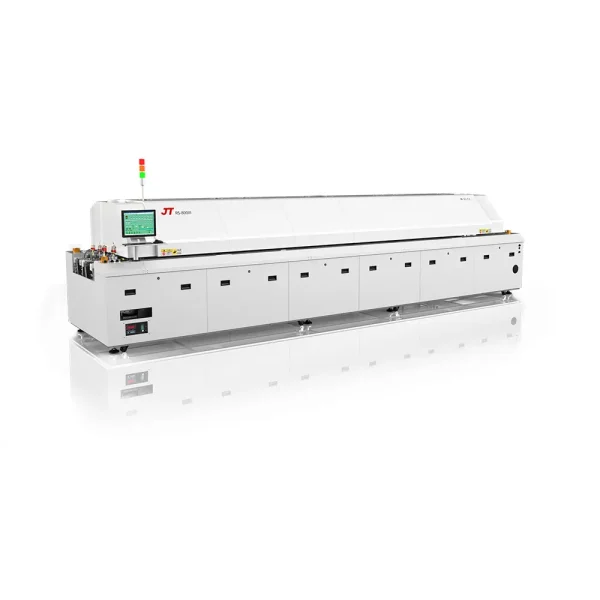
As the name suggests, wave soldering uses a liquid “wave” generated by an electric motor to solder PCB boards and components together. This liquid “wave” is actually molten solder. Wave soldering is performed on a wave soldering machine. The image below shows an example of a wave soldering machine.
• Soldering Process
The wave soldering process consists of four steps: flux application, preheating, wave soldering, and cooling.
Step 1: Flux Application. The cleanliness of the metal surface is fundamental to ensuring soldering performance, which in turn depends on the function of the flux. Flux plays a crucial role in the soldering process. Its main functions include:
1) Removing oxides from the metal surfaces of the circuit board and component leads;
2) Preventing secondary oxidation of the circuit board during heat treatment;
3) Reducing the surface tension of the solder paste;
4) Transferring heat.
Step 2: Preheating. The PCB board is placed on a tray along a conveyor-like chain and passes through a heating tunnel to preheat and activate the flux.
Step 3: Wave Soldering. As the temperature rises, the solder paste melts into waves. The circuit board moves over these waves, and the components are firmly soldered onto the board.
Step 4: Cooling. The temperature profile of wave soldering follows a specific temperature pattern. After reaching its peak during the wave soldering stage, the temperature begins to drop; this process is called the cooling zone. After cooling to room temperature, the circuit board can be successfully assembled.
When the circuit board is placed on a tray for wave soldering, time and temperature are closely related to the soldering performance. In terms of time and temperature, a professional wave soldering machine is crucial, while the professional skills and experience of PCB assembly personnel are difficult to acquire, as they depend on years of accumulation, application of the latest technologies, and focus on the business.
If the temperature is set too low, the flux cannot melt, thus failing to maintain its activity, reactivity, and ability to dissolve oxides and contaminants on the metal surface. Furthermore, if the temperature is not high enough, the flux and metal cannot form an alloy. Other factors, such as load speed and wave contact time, should also be considered and calculated.
Generally, even using the same wave soldering equipment, different assemblers will have varying production efficiencies due to differences in operating methods and understanding of the soldering machine. For example, engineers at PCPCart (a China-based full-service PCB assembly provider) use fixtures to hold THT components in place before wave soldering, ensuring all components are accurately mounted on the circuit board and significantly reducing soldering defects.
• Application Areas
Wave soldering can be used for Through-Hole Technology (THT), Dual In-line Package (DIP), and Surface Mount Technology (SMT) assembly, but it is more commonly used for THT.
Reflow Soldering
• Definition
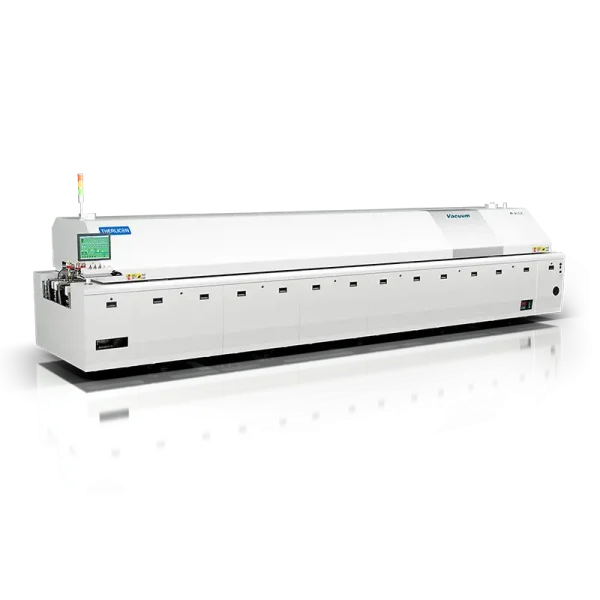
Reflow soldering is a process that permanently bonds components to a circuit board. First, solder paste is used to temporarily adhere the components to the pads, and then the solder paste is melted by hot air or other heat conduction methods. Therefore, DIY reflow soldering methods are easily found on YouTube; you can simply use a toaster or oven as a homemade reflow oven. Reflow soldering is typically performed in a reflow soldering machine (also called a reflow oven).
• Soldering Process
By definition, reflow soldering refers to temporarily fixing electronic components to the pads with solder paste before the actual soldering. This process mainly involves two steps. First, solder paste is precisely applied to each pad using a solder paste stencil. Then, a pick-and-place machine is used to place the components onto the pads. Only after these preparations are completely completed can the actual reflow soldering begin.
Step 1: Preheating Comparing a reflow oven to a toaster or oven makes the importance of preheating clear. Just as baking bread requires preheating, preheating in reflow soldering serves two purposes. First, preheating ensures the circuit board reaches the required temperature after assembly, perfectly matching the thermal profile. Second, preheating helps remove volatile solvents from the solder paste. Otherwise, solder quality may be compromised.
Step Two: Hot Dip. Similar to wave soldering, reflow soldering relies on the flux contained in the solder paste. Therefore, the temperature must rise sufficiently to activate the flux. Otherwise, the flux will not function effectively during soldering.
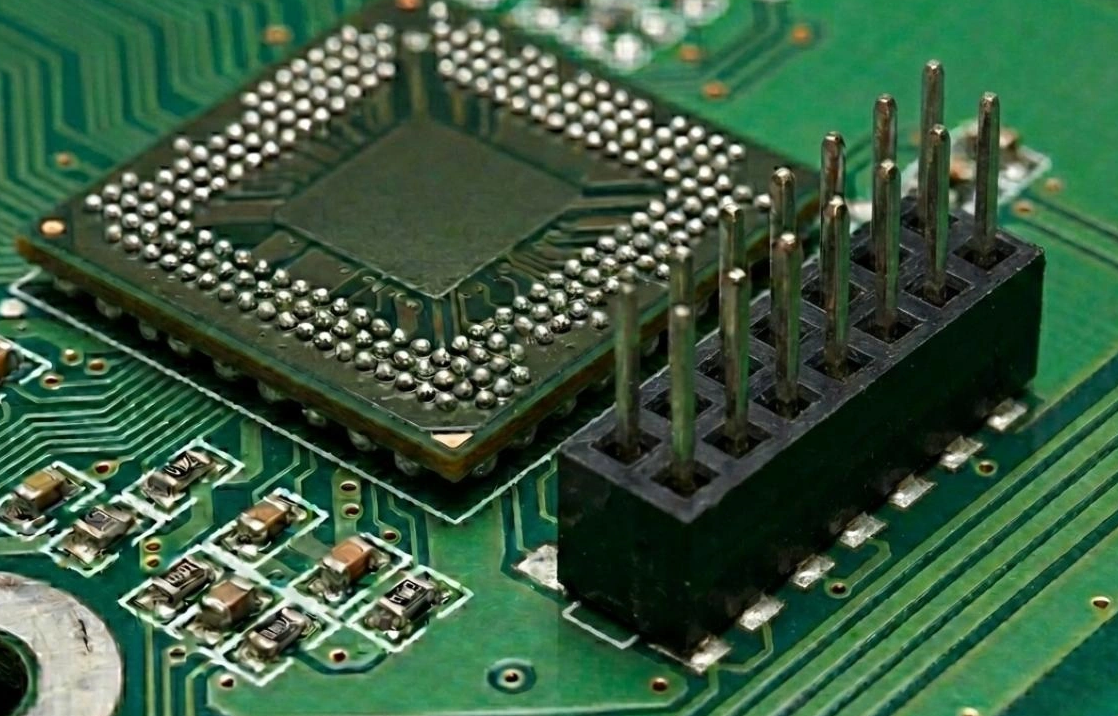
Step Three: Reflow Soldering. This stage is where the temperature reaches its peak during the entire soldering process. The peak temperature melts and reflows the solder paste. Temperature control plays a crucial role in reflow soldering. Too low a temperature will prevent the solder paste from reflowing sufficiently, while too high a temperature can damage SMT components or the circuit board. For example, BGA (Ball Grid Array) packages contain many solder balls that melt during reflow soldering. If the soldering temperature is not optimal, these solder balls may melt unevenly, leading to rework or damage in BGA soldering.
Step 4: Cooling. As shown in the diagram, the temperature drops rapidly after reaching its maximum. The cooling process solidifies the solder paste and permanently attaches the components to the pads on the circuit board.
• Application Areas
Reflow soldering can be used in both SMT and THT assemblies, but is primarily used in SMT. In THT assemblies, reflow soldering typically employs a PIP (Plate In-Place) process. First, solder paste is filled into the holes on the circuit board. Then, component leads are inserted into the holes, allowing some solder paste to overflow from the other side of the board. Finally, reflow soldering is performed to complete the soldering.
Wave Soldering vs. Reflow Soldering
The difference between wave soldering and reflow soldering processes is significant, as many people are unsure how to choose when preparing to purchase PCBA services from assemblers. As the Chinese proverb says: “A change in one aspect can lead to a complete outcome.” Changes in welding processes often trigger changes in all aspects of the entire assembly and manufacturing process, such as production efficiency, cost, time to market, and revenue. Based on the above introduction, you should now have a general idea in mind.
• Welding Process
The fundamental difference between wave soldering and reflow soldering lies in flux application: wave soldering includes this step, while reflow soldering does not. Flux promotes the soldering process and provides protection, such as eliminating oxides and reducing the surface tension of the materials being soldered. Flux only works after being activated, therefore, temperature and time must be strictly controlled. Since the flux in reflow soldering is included in the solder paste, the flux content must be properly proportioned and controlled.
• Welding Reliability
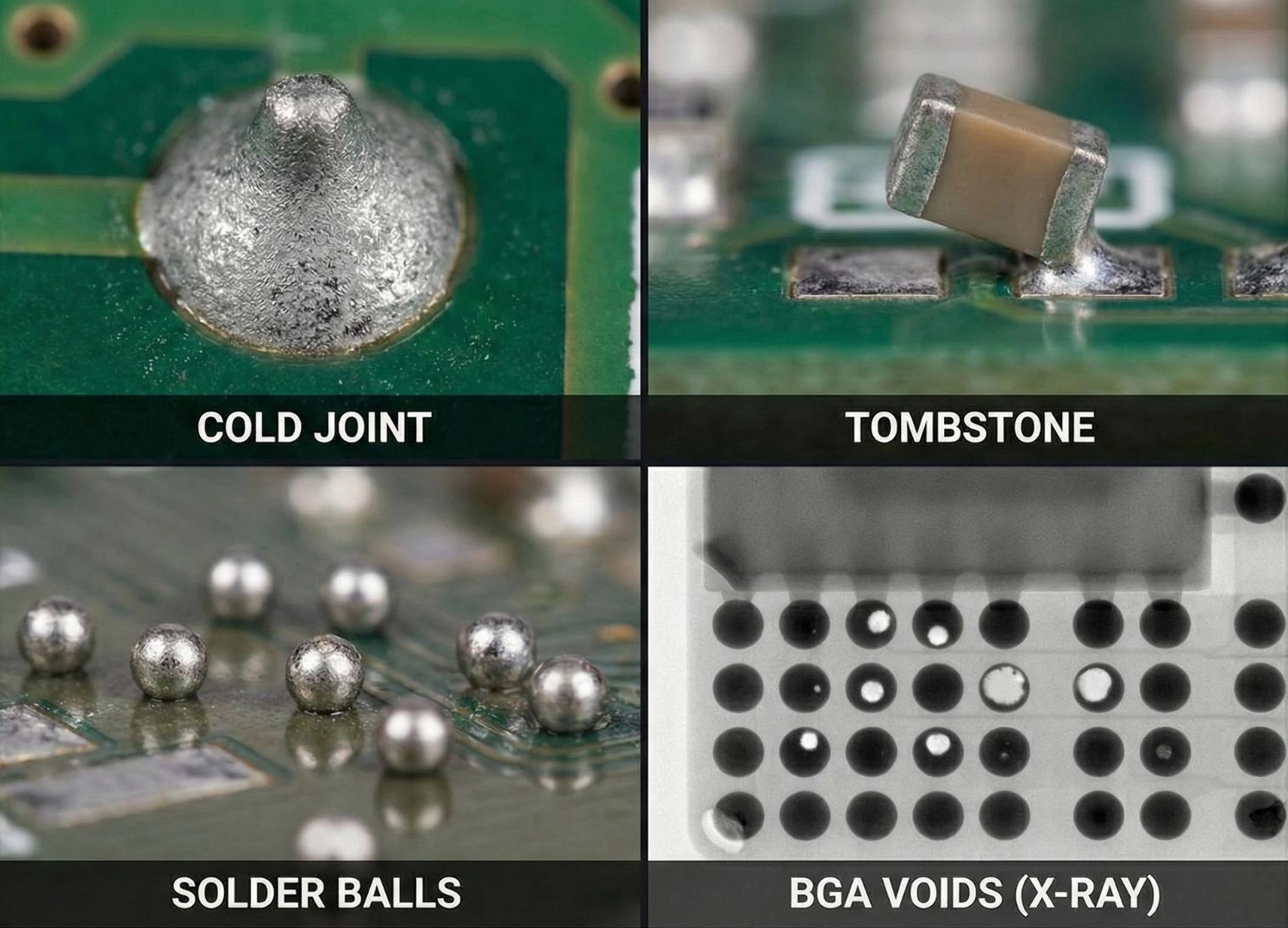
As long as a welding process exists, welding defects seem unavoidable. Even based on extensive experimental data, it is unscientific to simply point out which welding technique is more prone to welding defects than another. After all, every situation is different. Therefore, comparing the welding reliability of wave soldering and reflow soldering is meaningless.
While soldering defects are unavoidable, the probability of defects can be reduced by adhering to professional assembly and manufacturing standards and having a thorough understanding of the characteristics and performance of all equipment on the production line. Furthermore, engineers should possess the appropriate qualifications and receive regular training to keep pace with advancements in modern technology.
• Selection Criteria
Generally, reflow soldering is best suited for surface mount (SMT) assembly, while wave soldering is best suited for THT or DIP package assembly. However, circuit boards rarely contain only purely surface mount devices or through-hole components. For mixed assemblies, SMT assembly is typically performed first, followed by THT or DIP packages, because reflow soldering requires significantly higher temperatures than wave soldering. If the assembly order is reversed, the solid solder paste may remelt, causing defects in already soldered components or even detaching them from the circuit board.