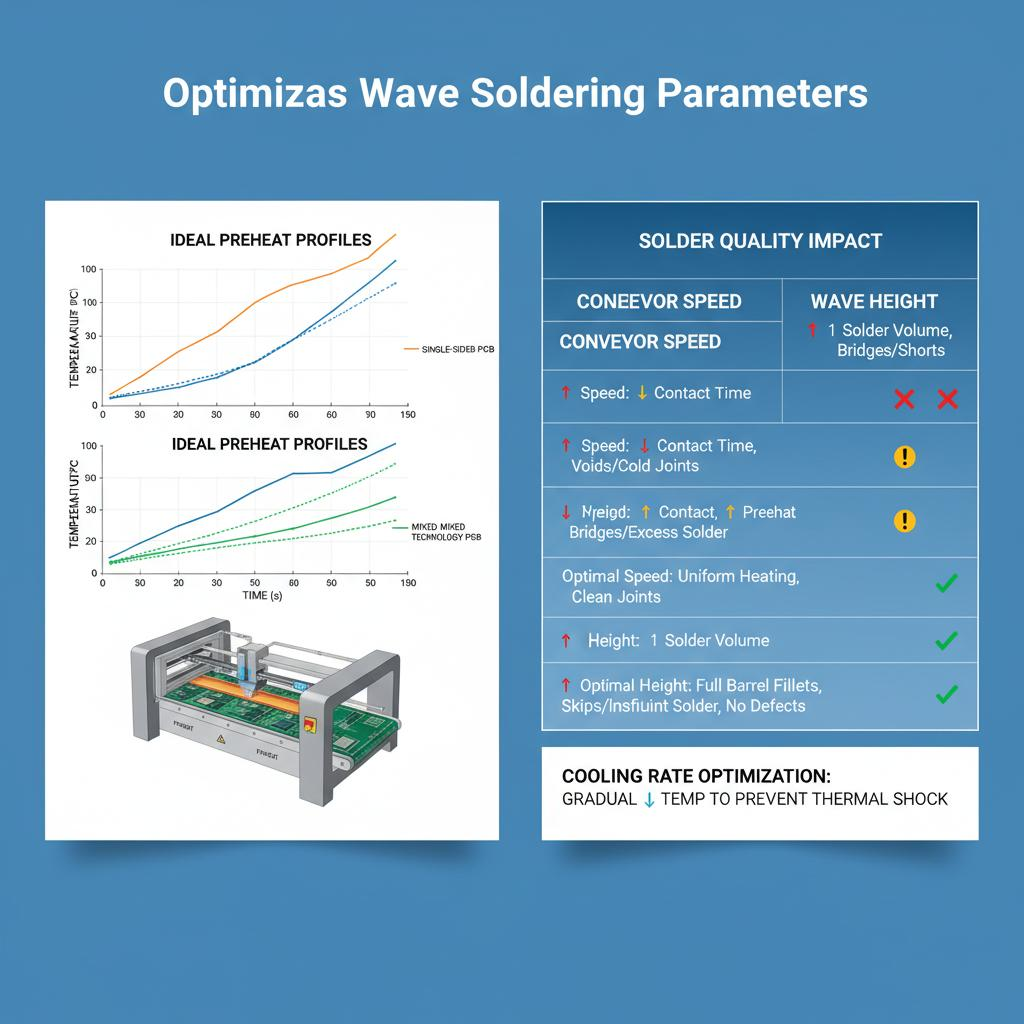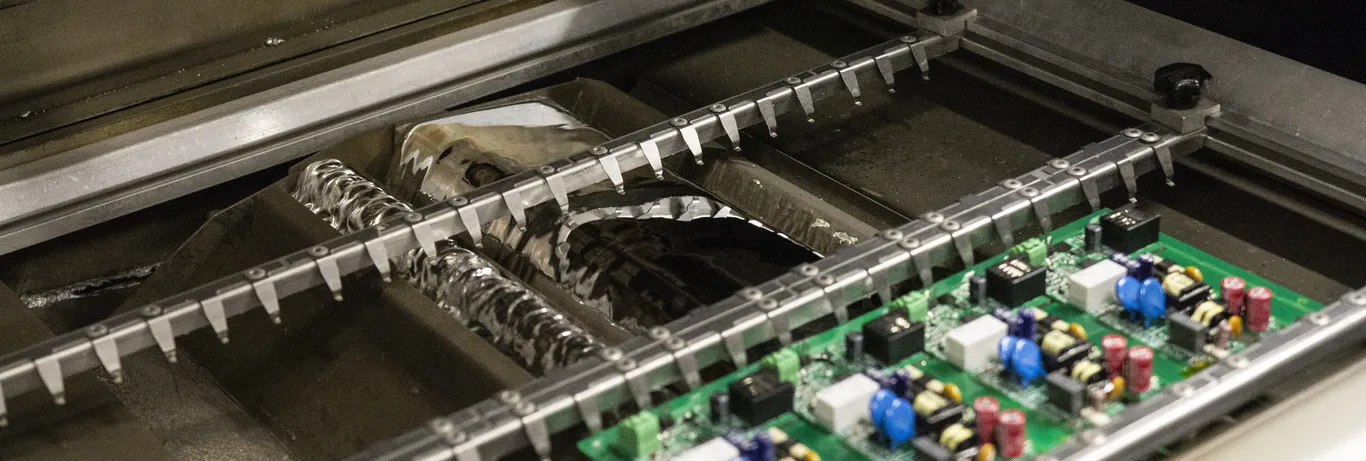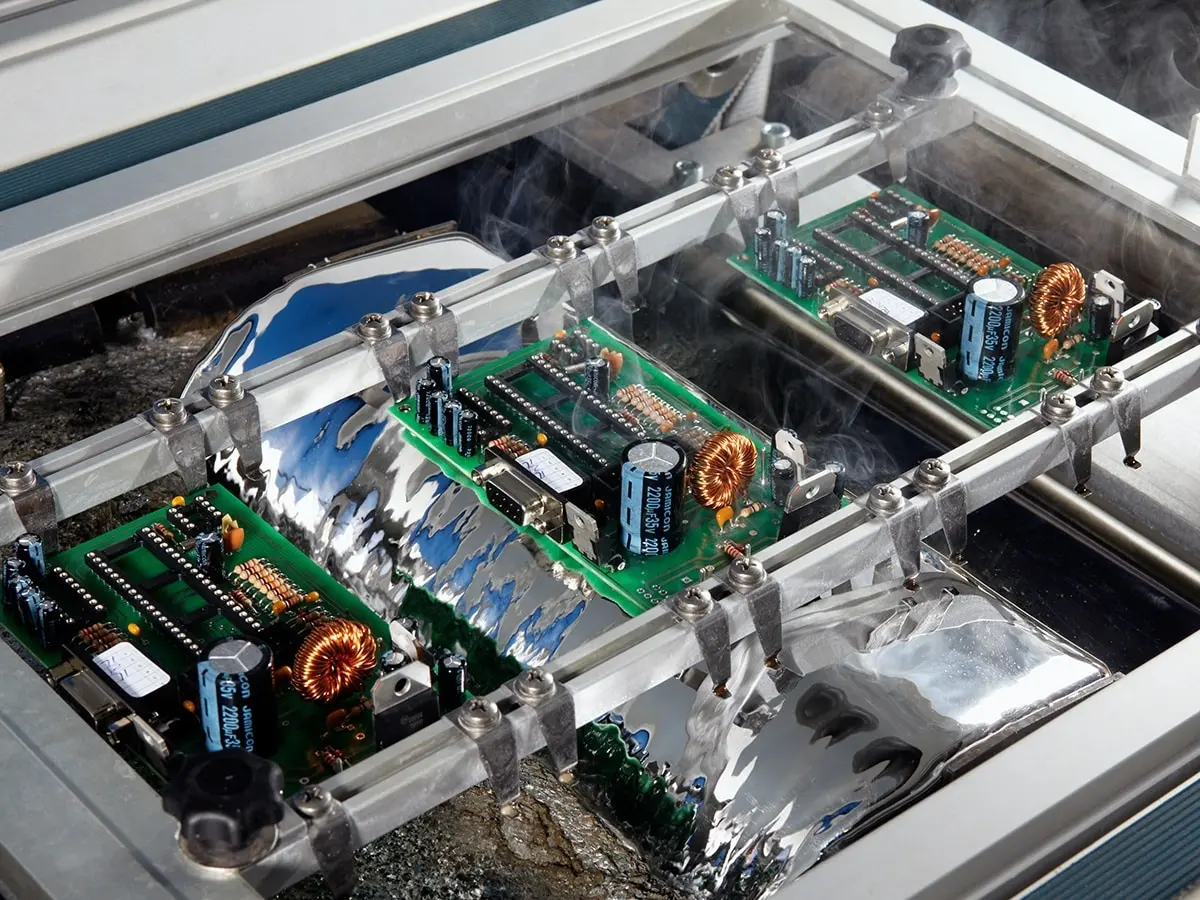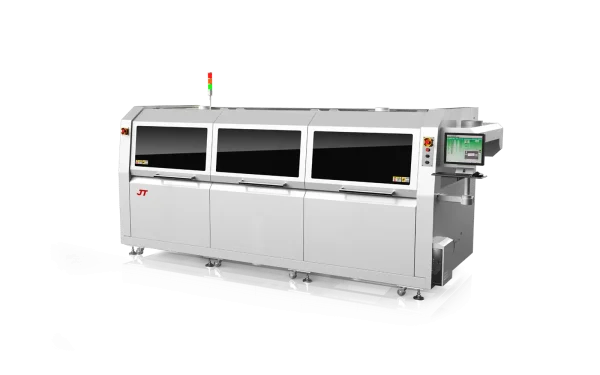

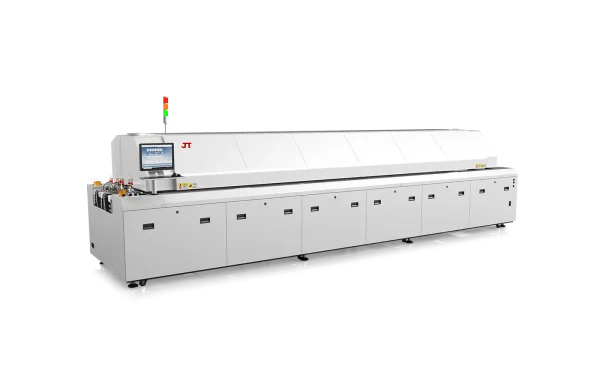
Against the backdrop of the electronics manufacturing industry’s accelerated transformation towards high precision, high efficiency, and sustainability, hot air reflow ovens, as core equipment in SMT (Surface Mount Technology), are undergoing profound changes in their technological architecture and functional positioning. From traditional temperature control to intelligent ecological integration, and from single soldering functions to full-process collaboration, their development trends can be summarized into three main directions: intelligent upgrading, green transformation, and flexible production, jointly propelling electronics manufacturing towards a new stage of integration between “intelligent manufacturing” and “green manufacturing.”
Intelligent Upgrading: From “Experience Control” to “Data-Driven”
Traditional hot air reflow ovens rely on manually setting temperature profiles, making soldering quality susceptible to the influence of operational experience. The new generation of equipment, through the integration of AI algorithms and Internet of Things (IoT) technology, achieves real-time perception and dynamic optimization of the soldering process. For example, soldering furnaces equipped with machine vision systems can automatically identify component types and pad spacing on PCBs, generating optimal temperature profiles based on historical data. Built-in sensor networks monitor furnace parameters such as temperature, airflow, and oxygen content in real time, rapidly adjusting process parameters through edge computing to improve soldering yield to over 99.95%. Furthermore, remote operation and maintenance and predictive maintenance are standard features, allowing equipment to autonomously diagnose faults and push maintenance plans, reducing downtime by over 30%.
Green Transformation: A Dual Breakthrough in Energy Saving and Environmentally Friendly Processes
With the advancement of global carbon neutrality goals, the energy consumption and emissions of hot air reflow soldering furnaces have received significant attention. The industry is achieving a green transformation through heat recovery technology, low-energy design, and lead-free soldering processes. For example, some companies use heat exchangers to recover waste heat from the furnace for preheating newly arrived PCBs, increasing energy efficiency by 40%; nitrogen protection systems reduce gas consumption through closed-loop control, while also reducing solder joint oxidation, eliminating the need for subsequent cleaning processes, and saving thousands of tons of water annually. Furthermore, addressing the high melting point and poor wettability of lead-free solders (such as Sn-Ag-Cu alloys), the equipment optimizes hot air circulation efficiency and cooling rate to ensure welding quality while reducing energy consumption, resulting in a reduction of over 20 tons of carbon emissions per line per year.
Flexible Production: An Efficiency Revolution for Small-Batch Customization and Multi-Product Switching
Faced with the demands of “small-batch, multi-product, and rapid iteration” in consumer electronics, new energy vehicles, and other fields, the flexibility of hot air reflow ovens has become a key competitive advantage. The new generation of equipment, through modular design and rapid changeover technology, supports seamless switching between different products on the same production line. For example, using an adjustable conveyor speed system and independent temperature zone control, the equipment can complete the welding switch from mobile phone motherboards to automotive BMS modules within 10 minutes; the dual-track parallel design doubles the capacity, meeting the needs of large-scale customization. In addition, the integration with additive manufacturing technologies such as 3D printing and laser welding further expands the application scenarios of the equipment, realizing a flexible production mode of “moldless manufacturing.”
Conclusion
From AI-powered intelligent control to low-carbon and environmentally friendly process innovations, from rapid response of flexible production lines to end-to-end ecological collaboration, the development trend of hot air reflow ovens is profoundly reshaping the competitive landscape of electronics manufacturing. In the future, with the penetration of cutting-edge technologies such as digital twins and hydrogen heating, hot air reflow ovens will be more deeply integrated into intelligent manufacturing systems, becoming a key node connecting the “digital world” and the “physical world,” injecting new momentum into the sustainable development of the global electronics industry.