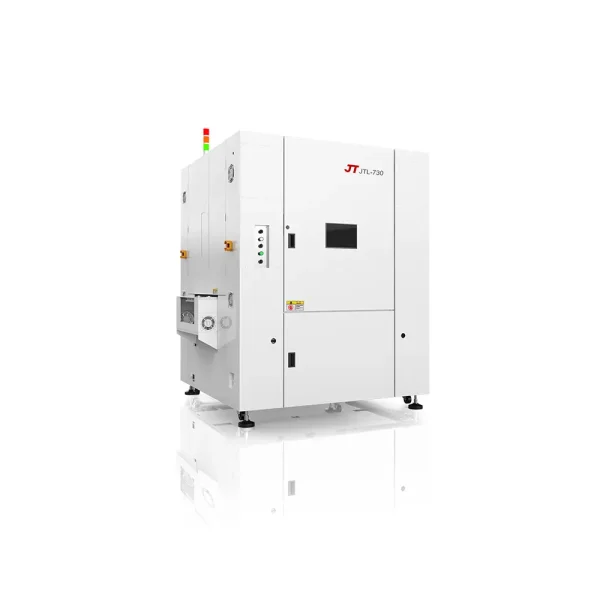

With the booming development of industries such as 5G communication, artificial intelligence, and new energy vehicles, the integration and performance requirements of electronic products continue to rise. As a core piece of equipment in surface mount technology (SMT), the hot air reflow oven, with its precise temperature control, efficient soldering capabilities, and wide material adaptability, has become crucial for ensuring reliable connections of electronic components, driving the leap of electronic manufacturing towards high precision, high efficiency, and intelligence.

I. Precise Temperature Control: The “Guardian” of Soldering Quality
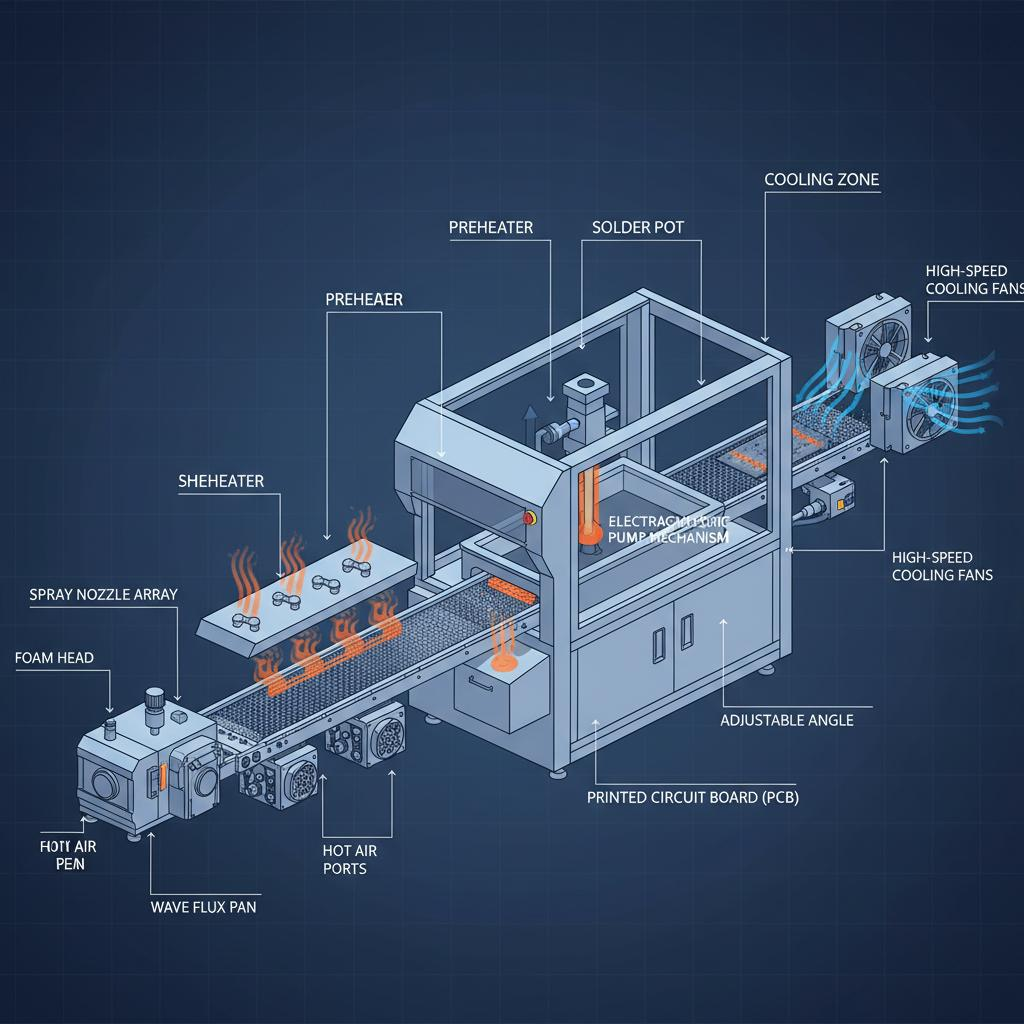
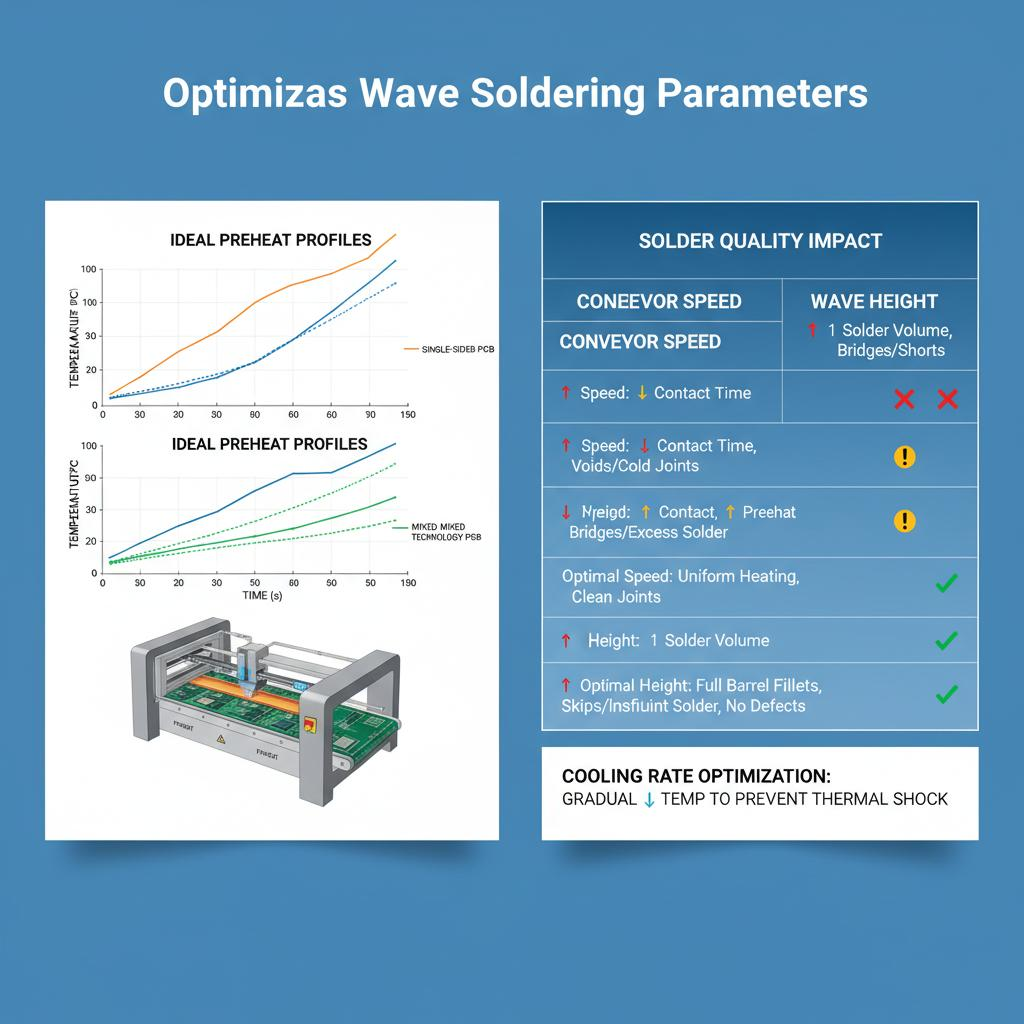
The core advantage of a hot air reflow oven lies in its multi-temperature zone independent control and hot air circulation system. The equipment is typically divided into four main modules: a preheating zone, a holding zone, a reflow zone, and a cooling zone. Each temperature zone can be independently set with a temperature profile (accuracy up to ±1℃), and high-speed hot air circulation ensures uniform temperature within the oven (temperature difference ≤2℃). This design effectively solves problems such as cold solder joints, bridging, and component cracking caused by uneven temperature in traditional soldering.
For example, when soldering high-density integrated circuits (such as BGA chips), hot air reflow ovens can precisely control the peak temperature (typically 235-245℃), ensuring the solder balls in the solder paste melt evenly and wet the pads, while preventing chip warping or PCB deformation due to localized overheating. Industry tests show that the soldering yield using hot air reflow ovens can reach over 99.9%, a 30% improvement over traditional wave soldering.
II. High-Efficiency Production: A Win-Win Situation of Speed and Flexibility
Hot air reflow ovens significantly improve production efficiency through automated conveyor and rapid heating technology. Their chain or mesh belt conveyor systems enable continuous PCB feeding, with soldering speeds reaching 0.5-1.5 meters per minute, easily exceeding 10,000 units per day for a single line. Simultaneously, the equipment supports rapid changeover; by adjusting the temperature profile and conveyor speed, soldering switching between different products can be completed within 10 minutes, meeting the flexible production needs of small batches and diverse product types.
Taking smartphone manufacturing as an example, a single motherboard requires the soldering of hundreds of tiny components such as 0402 and 0201 solder balls. Hot air reflow ovens can complete the entire soldering process within 3-5 minutes and support dual-track parallel operation, doubling production capacity. Furthermore, the equipment’s nitrogen protection system reduces solder joint oxidation, further shortening subsequent cleaning processes and reducing the overall production cycle by more than 20%.
III. Wide Adaptability: An “All-Round Performer” from Consumer Electronics to High-End Manufacturing
Another major advantage of hot air reflow ovens is their compatibility with diverse materials. Whether it’s conventional FR-4 epoxy glass cloth substrates, PTFE and ceramic substrates used in high-frequency communications, or flexible PCBs (FPCs), the equipment can adapt by adjusting the hot air velocity and temperature profile. For example, when soldering flexible screen driver chips, a low-velocity design prevents FPC deformation, while segmented cooling prevents stress concentration-induced circuit breakage.
Furthermore, hot air reflow ovens support lead-free soldering processes (such as Sn-Ag-Cu alloys), comply with RoHS environmental standards, and have become the preferred equipment in fields with extremely high reliability requirements, such as battery management systems (BMS) for new energy vehicles and medical electronics.
Conclusion: Thermal Control Empowers Intelligent Manufacturing for the Future
From precise soldering of micron-level components to efficiency breakthroughs in large-scale production, from traditional consumer electronics to high-end industrial manufacturing, hot air reflow ovens, with heat as the medium and control as the core, continuously drive the technological upgrade of electronic manufacturing. With the innovative applications of AI temperature control algorithms, modular design, and other technologies, future hot air reflow ovens will be more intelligent, more energy-efficient, and more adaptable to complex process requirements, providing solid support for the innovative development of the global electronics industry.