
Printed Circuit Boards (PCBs) are one of the most important technologies to emerge in the 20th century.
With the continuous advancement of global technology, their use has become increasingly rapid, permeating every aspect of our lives.
There is much to say about PCB design and other related aspects.
One of the many principles used in PCB manufacturing is the so-called “Surface Mount Technology.”
It is a key aspect of the modern PCB industry, almost ubiquitous, from the simplest circuits to more complex, highly integrated circuits.
There is much to discuss about Surface Mount Technology, from its basic design to more advanced aspects.
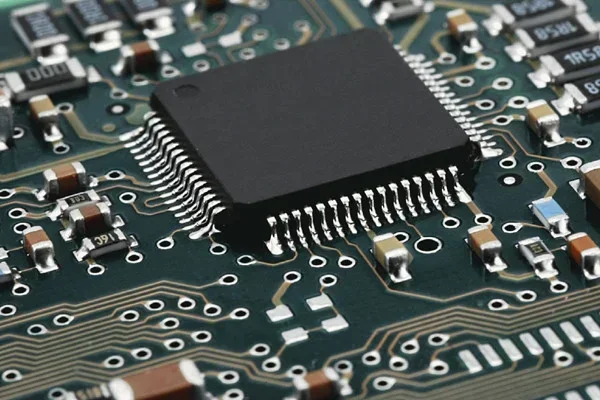
The following points will explain some of the key details.
1. Terminology and Basic Introduction
Due to the way chips are manufactured, the concept of Surface Mount Technology (SMT) is a core principle of Printed Circuit Board (PCB) design.
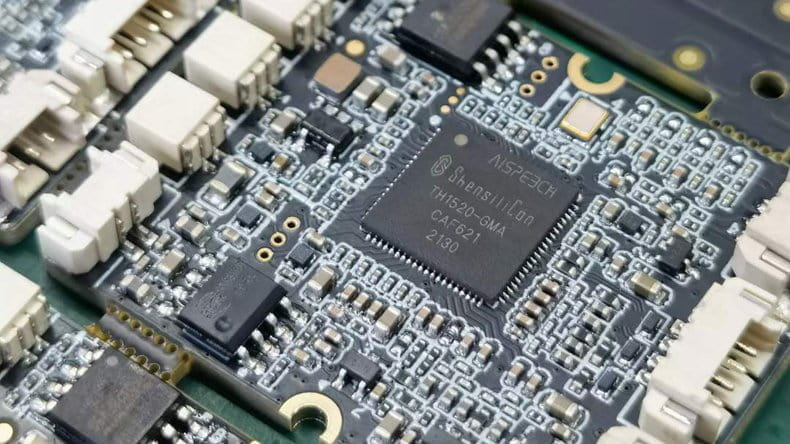
In this design, many components of the chip, from integrated circuits to resistors and other complex components, are essentially mounted on the surface of the circuit board, hence the name.
The manufacturing process generally works as follows: First, standard circuit boards are prepared according to industry standards. Then, the required components are “placed” in pre-designated locations on the circuit board, and then typically bonded together by soldering or other methods.
2. The Purpose of Surface Mount Technology
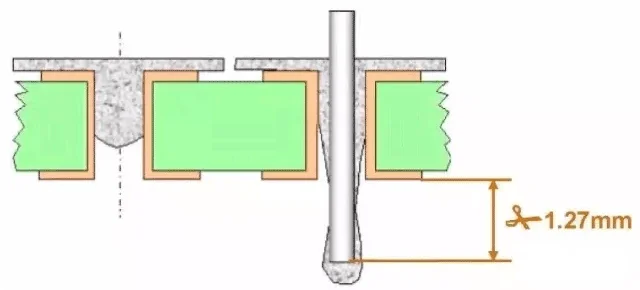
For a long time, the PCB industry used the “through-hole” structure principle, where component leads or other parts are passed through drilled holes in the circuit board to bond them to the board.
However, this proved to be a rather cumbersome and lengthy process, thus increasing the need for other technologies, one of which is surface mount technology.
Surface mount technology has proven particularly useful in automation, allowing for the mass production of PCBs compared to systems using “through-hole” designs.
3. General Understanding of the Principle
While there is much to discuss about how it works, it can be understood as an alternative to using wires.
Instead of transmitting signals or current with wires or leads, these components are simply “placed” on a surface using solder or other similar materials.
4. History of Surface Mount Technology
Surface mount technology is not a new technology, but its widespread application is a recent trend. The early designer of this technology was IBM, and it was then called “Planar Mount,” not “Surface Mount.”
Its origins can be traced back to the 1960s, a time when the technology sector was also undergoing other developments. However, at the same time, this technology was largely “shelved,” replaced by through-hole technology.
It began to revive in the 1980s and flourished about a decade ago with the widespread application of technology in all aspects of life. It’s worth noting that besides its widespread adoption in recent years, it has also changed significantly over time.
5. Advantages of Surface Mount Technology
Using surface mount technology in PCB design offers numerous advantages.
Some of the main advantages are listed below:
- Compared to through-hole design principles, this process is generally faster, meaning faster production speeds. This saves time and costs for both manufacturers and customers. Conversely, these cost savings benefit customers, enabling them to purchase products at lower prices.
- While this technology is called “surface mount technology” and is touted as an alternative to drilling into circuit boards, it’s not always completely drill-free, although this is common. In many cases, the actual number of holes required is less than with traditional methods.
- In terms of the components used, surface mount technology components are often cheaper than those using through-hole technology.
- Another significant advantage of surface mount technology is that it allows components to be placed on both sides of the circuit board, not just one. This makes it possible to manufacture more integrated chips that are faster, more powerful, and occupy the same or even smaller space as before.
- Surface mount technology components are typically smaller, allowing for higher component density on the circuit board.
- This technology can improve structural integrity, especially under harsh conditions, such as environmental stresses associated with vibration and shock.
6. Disadvantages of Surface Mount Technology
While surface mount technology has many advantages, it also has some disadvantages that need to be considered.
Some key drawbacks of this technology include:
- This technology is not suitable for all components. Instead, some components, such as larger or high-power components, must use through-hole structures to function properly on the PCB.
- Many components used in surface mount technology are very small, making PCB repair extremely difficult.
- Components requiring frequent connection and disconnection are not suitable for surface mount technology.
7. General steps of surface mount:
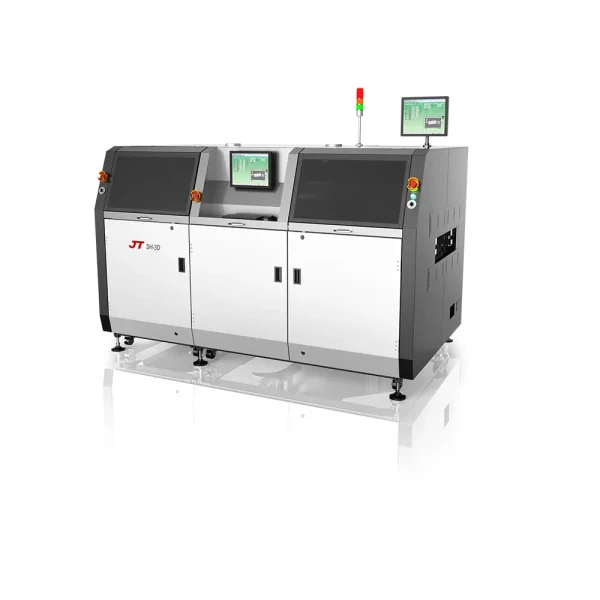
Apply solder paste
Place components
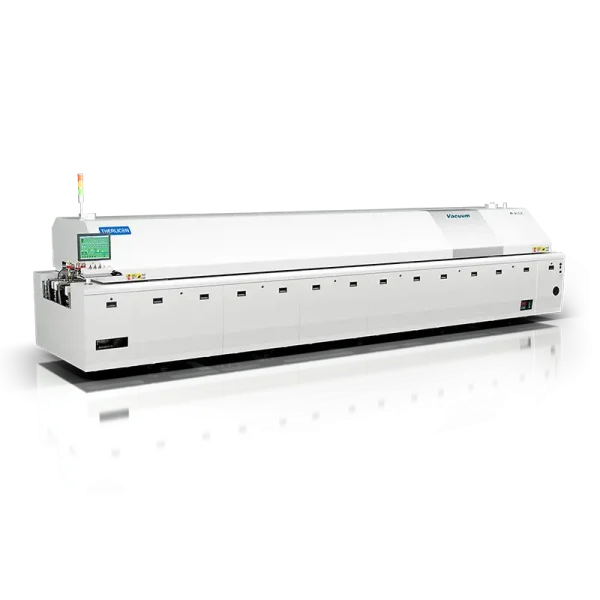
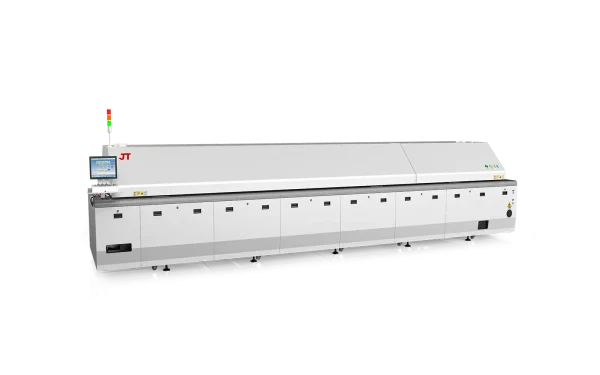
Reflow soldering
Clean assembly
Apply adhesive
Cure adhesive
Clean assembly
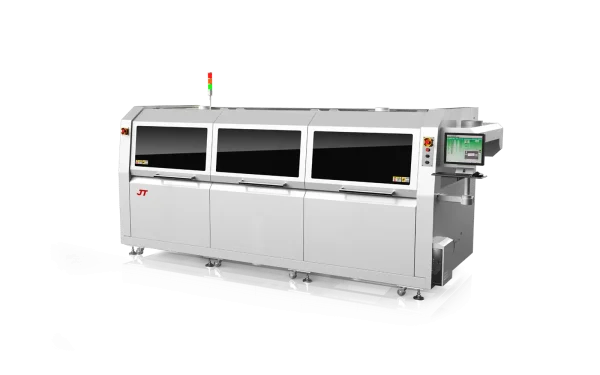
Wave soldering
Test components
A printed circuit board (PCB) typically requires multiple component placement and cleaning steps to complete. There are also other unique custom surface mount components, such as surface mount motors, surface mount transformers, and surface mount actuators.
These components cannot be strictly classified as SMT components because their coils are printed on the PCB, while other key components, such as ferrite cores and metal caps, are soldered to the PCB using surface soldering or through-hole soldering techniques, depending on the required mechanical strength. There are also other unique custom surface mount components, such as surface mount motors, surface mount transformers, and surface mount actuators.
The Driving Forces of SMT: The development of surface mount technology has benefited from advancements in memory and microprocessor technology. Each new generation of memory modules and CPUs spurs new surface mount technologies with higher densities and more compact structures. These chips utilize plastic or ceramic packages with enhanced thermal and electrical performance, capable of handling hundreds of watts of power (the Nvidia 3080 chip consumes approximately 300 watts). The development of surface mount technology is also driven by factors such as increasing operating frequencies, power consumption, and pin counts. Another key driving factor is practicality.
Modern electronic products have such high packaging densities that no through-hole components are used on the printed circuit boards of mobile devices. Today, the mobile communications industry relies entirely on SMT technology.
In conclusion, there is much more to say about the applications of surface mount technology, far beyond what has been mentioned above.
The above is merely a general introduction and understanding of this new manufacturing principle that is gradually being adopted in the PCB industry.