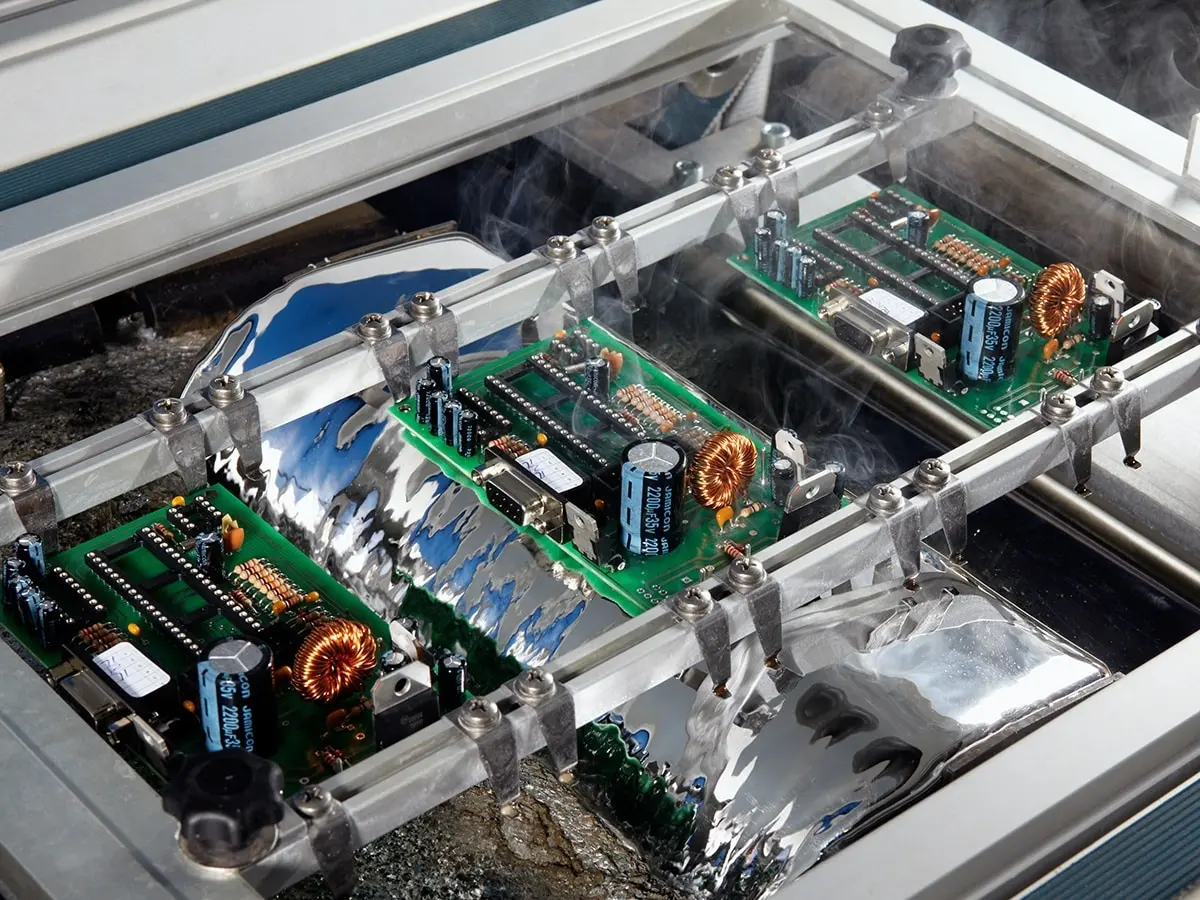

When using reflow soldering technology, chip components are subject to rapid heating, which can cause tombstoning. Therefore, preventing component tombstoning is crucial during reflow soldering.
Generally speaking, to effectively prevent component tombstoning, it’s best to choose solder paste with strong adhesion, and ensure both solder printing accuracy and component placement precision are optimized.

The exterior of the component requires good wettability and stability. Recommendations: Keep the temperature below 40°C and the humidity below 70% RH. The shelf life of incoming components should not exceed six months.
Reflow soldering temperature management settings are also a factor in component warping. The general goal is uniform heating, especially before the solder fillets are formed at the component’s ends. Heating should be balanced and free of fluctuations.
A smaller solder pad width and size can be used to reduce the stress on the component ends caused by melting solder. Solder print thickness can also be appropriately reduced.
SMT chip components can warp when subjected to rapid heating. This is because the sudden heating creates a temperature difference between the two ends of the component. The solder on the terminal side fully melts, achieving good wetting, while the solder on the other side is not fully melted, resulting in poor wetting and promoting component warping. Therefore, reflow soldering should be timed to ensure a balanced temperature distribution across the horizontal direction and avoid the occurrence of sudden heating.