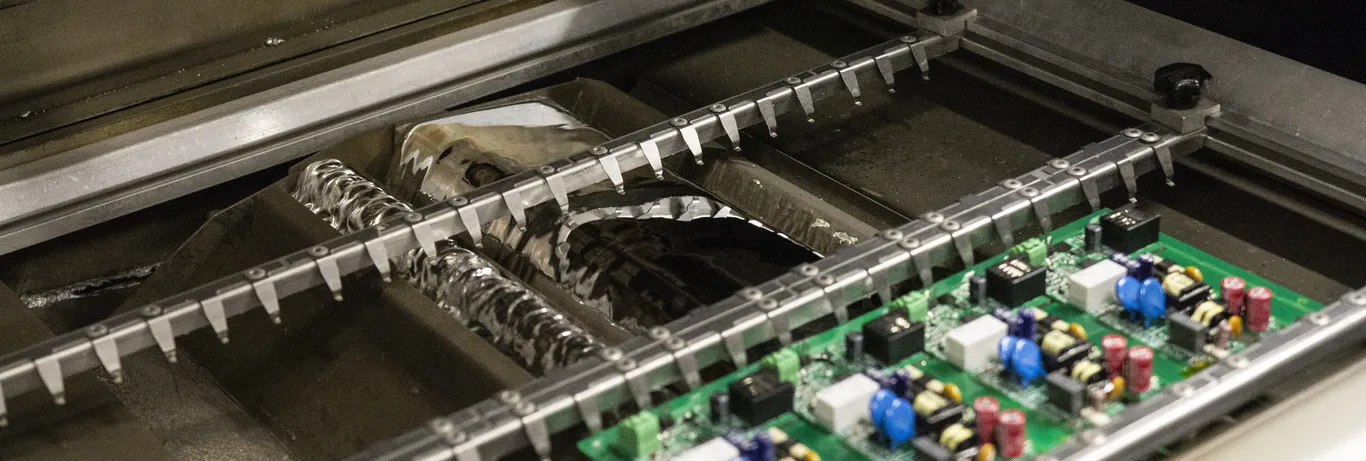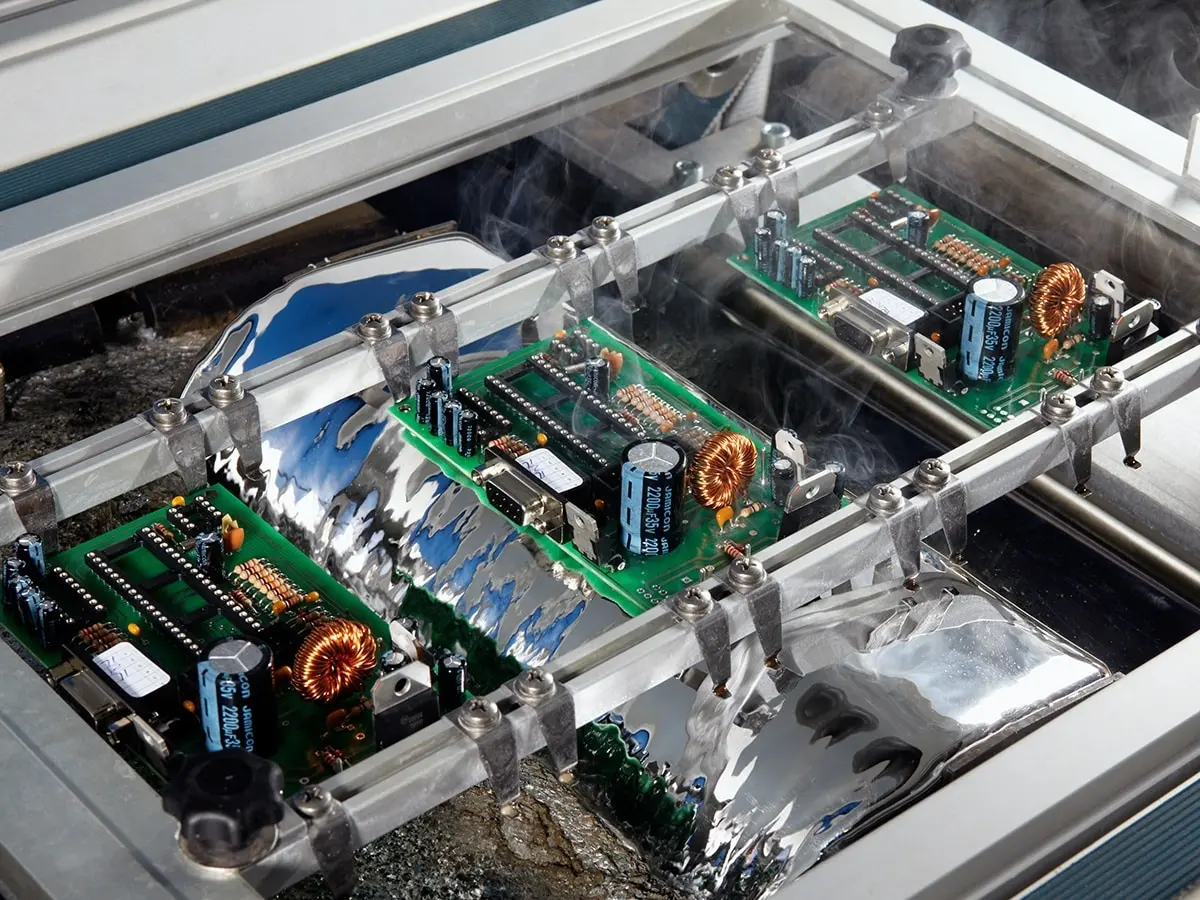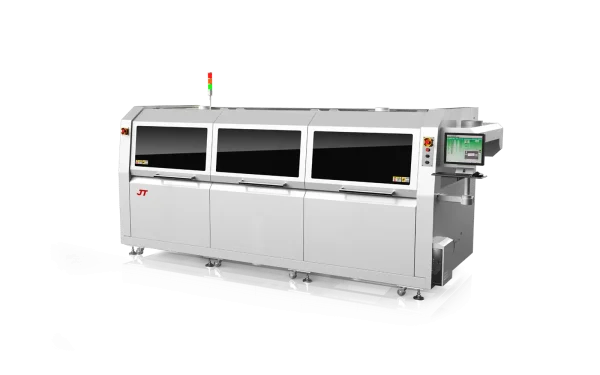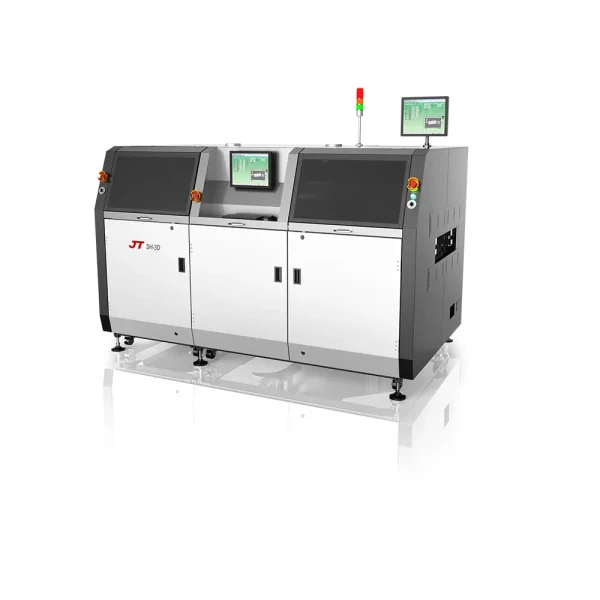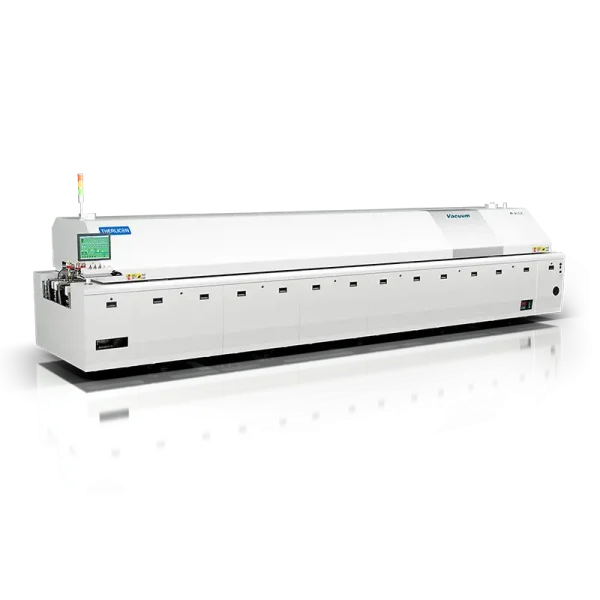

Reflow soldering is currently the most important soldering process in surface mount technology (SMT). It has been widely used in many industries, including mobile phones, computers, automotive electronics, control circuits, communications, and LED lighting. As more and more electronic components transition from through-hole to surface mount, reflow soldering has largely replaced wave soldering, a clear trend in the soldering industry.
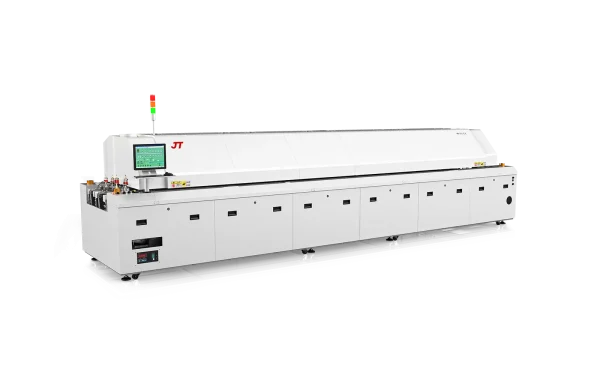
So, what role does reflow soldering equipment play in the increasingly mature lead-free SMT process? Let’s examine this from the perspective of an entire SMT surface mount line:
An SMT surface mount line generally consists of three components: a stencil solder paste printer, a placement machine, and a reflow oven. For placement machines, lead-free soldering does not impose new requirements compared to lead-based soldering. For screen printers, slight differences in the physical properties of lead-free and lead-based solder pastes necessitate some improvements, but this does not represent a fundamental change. The primary challenge and pressure of lead-free soldering lies precisely in the reflow oven.
The melting point of lead-based solder paste (Sn63Pb37) is 183°C. To form a good solder joint, a 0.5-3.5µm thick intermetallic compound must form during soldering. The intermetallic compound formation temperature is 10-15°C above the melting point, which is 195-200°C for lead-based soldering. The maximum temperature tolerance of electronic components on circuit boards is generally 240°C. Therefore, the ideal soldering process window for lead-based soldering is 195-240°C.
Lead-free soldering introduces significant changes to the soldering process due to the change in the melting point of the lead-free solder. Currently, the most commonly used lead-free solder is Sn96Ag0.5Cu3.5, with a melting point of 217-221°C. A good lead-free soldering process must also form an intermetallic compound with a thickness of 0.5-3.5µm. The formation temperature of the intermetallic compound is also 10-15°C above the melting point, which is 230-235°C for lead-free soldering. Since the maximum temperature tolerance of electronic components for lead-free soldering does not change, the ideal soldering process window for lead-free soldering is 230-245°C.
This significant reduction in the process window poses a significant challenge to ensuring soldering quality and places higher demands on the stability and reliability of lead-free wave soldering equipment. Due to the inherent lateral temperature differences in the equipment itself, and the temperature differences generated during the heating process due to the varying heat capacities of electronic components, the adjustable soldering temperature process window in lead-free reflow soldering becomes very narrow. This is the real difficulty of lead-free reflow soldering.