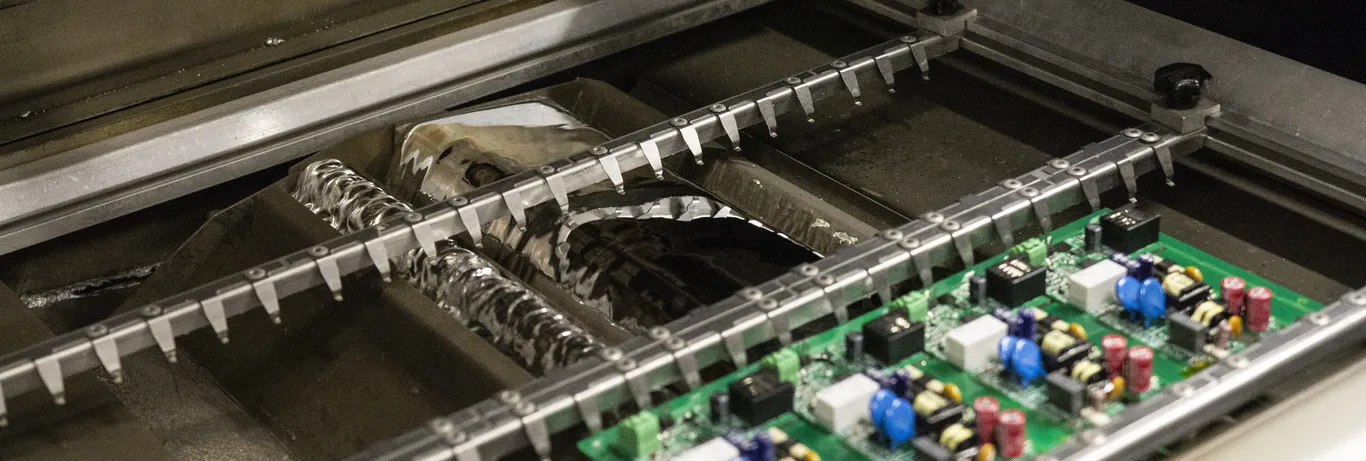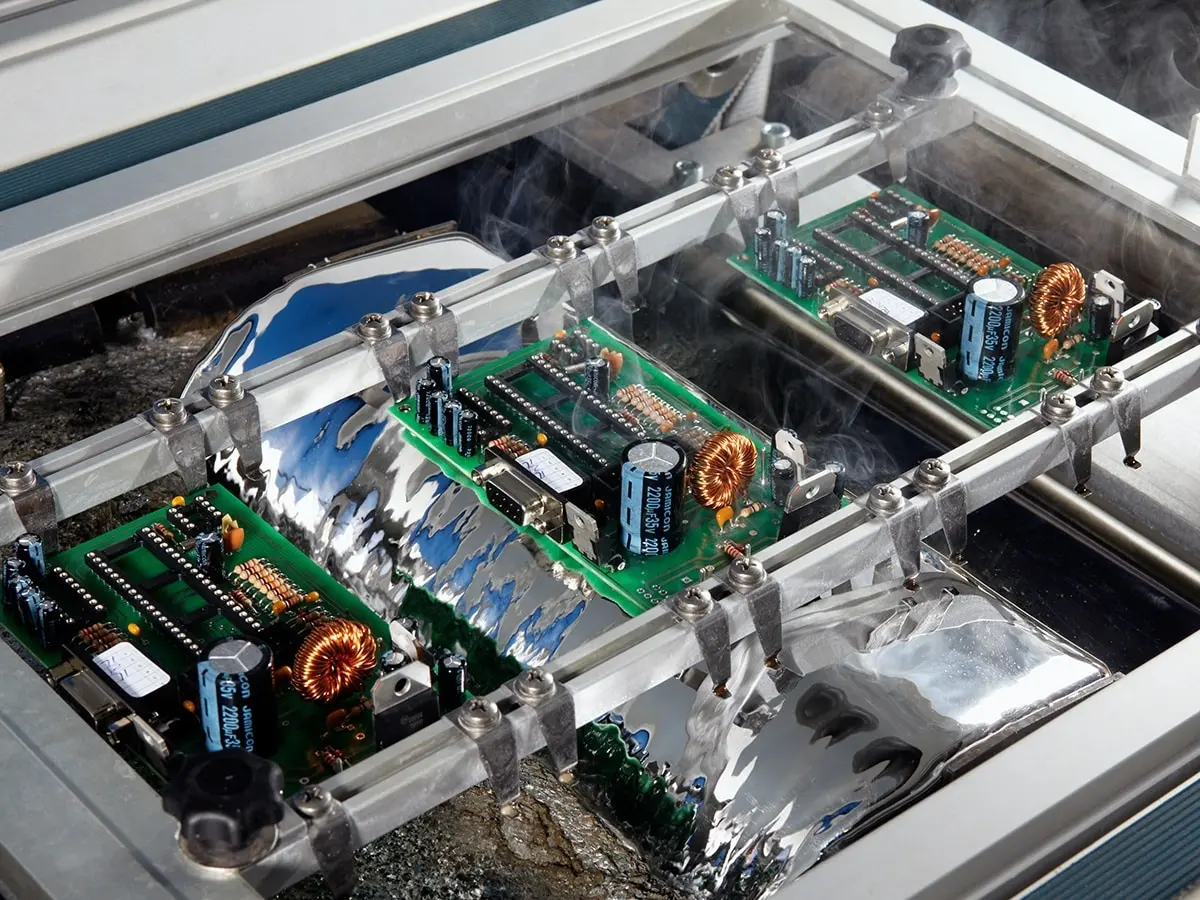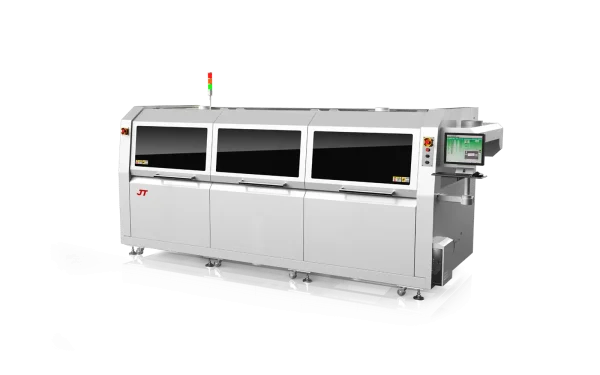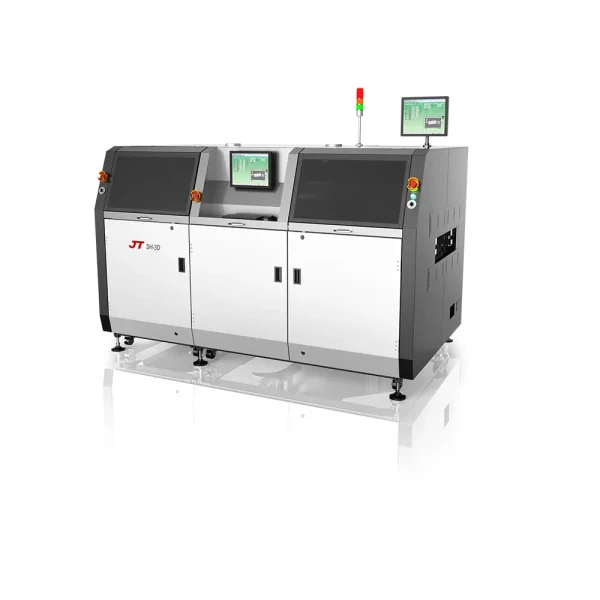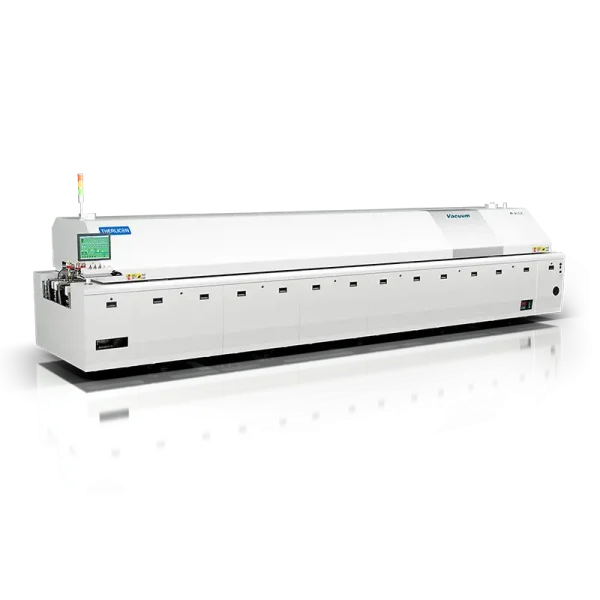

Reflow soldering refers to the process of soldering surface mount components (SMDs) by remelting pre-applied solder paste onto PCB pads to achieve mechanical and electrical connections between the solder tips or leads and the PCB pads. It utilizes a heated environment to melt the solder paste, reliably bonding the SMD components to the PCB pads. Based on its technical characteristics, reflow soldering is further divided into vapor phase reflow, infrared reflow, and hot air reflow.
Currently, most mainstream equipment uses hot air reflow. Hot air reflow uses a hot airflow to force the gel-like flux (solder paste) to undergo a physical reaction under a specific high-temperature airflow to achieve SMD soldering. Because this hot airflow circulates within the soldering machine to achieve the soldering purpose, the industry refers to this type of equipment that uses the principle of hot reflow to solder surface mount components as a reflow soldering machine.
Reflow equipment is typically placed at the rear of the SMT placement machine to complete the soldering process for surface mount components. After nearly a decade of development, reflow soldering equipment has evolved from relatively simple heat treatment equipment to highly automated equipment that integrates production processes and formulas, with a PC as the human-machine interface. The equipment’s control system has also shifted from simple electrical control to a system integration solution with a PC as the operating platform and a PLC as the system control core, to adapt to increasingly complex production and soldering processes. With the advent of demands for lead-free soldering, flux recovery, and energy conservation and environmental protection, higher requirements will be placed on the automation and intelligent control of the equipment.
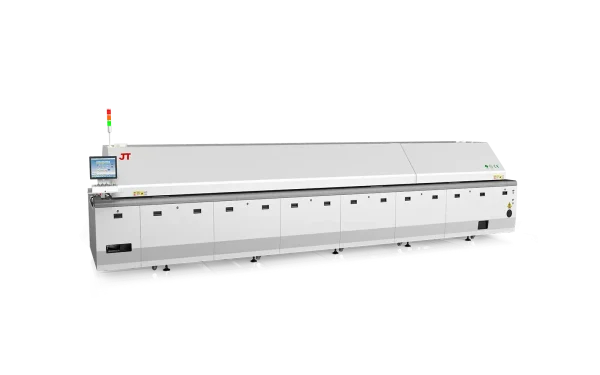
Basic Principles Analysis
The principle of reflow soldering is simple: an appropriate amount of solder is applied to the soldering areas of the circuit board beforehand, surface-mount components are mounted, and then an external heat source is used to make the solder flow again to achieve soldering. The reflow soldering heating process can be divided into four temperature zones: preheating, holding, soldering, and cooling. There are two main methods for achieving this: one is to allow the circuit board to sequentially pass through the four temperature zones in the oven along the direction of the conveyor system; the other is to stop the circuit board in a fixed position and, under the control of the control system, adjust and control the temperature changes according to the gradient pattern of the four temperature zones. In fact, we can better understand the principle of reflow soldering by understanding the internal structure of the reflow soldering machine.
Reflow Soldering Machine Structure:
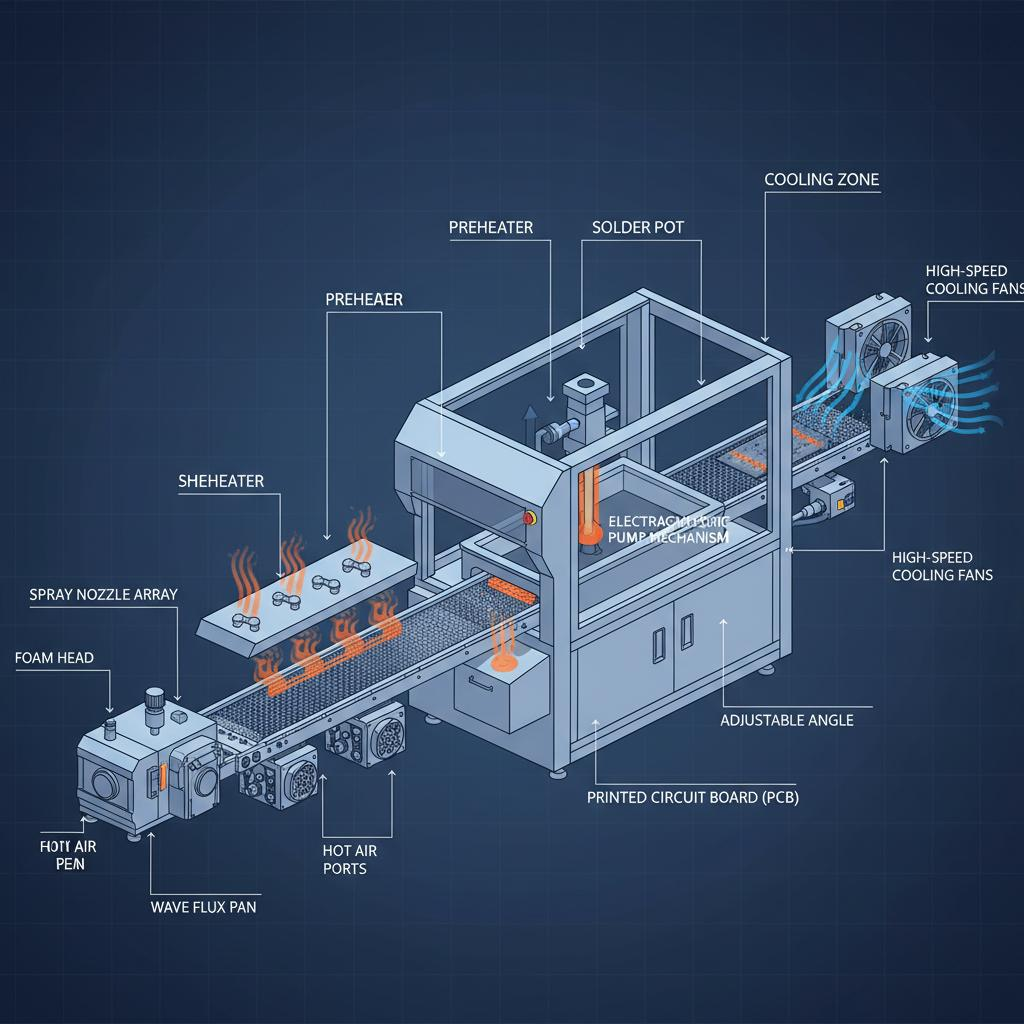
A reflow soldering machine mainly consists of four parts: a conveying system, a control system, a heating system, and a cooling system. Due to different heating methods, the internal structure varies. Below, we will take a thermal reflow soldering machine as an example:
(1) Conveying System: Conveying systems are mainly of two types: mesh belt and chain. Mesh belt conveyors allow for arbitrary placement of printed circuit boards (PCBs) and are suitable for single-sided board soldering. They overcome the defect of PCBs potentially denting when heated, but have limitations for double-sided board soldering and equipment wiring. Chain conveyors place the PCB on an extended stainless steel chain for transport. The chain width is adjustable to accommodate different PCB widths, but may cause dents in wide or ultra-thin PCBs when heated.
(2) Control System: The control system is the central hub of the reflow soldering machine. Its operation, flexibility, and functions directly affect the equipment’s performance. Advanced reflow soldering equipment has fully adopted computer or PLC control, utilizing the rich hardware and software resources of computers to greatly enrich and improve the functions of the reflow soldering equipment, effectively ensuring improved production management quality.
(3) Heating System: Each temperature zone of the heating system adopts forced independent circulation and independent control, with top and bottom heating to ensure accurate, uniform furnace temperature and large heat capacity. The temperature controller uses PID control to maintain the temperature at the set value, and the temperature sensor uses thermocouples to measure the airflow temperature.
(4) Cooling System: The cooling system mainly consists of heat exchanger cooling and fan cooling. After reflow soldering, the PCB must be cooled immediately to achieve good soldering results. Because flux easily condenses in the cooling system, the flux filter must be checked and cleaned regularly. Otherwise, the decreased thermal circulation efficiency will reduce the efficiency of the cooling system, resulting in poor cooling and a decline in product soldering quality.