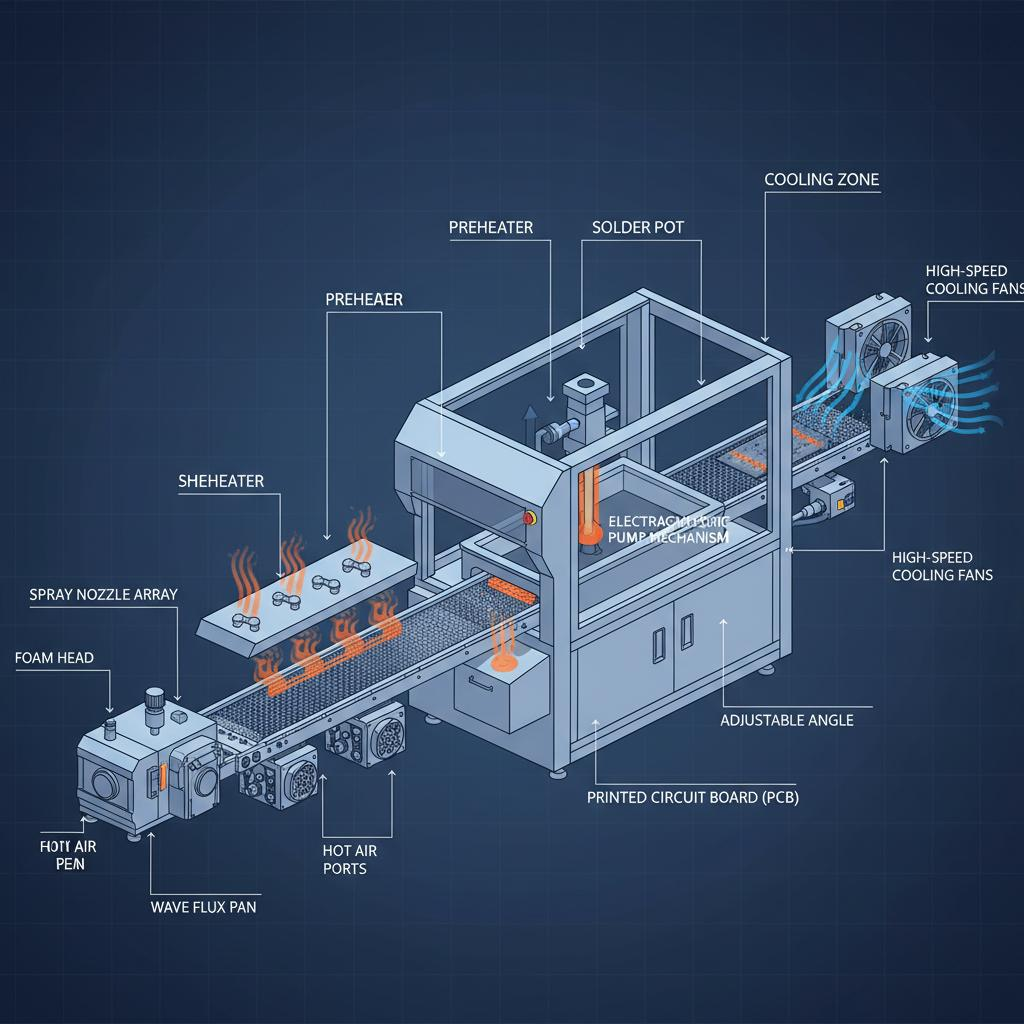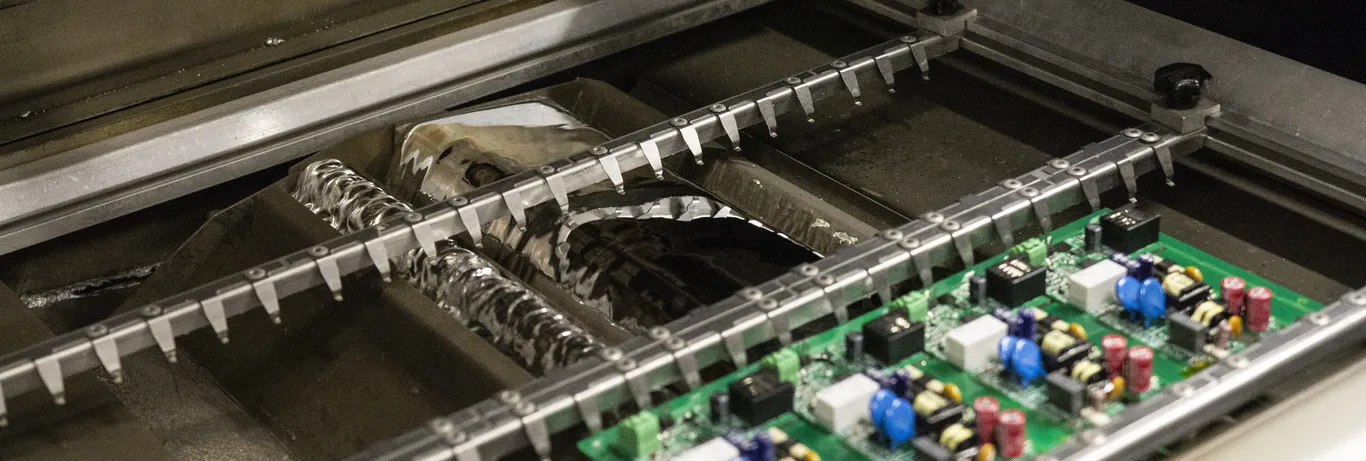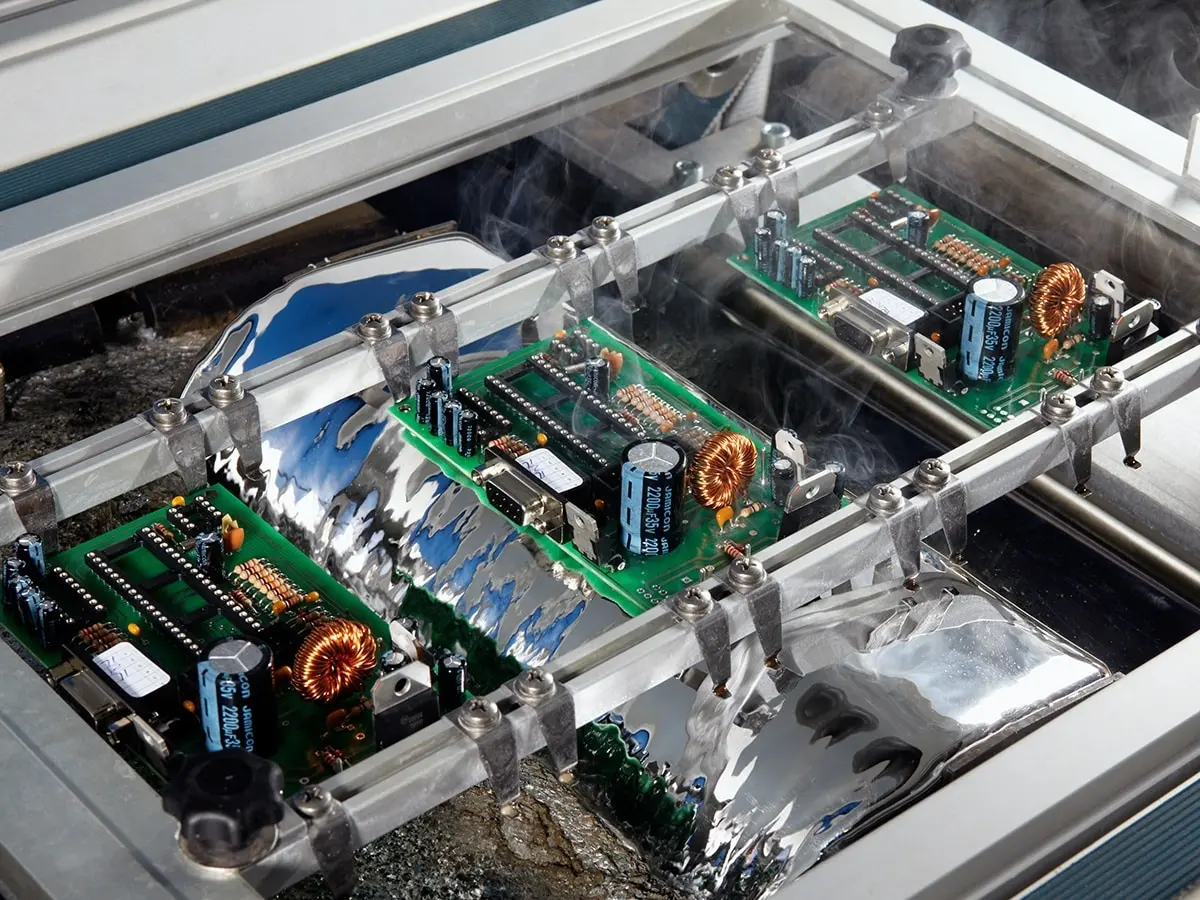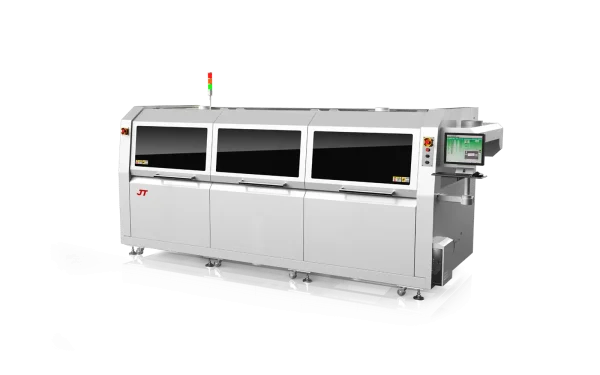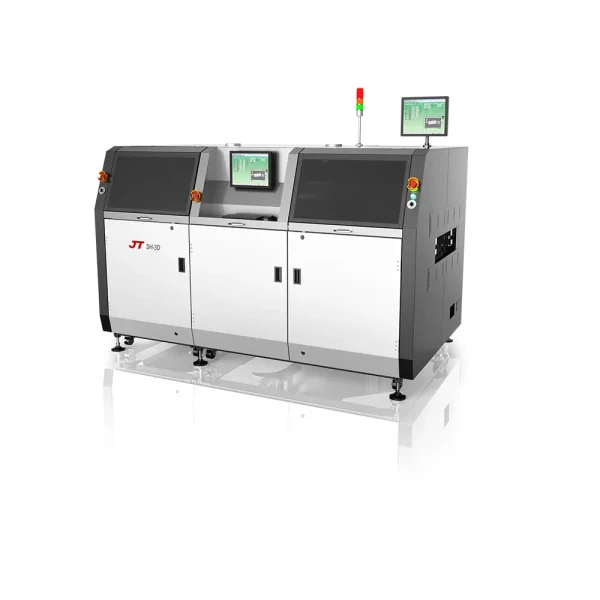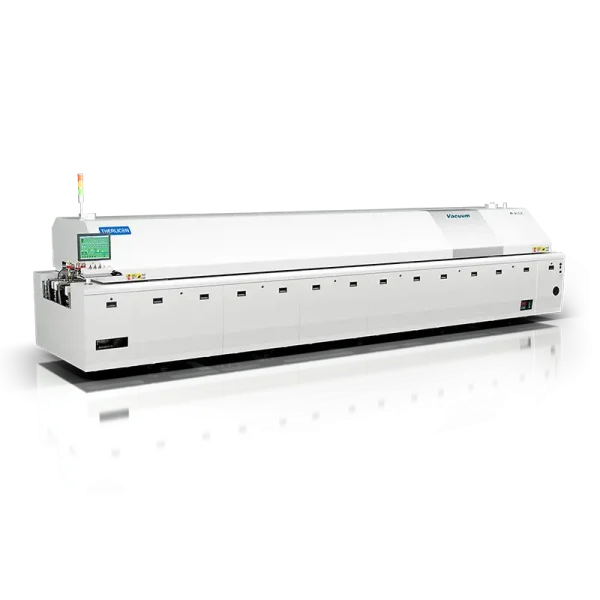

Industrial reflow ovens used for solder reflow on printed circuit boards (PCBs) are complex tools. A reflow oven combines radiant heating with heat convection to provide a continuous and controlled flow of heat to the PCB, thus assembling the circuit board. This process melts the solder, creating strong solder joints between the components and the circuit board.

Troubleshooting and Maintenance
1. Red light on, buzzer continuously beating
Causes: The time relay controlling the buzzer is faulty; the thermocouple is open-circuited; the control section of the main circuit SSR is damaged.
Solutions: Check the time relay controlling the buzzer; check the thermocouple; check the control section of the main circuit SSR.
2. System automatically enters cooling state.
Causes: PCB has fallen or is stuck; photoelectric sensors at the conveyor and outlet are damaged.
Solutions: Remove the fallen board; replace the photoelectric sensor.
3. Heating zone temperature does not reach the set temperature during startup.
Causes: Heater is damaged; heating point pair malfunction; solid-state relay output is disconnected; exhaust volume is too large or unbalanced; opto-isolator on the control board is damaged.
Solutions: Replace the heater; check or replace the thermocouple; replace the solid-state relay; adjust the exhaust valve plate; replace the opto-isolator.
4. Emergency switch pressed, system in standby mode
Cause: Emergency switch pressed; circuit damaged.
Solution: Reset emergency switch and press start button; repair circuit.
5. Inaccurate counting
Cause: Detection distance of counting sensor changes; counting sensor damaged.
Solution: Adjust detection distance of counting sensor; replace counting sensor.
Precautions:
- The reflow oven must fully reach the set temperature (green light illuminates) before soldering can begin.
- During reflow soldering, frequently observe temperature changes in each zone, with a variation range of 1°C (depending on the reflow oven).
- If any abnormality occurs during SMT reflow production, stop immediately.
- The substrate size should not exceed the width of the conveyor belt; otherwise, board jamming may occur.
- Before reflow soldering, based on documentation or component packaging instructions, protective measures (shielding) must be taken for components that cannot withstand normal soldering temperatures, or reflow soldering should be avoided and replaced with manual soldering or robotic soldering.
- During reflow soldering, prevent conveyor belt vibration, as this can lead to component displacement and unstable solder joints.
- Regularly measure the exhaust volume at the reflow oven exhaust port, as the exhaust volume directly affects the soldering temperature.