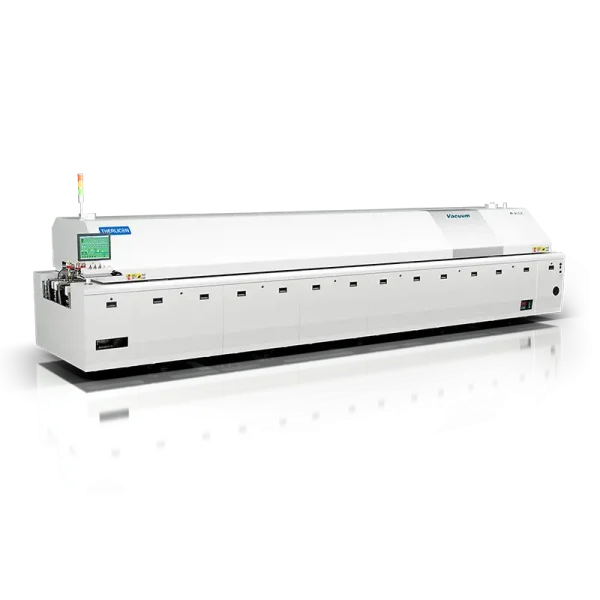

Wave soldering, a widely used soldering process in electronics manufacturing, uses molten solder to form waves of a specific shape, achieving a mechanical and electrical connection between components and circuit boards. Depending on different process requirements, equipment scale, and degree of automation, wave soldering can be divided into several types, each with its unique characteristics and application scenarios.

Process and Number of Waves
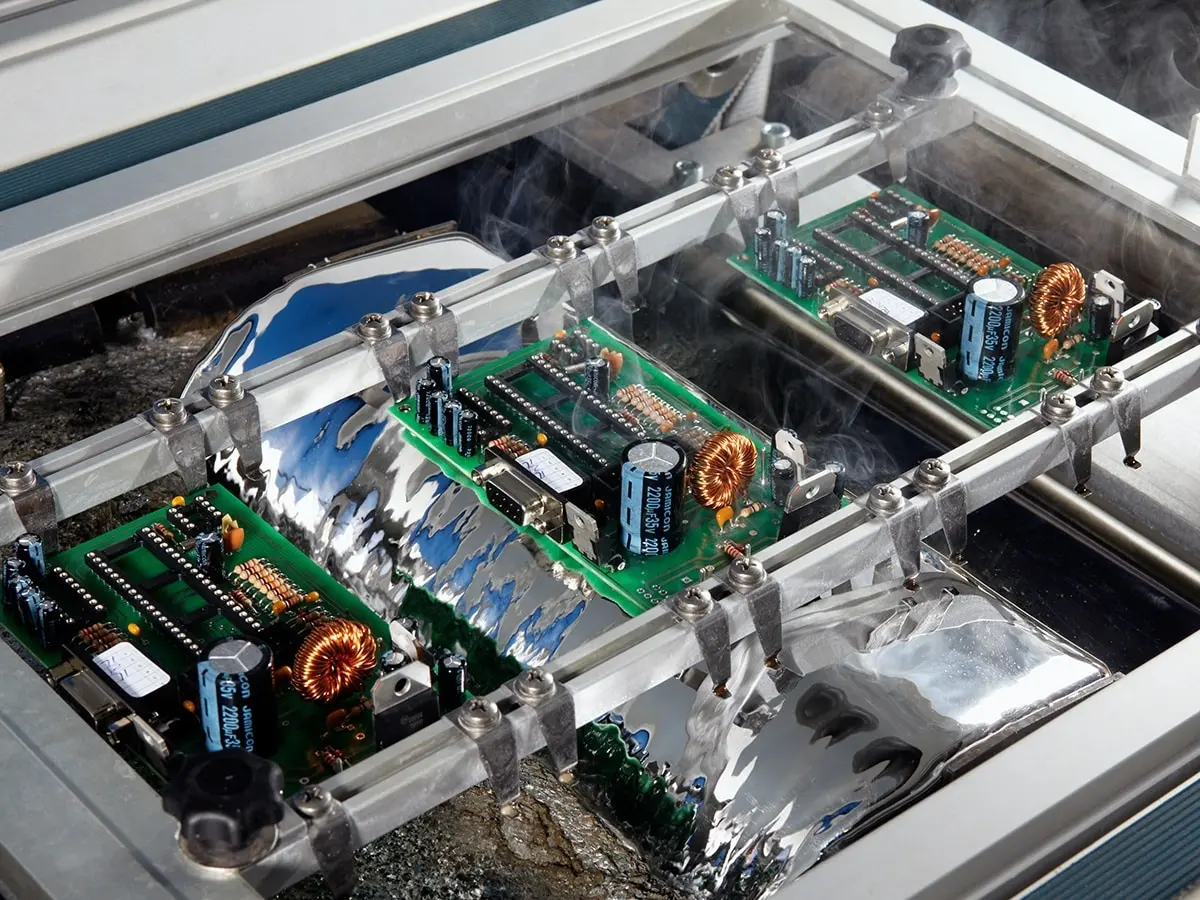
Single wave soldering is the most basic type. It uses an electric or electromagnetic pump to spray molten solder vertically upwards, forming a wave with a height between 20-40mm. Single wave soldering is suitable for soldering relatively simple single-sided boards or sparsely laid-out circuit boards, offering advantages such as low equipment cost and ease of operation. However, due to the vertical impact force of the wave, single wave soldering may produce floating components or cold solder joints when soldering lighter components.
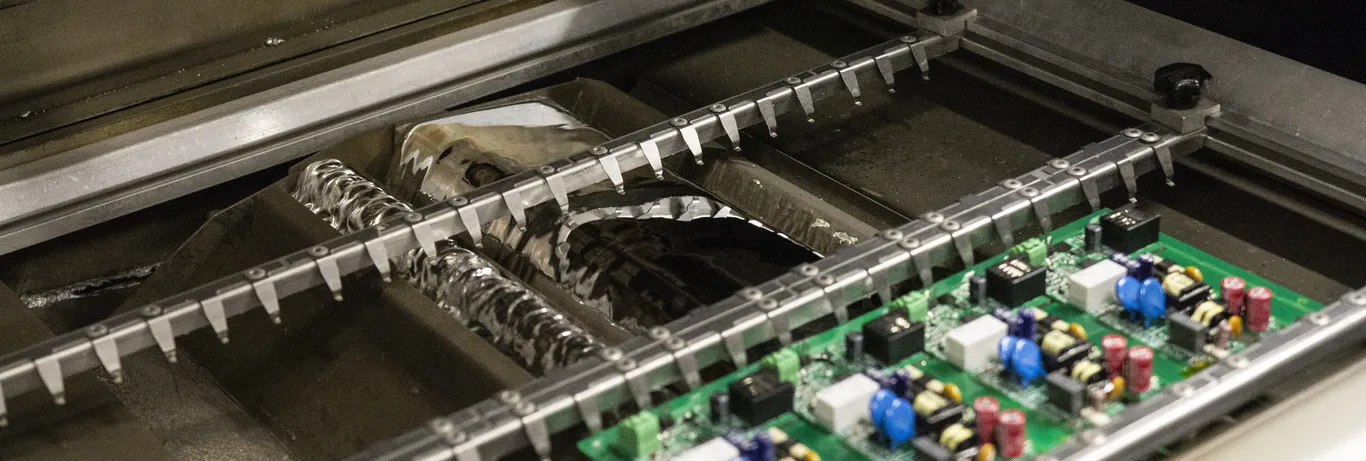
Double wave soldering, on the other hand, uses two waves to process the circuit board sequentially, effectively addressing the shortcomings of single wave soldering. The first wave peak is a turbulent wave with high vertical pressure and good penetration, reaching deep into the narrow space between component leads and pads to ensure full solder filling. The second wave peak is a smooth wave with a slower flow rate, which helps form full solder joints and eliminates burrs and bridging that may occur in the first wave peak. Dual-wave soldering is widely used in high-density SMD components and mixed-assembly processes, significantly improving soldering quality.
Equipment Scale and Applications
Mini/small wave soldering machines are suitable for new product trials or small-to-medium batch production in research institutes. These machines typically have a wave peak width of less than 300mm and a small solder bath capacity, featuring small footprint and low cost.
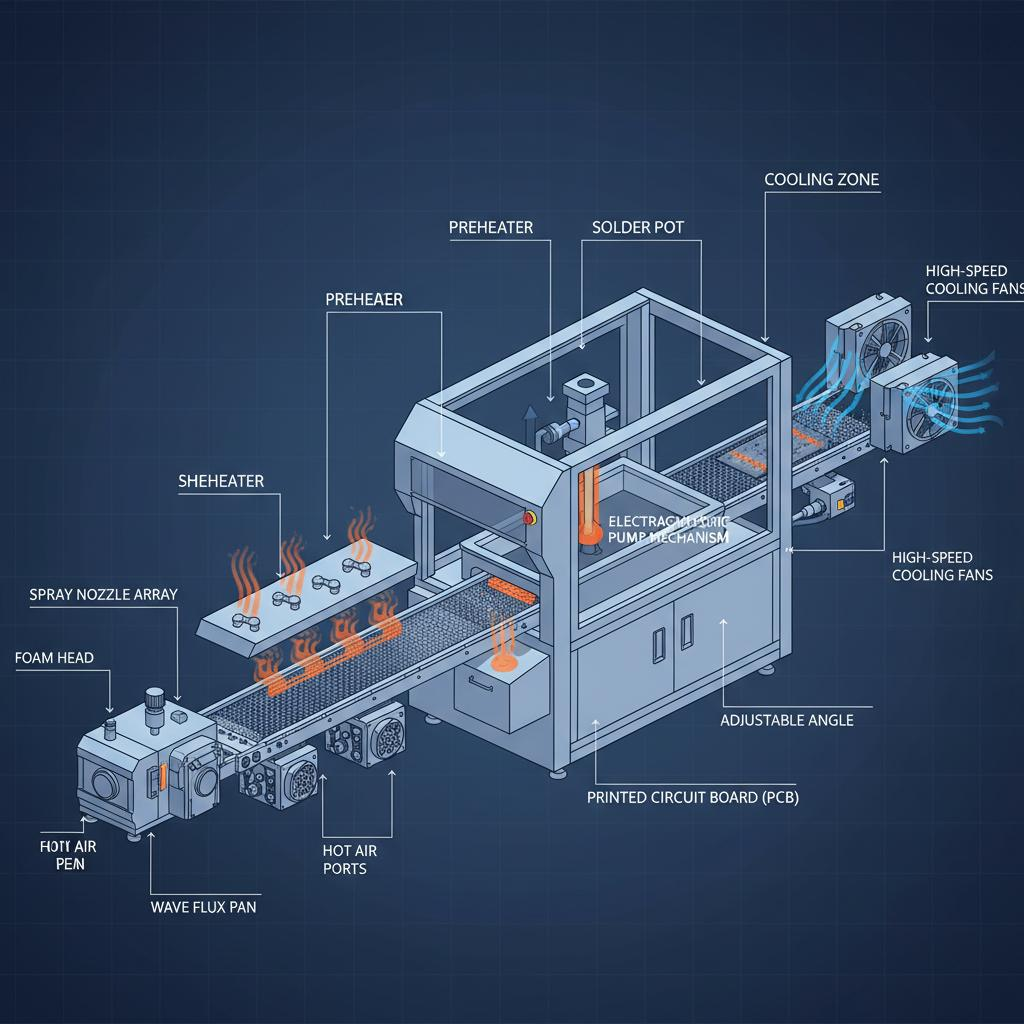
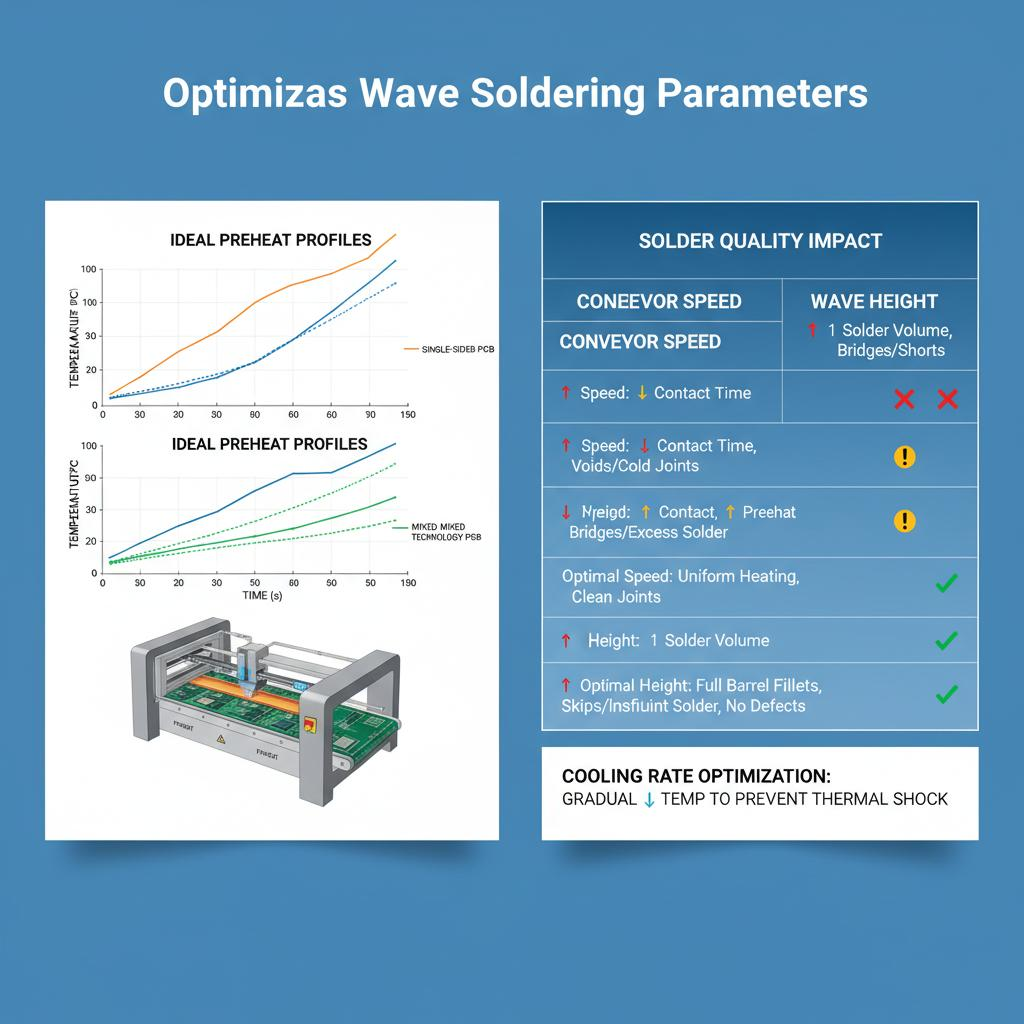
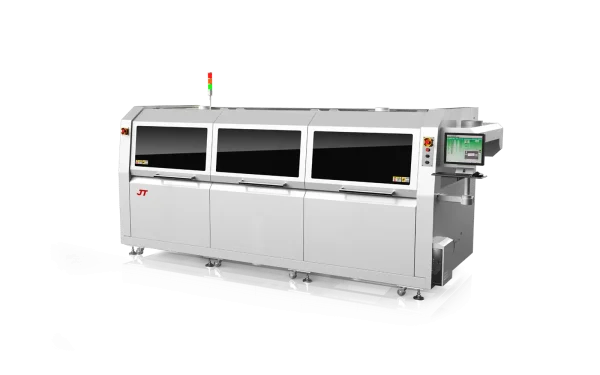
Medium/large wave soldering machines are suitable for large-scale automated production lines. They have a wave peak width exceeding 300mm, a large solder bath capacity, and are highly functional and intelligent. These machines are typically equipped with advanced preheating systems, digital monitoring systems, and nitrogen protection devices, enabling precise control of key parameters such as soldering temperature, conveyor speed, and wave peak height to ensure stable and consistent soldering quality.
Classified by Special Process
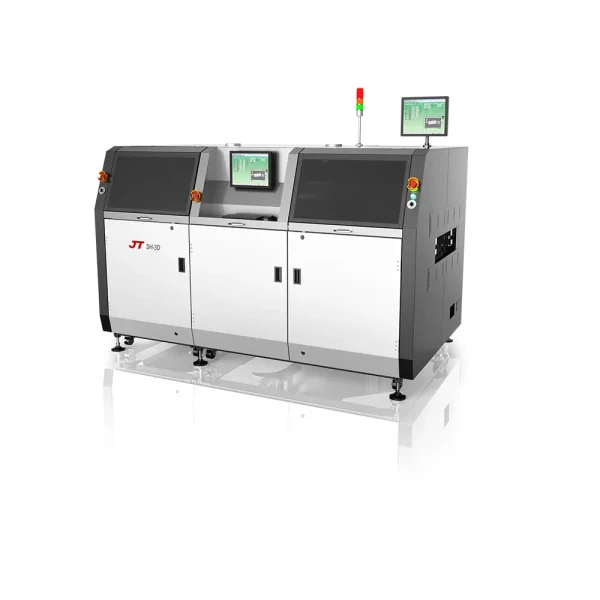
Selective wave soldering is a process that solders specific joints. It uses flux spraying and localized heating to solder only the joints that need soldering, without affecting other precision components on the board. Selective wave soldering comes in offline and online versions and is suitable for high-precision, high-reliability electronic product manufacturing, such as automotive electronics and aerospace.
Choose equipment based on your production density and batch requirements. For high-precision multilayer PCBs or automotive electronics, selective wave soldering should be prioritized to ensure soldering quality and protect sensitive components.