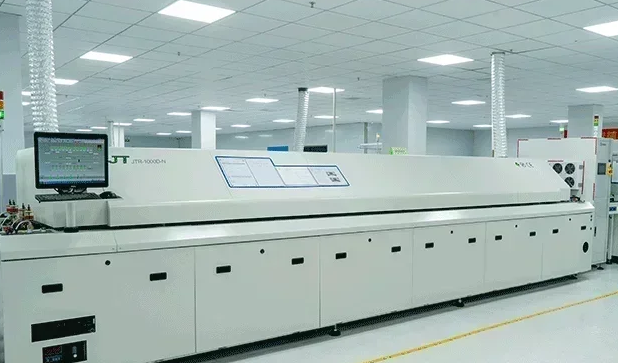
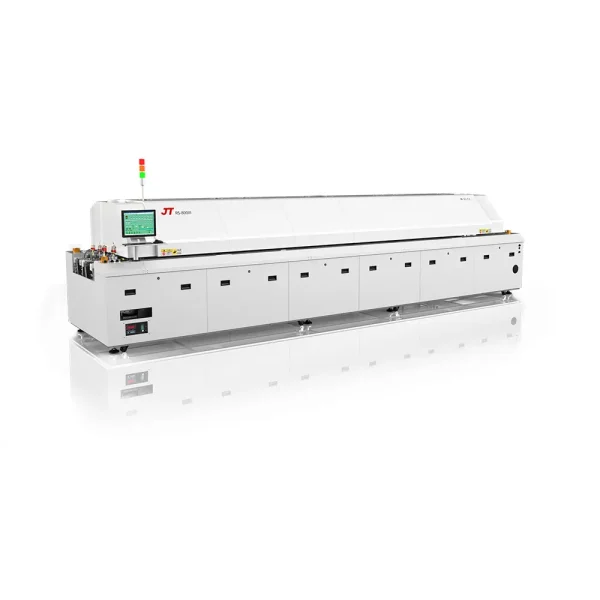
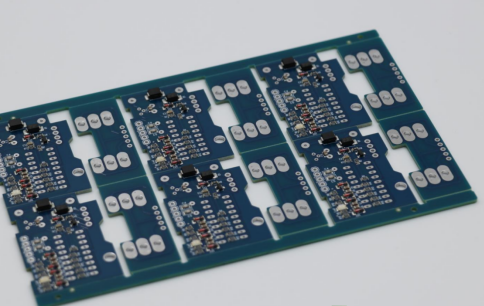
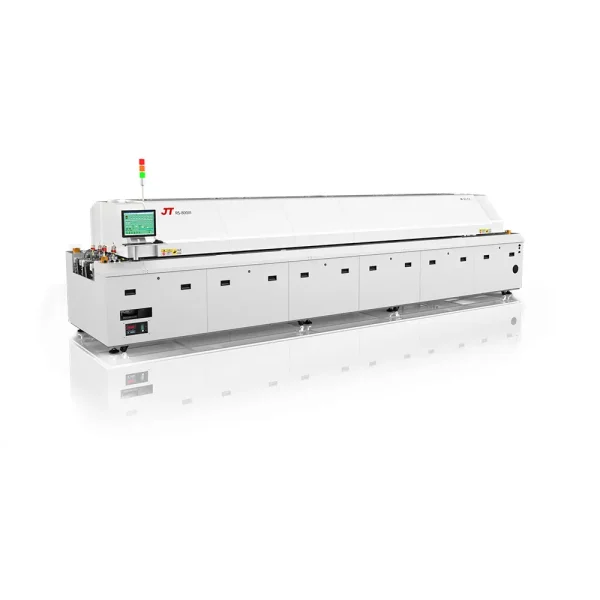
In the global wave of green transformation in the electronics manufacturing industry, lead-free hot air reflow ovens have become core equipment in the surface mount technology (SMT) field due to their environmentally friendly characteristics and superior performance. Through optimized hot air circulation systems, modular temperature control design, and intelligent management, they have solved challenges such as the high melting point and narrow process window of lead-free solders, providing reliable assurance for high-precision electronic manufacturing.
Environmental Compliance: An Inevitable Choice for Lead-Free Transformation
Traditional tin-lead solders, due to the potential hazards of lead to the environment and human health, have been strictly restricted by regulations such as the EU RoHS. Lead-free hot air reflow ovens use environmentally friendly solders such as Sn-Ag-Cu (SAC305), with a melting point increased to 217-227℃, approximately 30℃ higher than traditional solders. This change places higher demands on the equipment: it needs to achieve uniform heating at higher temperatures while controlling oxidation. Lead-free hot air reflow ovens effectively reduce oxidation reactions at high temperatures through a nitrogen protection system (concentration adjustable from 5-200ppm) and a closed-loop hot air circulation design, ensuring solder joint quality meets international standards and helping companies meet global environmental compliance requirements.
Precise Temperature Control: Overcoming Bottlenecks in Lead-Free Soldering Technology
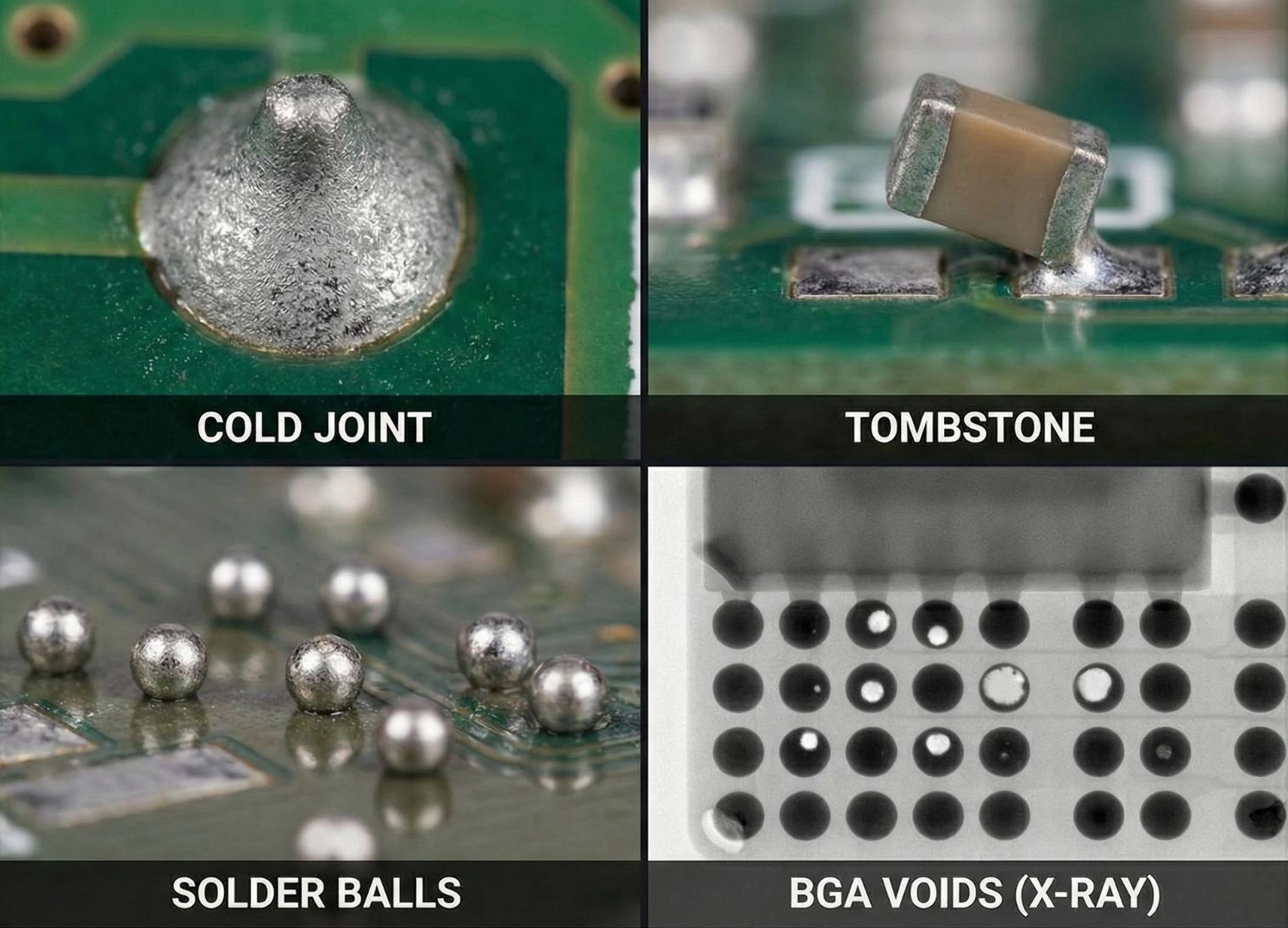
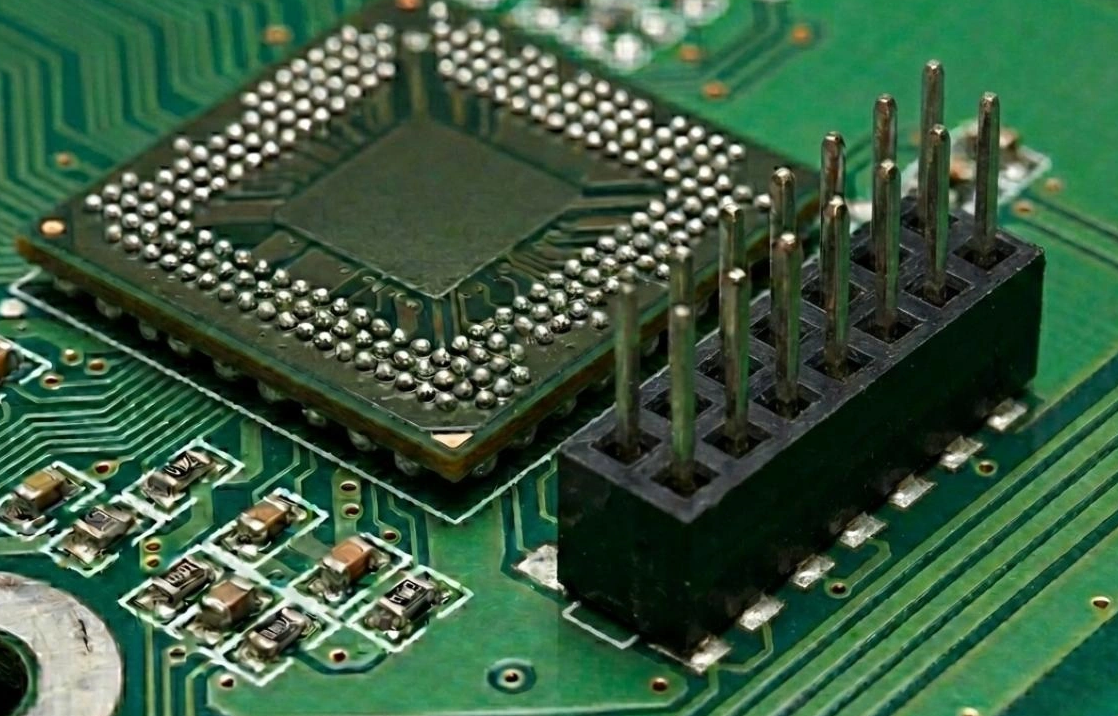
The high melting point of lead-free solder narrows the process window, posing stringent challenges to temperature control precision. Lead-free hot air reflow ovens employ a modular, independent temperature control system. Each heating zone is equipped with an independent PID controller, using thermocouples to monitor temperature in real time and feed it back to the main control computer, achieving a temperature control accuracy of ±1℃. For example, the GSD-L10 equipment, through the coordinated operation of 24 heating zones and 2 cooling zones, combined with a forced independent circulation design, ensures uniform and stable temperature within the oven cavity, avoiding defects such as cold solder joints caused by localized overheating or undercooling. Furthermore, the equipment supports online temperature profile testing and data analysis, enabling rapid optimization of process parameters to meet the soldering needs of precision components such as CSPs, BGAs, and 0201 chips.
High Efficiency and Energy Saving: Key Advantages in Reducing Production Costs
Lead-free hot air reflow ovens optimize energy consumption through technological innovation while improving performance. They employ a high-efficiency pressurized acceleration air duct design, significantly improving heat compensation efficiency and shortening heating time to 10-15 minutes, saving over 30% energy compared to traditional equipment. Some models, such as the TOP-800-N, are equipped with dual-rail, dual-speed technology, allowing adjustment of track speed according to production needs, further reducing energy consumption by 60%. In addition, the equipment has a built-in UPS power failure protection system and automatic delayed shutdown function to prevent PCB damage due to sudden power outages, reducing production losses.
Intelligent Management: Enhancing Production Efficiency and Reliability
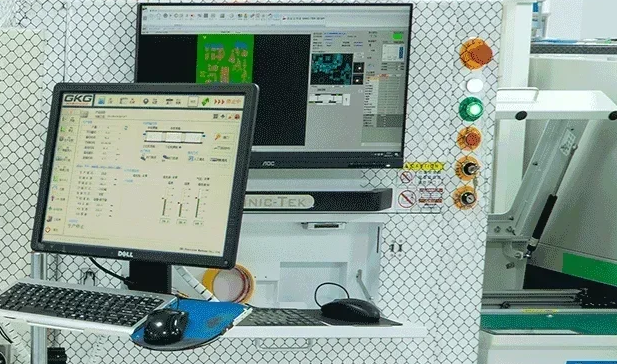
Modern lead-free hot air reflow ovens integrate an intelligent operating system, supporting both Windows interface and emergency manual dual control modes, making operation simple, safe, and reliable. The equipment is equipped with fault audible and visual alarms, password management, and operation record traceability functions to prevent unauthorized personnel from altering process parameters and ensure traceability of the production process. For example, the GSD-L10 achieves stable communication between the computer and PLC via the PC/PP protocol, eliminating the risk of system crashes. It also supports automatic flux recovery and exhaust gas filtration systems, reducing maintenance costs and extending equipment lifespan.
Application Scenarios: Covering the entire spectrum of high-precision electronic manufacturing
Lead-free hot air reflow ovens are widely used in high-reliability applications such as smartphones, automotive electronics, and aerospace. They support multi-variety, small-batch production and can flexibly switch between hot air convection modes and guide rail widths (50-450mm) to adapt to the soldering needs of PCBs of different sizes. In automotive electronics, the equipment ensures the reliability of solder joints for high-power devices such as IGBTs and MOSFETs through a highly efficient cooling system (cooling rate of 4-8℃/second). In flexible printed circuit board (FPC) soldering, low-temperature solder and uniform heat distribution design prevent substrate deformation and improve product yield.
Conclusion
Lead-free hot air reflow ovens, based on environmental compliance, have become core equipment for electronic manufacturing companies to cope with lead-free transformation through precise temperature control, high energy efficiency, and intelligent management. It not only solves the technical challenges of lead-free soldering, but also helps companies enhance their competitiveness and seize the initiative in the wave of green manufacturing through its modular design and flexible production capabilities. As the SMT industry develops towards higher density and higher reliability, lead-free hot air reflow ovens will continue to evolve, providing strong impetus for the sustainable development of the electronics industry.