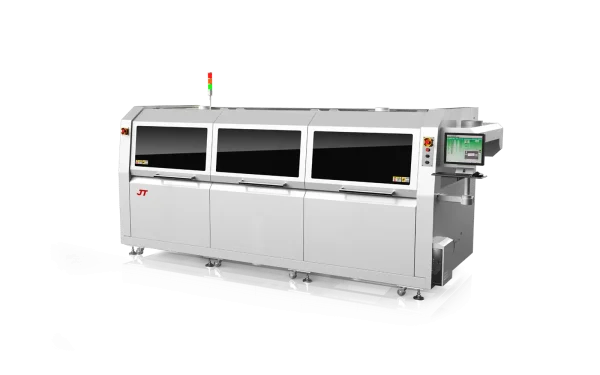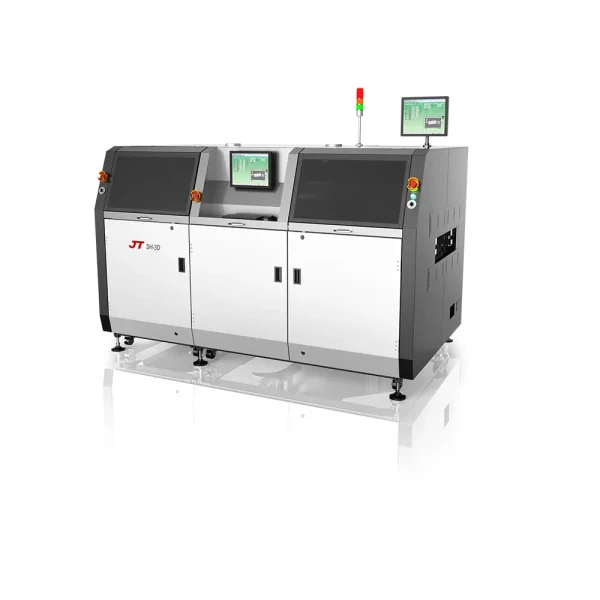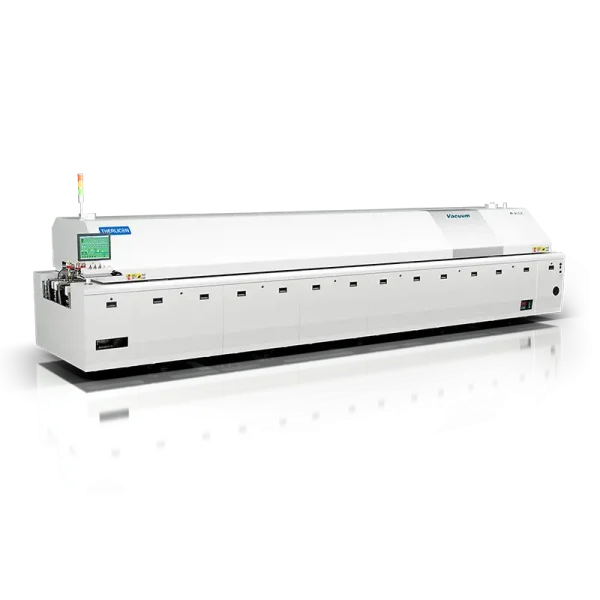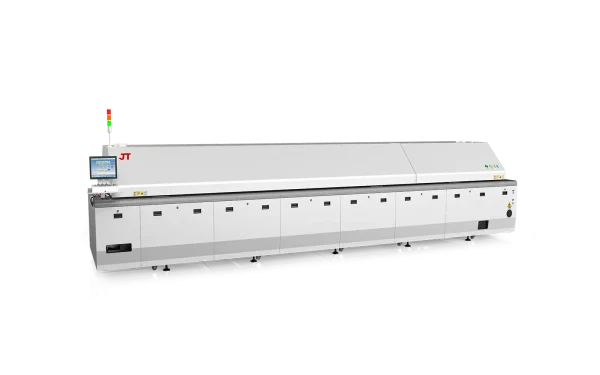

If your project targets mid-to-high-end applications such as automotive, medical, defense, and aerospace, nitrogen reflow soldering is ideal for printed circuit board assembly (PCBA). What are the advantages of nitrogen reflow soldering in electronic hardware manufacturing? In what situations should you consider using nitrogen reflow soldering for PCB assembly? Read this comprehensive guide to nitrogen reflow soldering.
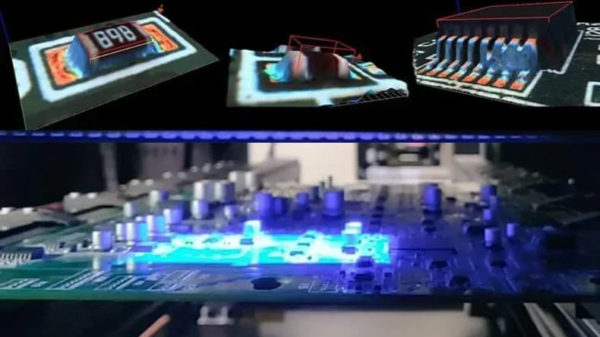
Part 1: What is Nitrogen Reflow Soldering?
Reflow soldering is the process of preheating solder paste, activating the flux, and melting tin alloy powder. The flux enhances the wettability of the tin alloy (liquid tin alloy is used to bond PCB pads and surface mount devices).
The flux then evaporates. When the reflow temperature reaches its peak and is held for approximately 40 to 70 seconds, a chemical reaction occurs between the PCB pads, surface coating, and solder, forming intermetallic compounds (IMCs).
The reflow temperature then decreases. Reflow soldering ends when the transfer line sends the PCBA out of the reflow oven.
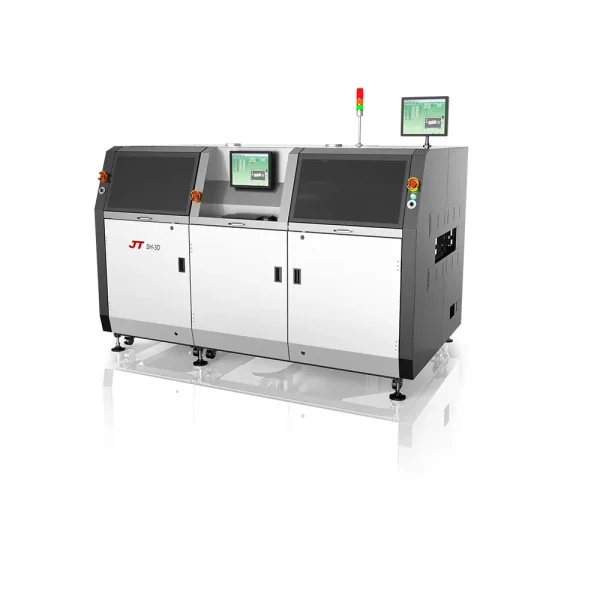
Nitrogen reflow soldering refers to a reflow oven where the entire soldering process is conducted in pure nitrogen. The nitrogen purity in a nitrogen reflow oven is as high as 99.99%. Nitrogen reflow ovens typically have 8 to 12 temperature zones. PCBONLINE’s PCB assembly plants use reflow ovens with 8 temperature zones.
According to the Chinese standard GB/T 10565-1989, the oxygen content in a nitrogen reflow oven should be below 4%. If the oxygen content in the nitrogen reflow oven is too high, it will affect the soldering quality and heat transfer efficiency, and may even lead to a fire during SMT manufacturing.
Part Two: Advantages of Nitrogen Reflow Soldering
Nitrogen reflow soldering was developed based on ordinary reflow soldering (air reflow soldering). Compared with ordinary reflow soldering, nitrogen reflow soldering has better wettability and can effectively prevent oxidation during the soldering process.
Nitrogen reflow soldering prevents oxidation during the soldering process. Nitrogen is an inert gas and will not oxidize metals. If the PCB pads and surface mount device (SMD) leads are free of oxides before soldering, they can be soldered in a nitrogen reflow oven without the influence of oxygen or impurities in the air.
Nitrogen reflow soldering provides better solder wetting. Good wetting is crucial for successful soldering. In a nitrogen reflow oven, tin alloy solder has excellent flowability, allowing it to fully “crawl” onto the SMD leads, thus achieving wetting. If oxides are present on the PCB pads or SMD leads, or if oxygen is present during reflow soldering, poor wetting or even complete lack of wetting may occur. Without oxides, there is no solder interface, and intermetallic compounds (IMCs) cannot form properly.
Nitrogen reflow soldering reduces the probability of solder incomplete fusion and voids. The solder and PCB pads do not oxidize during reflow soldering, resulting in good solder wetting and significantly reducing the likelihood of voids. Good wetting leads to full and bright solder joints.
However, due to the excellent fluidity of the solder, small SMD components, especially resistors and capacitors in 0603 and 0805 packages, may experience tombstoning (a soldering defect caused by the difference in solder strength at the two ends of the SMD component). Furthermore, solder may excessively “climb” onto the connector pins, even causing short circuits. Therefore, after nitrogen reflow soldering, we must perform automated optical inspection (AOI) to ensure that such problems do not occur.
Part 3: When to Use Nitrogen Reflow Soldering
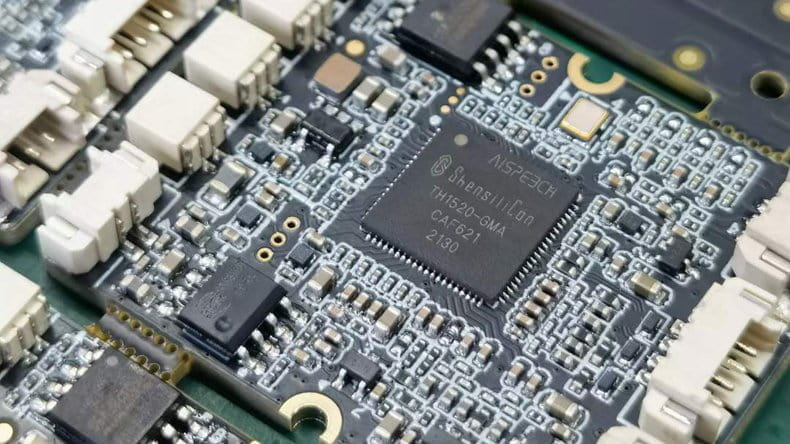
For double-sided PCBs and easily oxidized components, oxidation during reflow soldering can lead to failure, and nitrogen reflow soldering is an effective solution. If your mid-to-high-end PCB uses a double-sided design with poor wettability, large package size, high-density BGA packages, or packages easily oxidized components, then consider using nitrogen reflow soldering for PCB assembly.
Double-sided PCBs: For double-sided PCB assembly, we reflow solder the first side (component mounting side) first, and then reflow solder the second side. This means the PCBA needs to undergo two reflow soldering processes. During the second reflow soldering process, the surface coating and solder on the first side are prone to oxidation at high temperatures. Using nitrogen reflow soldering prevents oxidation of the first side when soldering the second side.
Poor SMD or PCB wetting: Before large-scale PCBA production, we perform PCB prototype assembly to test the manufacturing process. If poor SMD or PCB wetting is found during PCB prototype assembly, we switch to nitrogen reflow soldering because it provides better wetting. Based on our experience, QFN packaged SMDs or PCBs may have poor wetting issues.
Large and high-density BGAs: For large and high-density BGAs, the soldering area is large, and poor wetting can lead to solder voids or even open circuits. Using nitrogen reflow soldering, you don’t need to worry about soldering defects in CSPs, PoPs, BGAs, DCAs, and flip chips.
Easily oxidized components: Surface mount components (with silver, nickel, or tin-plated leads) are prone to oxidation at high temperatures during reflow soldering. Using nitrogen reduces the contact between SMD pins and oxygen, thus ensuring soldering quality.
Nitrogen reflow soldering evolved from conventional reflow soldering; it provides better wetting and prevents oxidation during the soldering process.