As contemporary electronics embraces light weight, high speed and increasing efficiency, each link of manufacturing thereafter conforms to such philosophy, which is open to Printed Circuit Board Assembly as well. Soldering has been playing an essential role in determining the success of electronic products since electrical connection achievement derives from precise soldering. Compared with hand soldering that’s still preferred by some electronics hobbyists, automatic soldering has been widely selected due to its merits of high accuracy and speed and demands of large volume and high cost-effectiveness. As the leading soldering technologies for assembly, wave soldering and reflow soldering have been most widely applied to contribute to high-quality assembly. Nevertheless, they are always being mixed up and differences between them tend to confuse many and when to use them is even vague.

Background
Prior to formal comparison between wave soldering and reflow soldering, it’s important to understand difference between soldering, welding and brazing.
Briefly speaking, welding refers to the process in which two similar metals are melted to be bonded together. Brazing refers to the process in which two pieces of metals are bonded together by heating and melting filler that is also called alloy at a high temperature. Soldering is actually a low-temperature brazing and its filler is called solder.
As far as soldering is concerned, difference between wave soldering and reflow soldering can never be ignored because many people have no idea which one to select as they are ready to purchase PCBA services from assemblers. As a Chinese proverb goes: a slight move in one part may affect the situation as a whole. A modification in terms of soldering tends to arouse changes from head to toe in the whole assembly manufacturing process, such as manufacturing efficiency, cost, time to market, gains etc. Based on the introduction above, it’s believed that a sketch must have been outlined in your mind.
• Soldering Process
As for soldering process steps, the following figure demonstrates the difference between them.
The essential difference between wave soldering and reflow soldering in terms of manufacturing process lies in flux spraying in that wave soldering contains this step while reflow soldering not. Flux promotes soldering process and plays a protective role of dioxide elimination and surface tension of reduction material to be soldered. Flux works only when it’s activated, which then calls for rigorous requirement on temperature and time control. Since flux is contained in solder paste in reflow soldering, flux content has to be appropriately arranged and achieved.
• Soldering Reliability
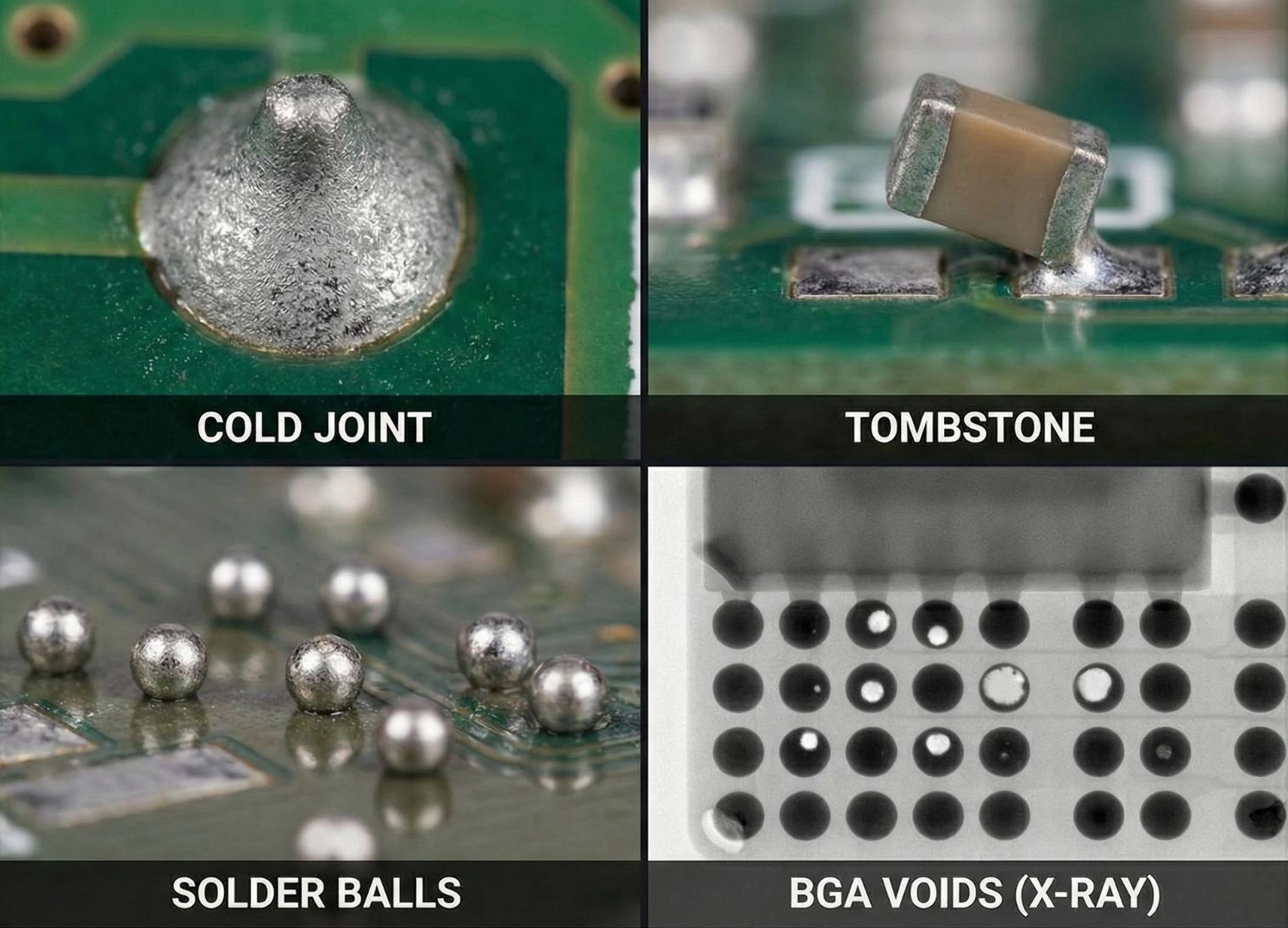
Soldering defects seem unavoidable as long as soldering takes place. It’s non-scientific to purely indicate which soldering technology features more soldering defects than the other even though the conclusion is achieved based on piles of experimental data. After all, situation differs each time. Thus, it’s of no significance to compare soldering reliability between wave soldering and reflow soldering.
In spite of the inevitability of soldering defects, opportunity of defect occurrence can be proportionally cut down when assemblers conform to professional assembly manufacturing regulations and get fully aware of characteristics and performance of all the equipment along manufacturing line. In addition, engineering staff should be qualified and regularly trained in order to keep pace with progress of modern technologies.
• Selection Standard
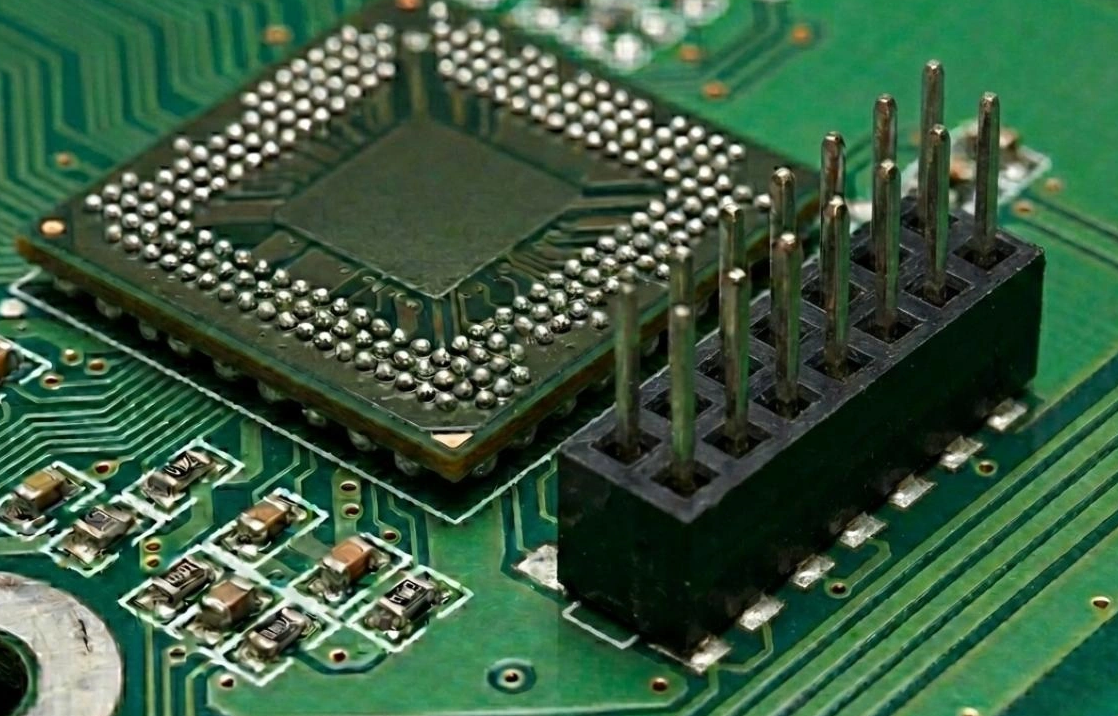
Generally, reflow soldering works best for SMT assembly while wave soldering for THT or DIP assembly. Nevertheless, it seldom occurs that a circuit board only contains pure surface mount devices or through-hole components. In terms of mixed assembly, SMT is normally first carried out and then comes THT or DIP because the temperature reflow soldering has to go through is much higher than that wave soldering has to suffer. If sequence of two assemblies is inverted, solid solder paste will possibly be melted again with well-soldered components suffering from defects or even falling down from board.