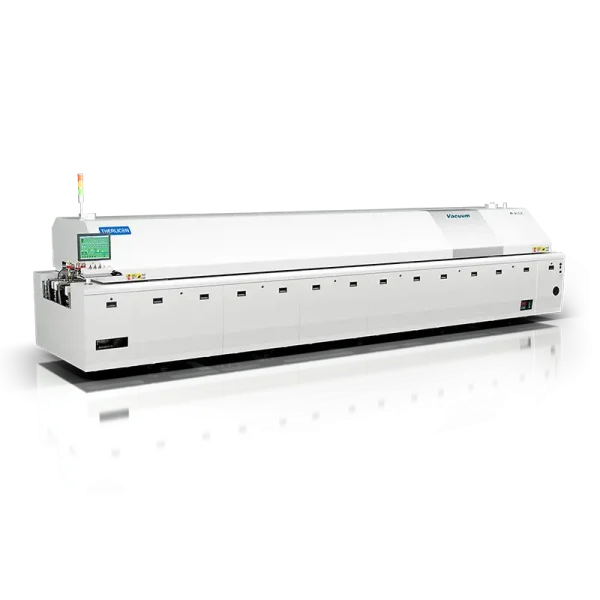

In the electronics manufacturing industry, when you disassemble a television, computer, or any circuit board, you’ll find it densely packed with resistors, capacitors, chips, and other components soldered onto it. How are these components securely fixed to the circuit board? One answer is wave soldering.

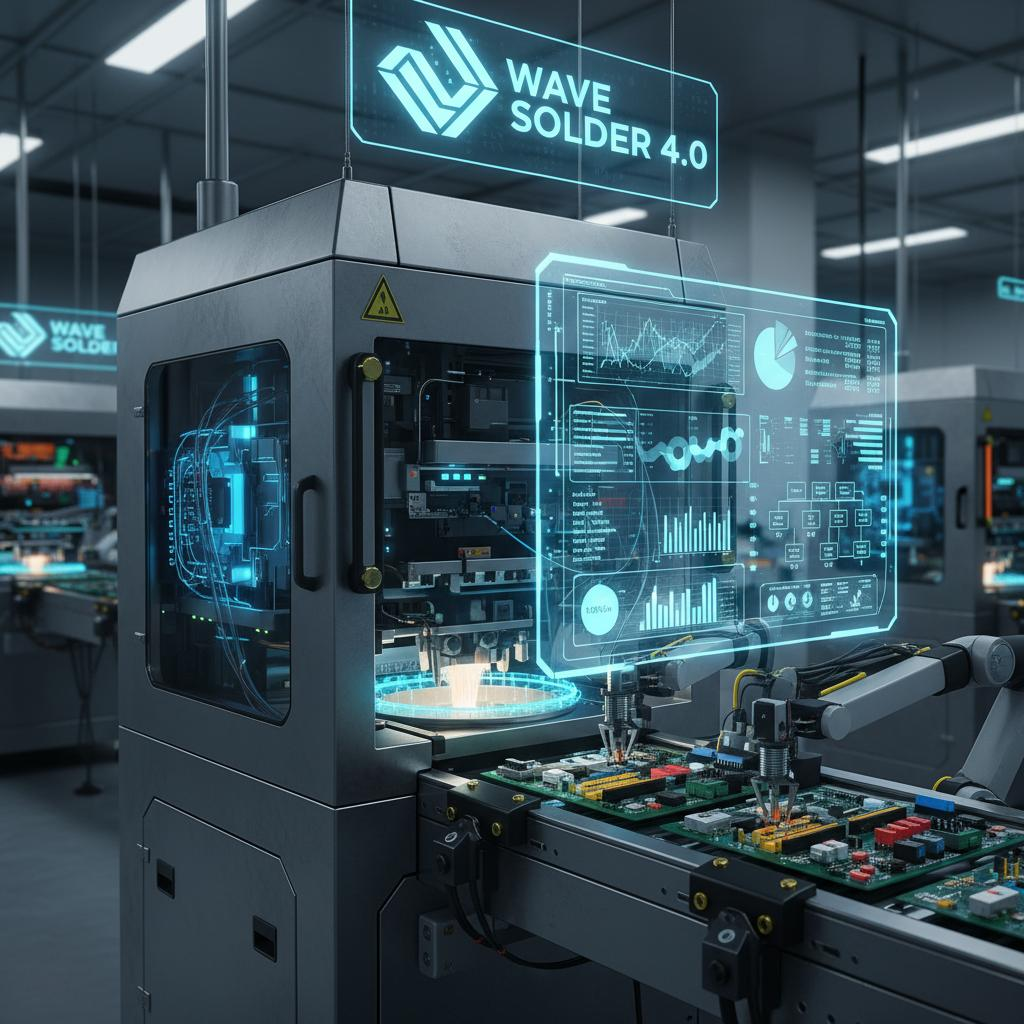
Wave soldering is an automated soldering process specifically designed for soldering through-hole components. “Through-hole components” refer to electronic components with metal leads that need to pass through pre-drilled holes in the circuit board. Unlike surface-mount components, the leads of these components pass through holes on one side of the circuit board and protrude on the other.
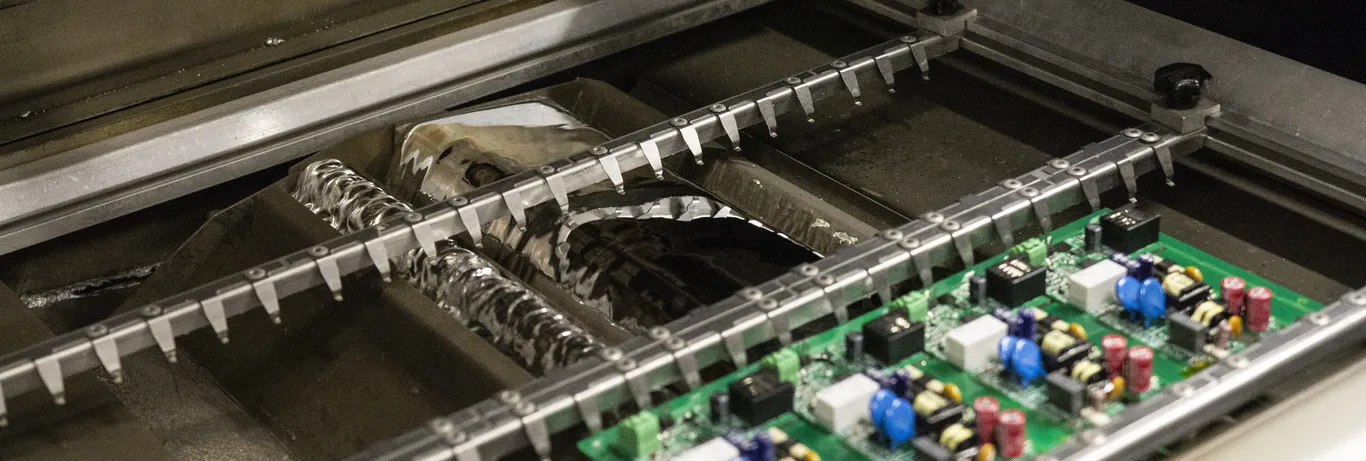
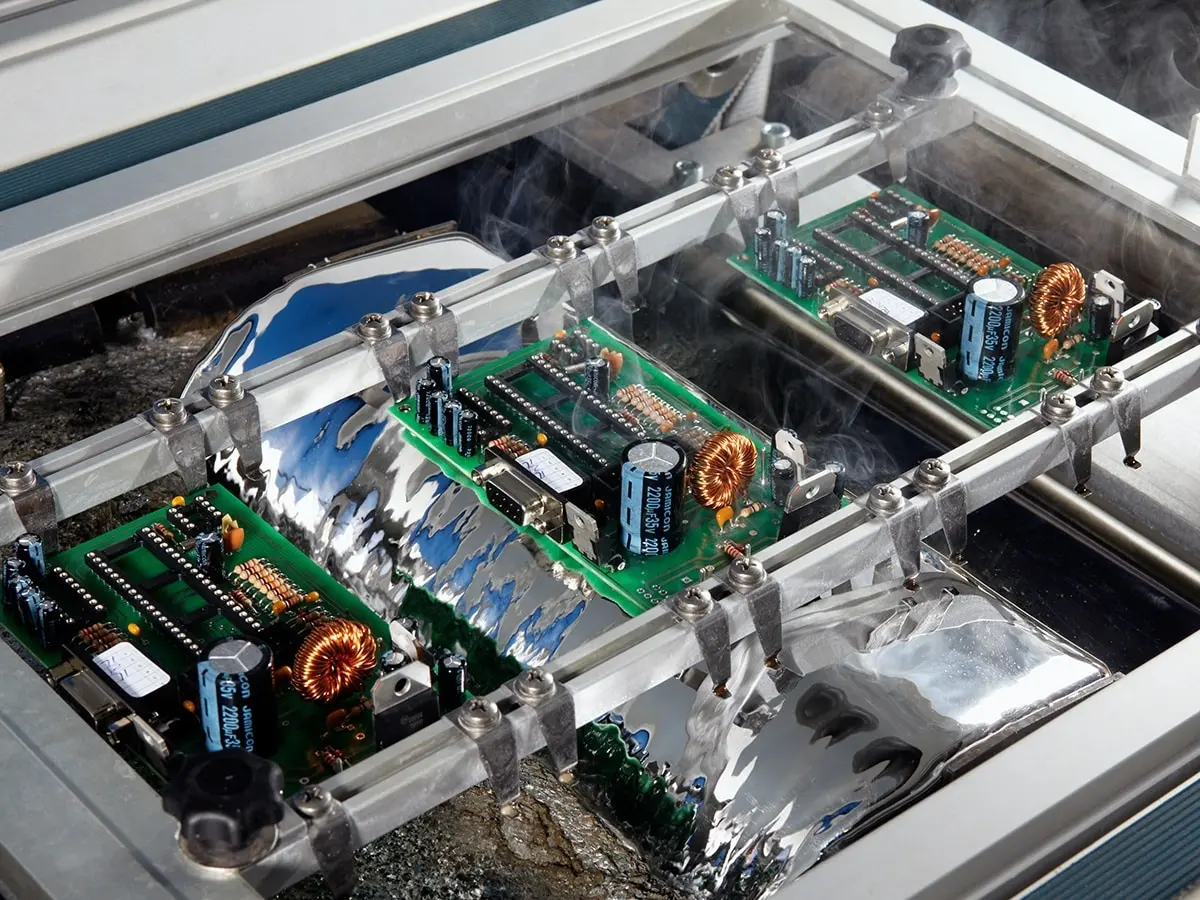
The core principle of wave soldering is not complicated: the soldering surface of the circuit board slides over a continuously flowing “wave” of molten solder. The solder naturally wets and connects the component leads to the circuit board pads, completing the soldering. The name comes from the continuously rising “waves” of solder.
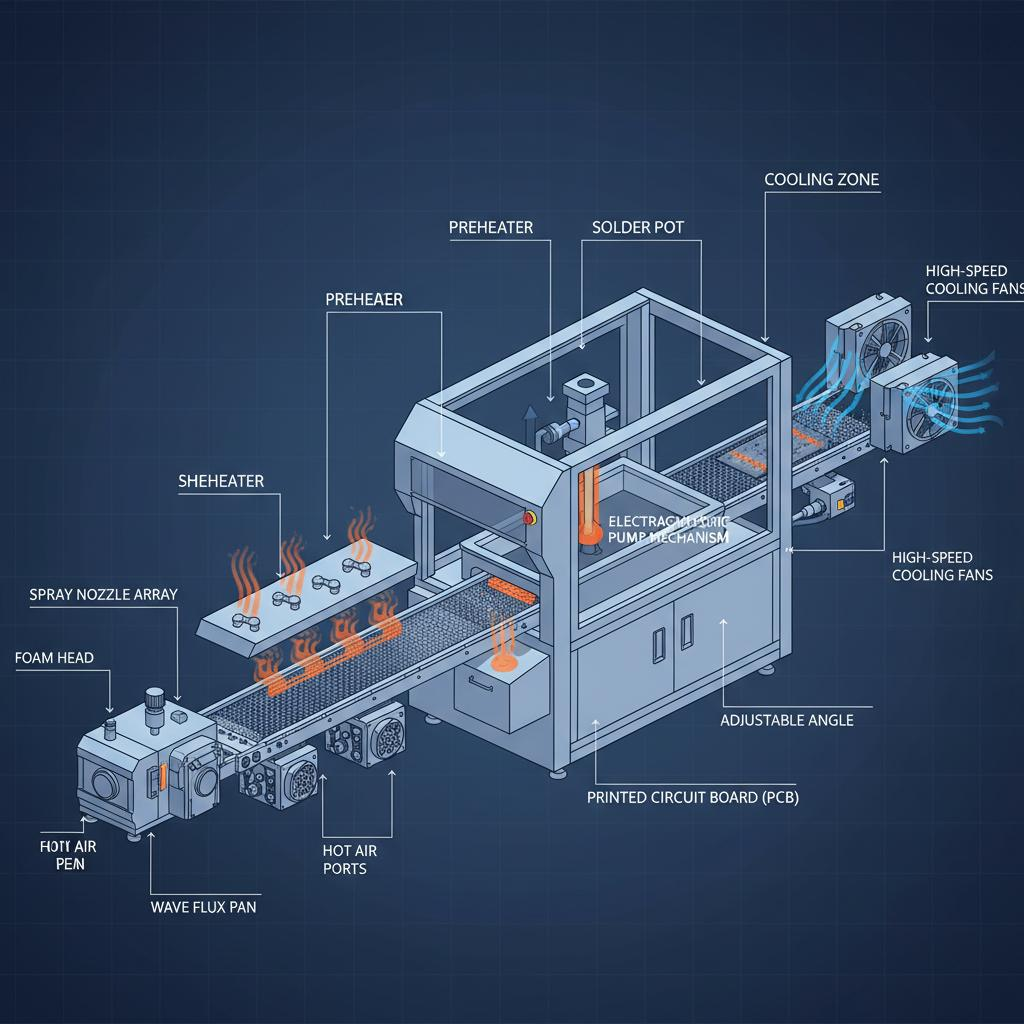
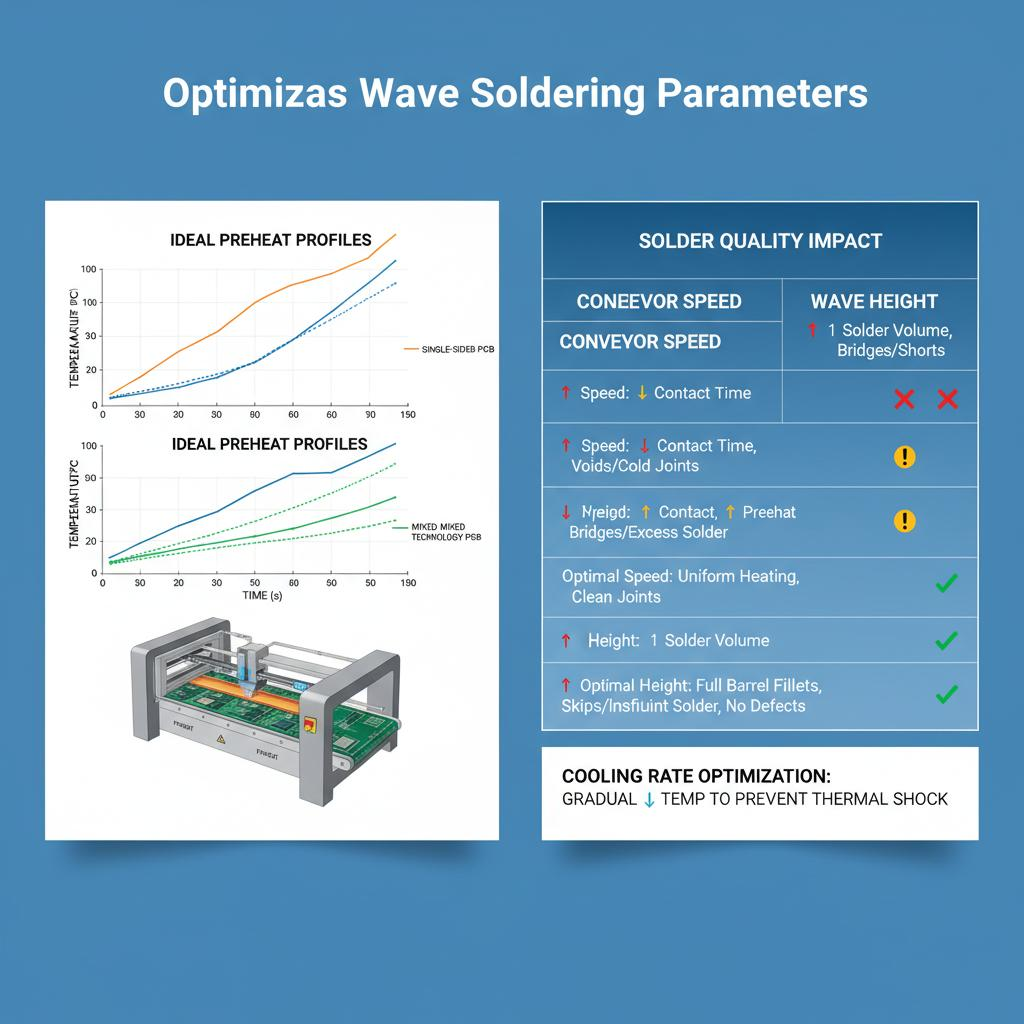
A typical wave soldering process involves several key steps. First, the circuit board is coated with flux. This chemical removes the oxide layer from the metal surface, helping the solder adhere better. Next, the circuit board passes through a preheating zone, where it is gradually heated to activate the flux and prevent excessive thermal shock during subsequent soldering. Finally, the core step—soldering—takes place: the circuit board is carried by a conveyor belt and smoothly passes over the crests of gushing molten solder. The small waves formed by the top of the solder contact the bottom surface of the circuit board, quickly filling the holes and enveloping the component leads under surface tension. After cooling, strong solder joints are formed.
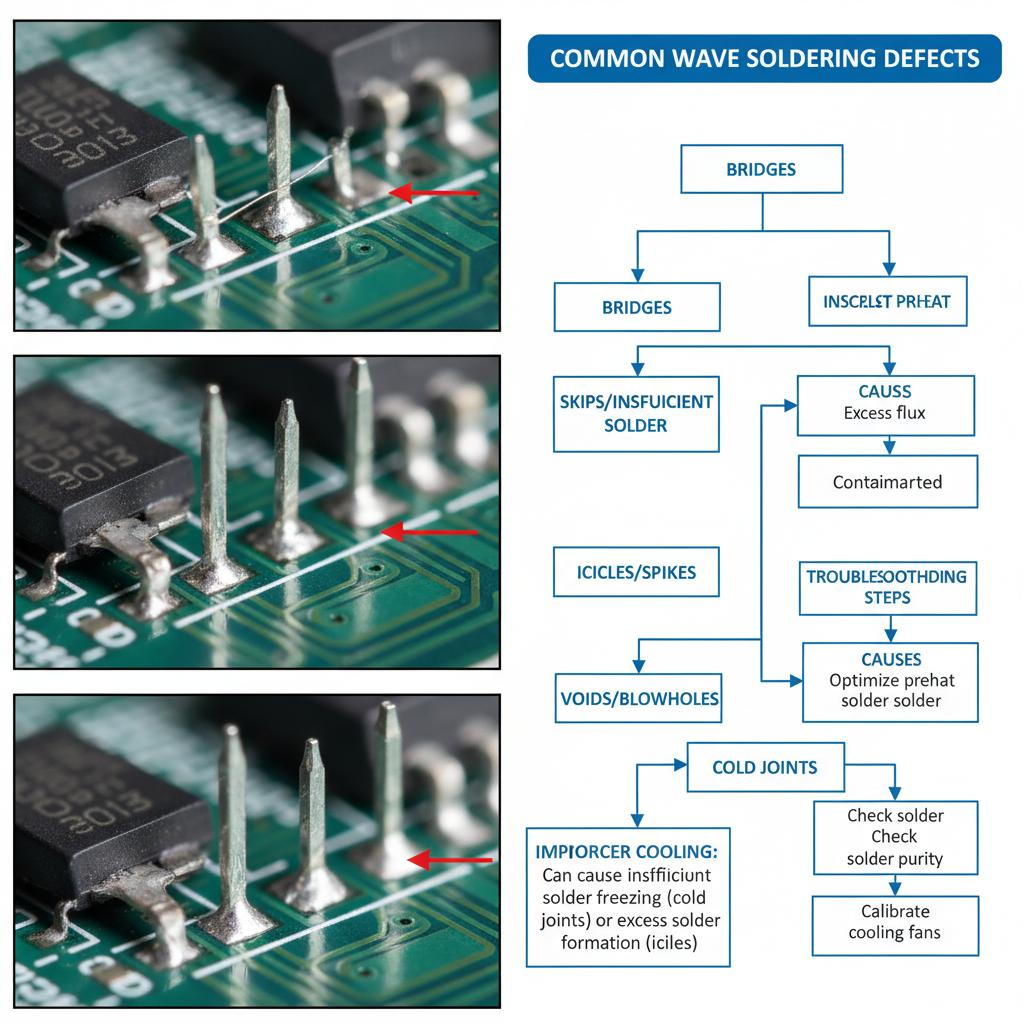
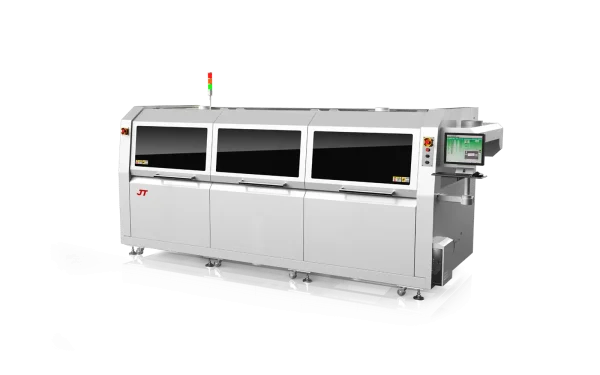
The biggest advantage of wave soldering is its efficiency. A circuit board filled with components can have hundreds or even thousands of solder joints completed in just tens of seconds, something unmatched by hand soldering. At the same time, the mechanized process ensures the consistency and reliability of the solder joint quality.
However, wave soldering also has its limitations. It is mainly suitable for through-hole components, while for the increasingly mainstream surface-mount components, it usually needs to be used in conjunction with reflow soldering. Furthermore, the equipment requires regular maintenance, and high-temperature operation necessitates strict safety measures.
From the first television set to today’s various electronic products, wave soldering technology has played an indispensable role in the development of electronics manufacturing. It enables the mass production of high-quality circuit boards and provides a stable and reliable connection foundation for various electronic devices we use every day. The next time you pick up any electrical appliance, you might think about it: those fine and neat solder joints inside may well be the masterpiece of wave soldering.